India Foreign Exchange Crisis: 3 Severe Economic Threats
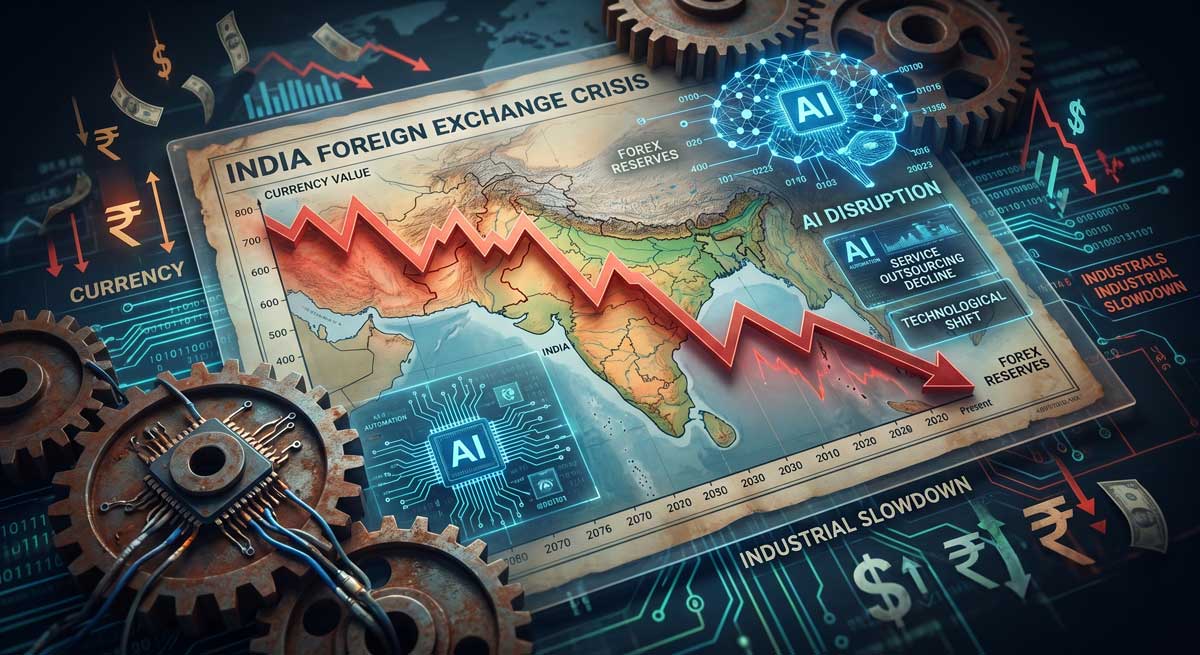
I have been closely monitoring global macroeconomic trends for years, and the recent trajectory of South Asian currency markets has caught my immediate attention. The severe depreciation pressures currently at play signal what I recognize as an impending India foreign exchange crisis.
While headline GDP figures continue to project robust growth, analyzing this output in USD terms reveals a starkly different reality. To protect the domestic currency, massive market interventions and dollar sell-offs have been deployed. However, I believe these measures merely slow down an inevitable correction. The structural economic model relies on external revenues to subsidize domestic consumption, and right now, the foundation of that model is fracturing.
In this analysis, I will break down why surface-level reserve figures are misleading and explore the collapse of the three critical pillars holding up this economic framework.
Table of Contents
The Illusion of Robust Reserves
On paper, holding hundreds of billions in foreign reserves appears incredibly secure. However, when I look closely at the asset composition, the safety net is far more fragile than it seems.
A substantial portion of this wealth is tied up in physical gold. While gold appreciates in a volatile market, its liquidity is exceptionally poor compared to the US dollar. During an acute currency event, I know that liquidating physical gold—which requires complex transportation, verification, and international clearing—is too slow to immediately stabilize an economy.
Furthermore, the largest segment of these reserves consists of foreign portfolio investments. This is “hot money” chasing high domestic interest rates. It is not sovereign wealth. As soon as global monetary tightening occurs or domestic regulatory friction increases, this capital vanishes. I have observed record-breaking foreign capital outflows recently, validating my concern that these funds will flee at the first sign of systemic risk.

Table 1: Reserve Composition Breakdown
| Asset Class | Apparent Value | Liquidity/Utility in Crisis | True Sovereignty |
| Physical Gold | High (Due to market rallies) | Extremely Low | High |
| Hot Money (FCA) | High (Inflates total reserves) | High | Low (Can be withdrawn instantly) |
| Liquid USD Cash | Low (Relative to total debt) | Immediate | High |
The Trade Deficit Trap: Energy and Gold
I constantly emphasize that true economic independence requires energy security and productive capital investment. Currently, the domestic economy is a massive net importer, suffering a trade deficit that bleeds billions of dollars monthly.
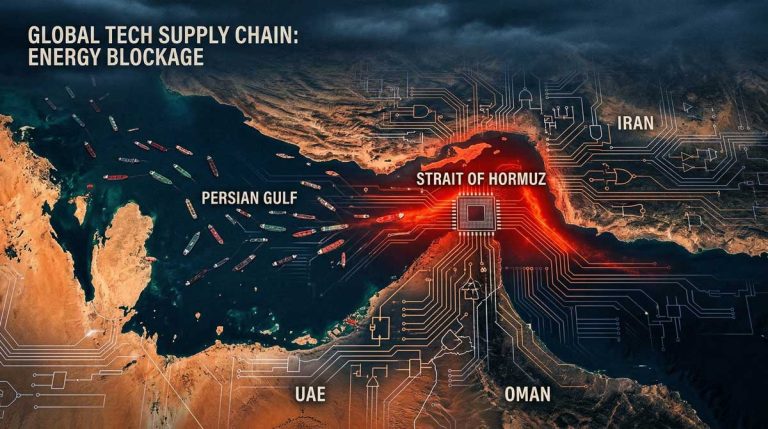
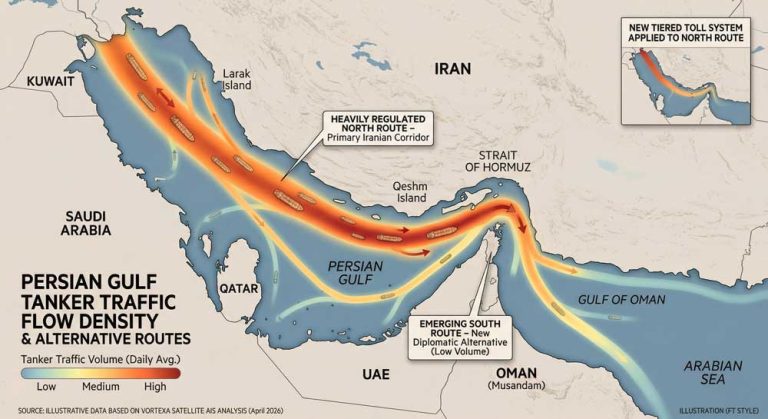
The reliance on imported oil is a glaring vulnerability. Without a substantial strategic petroleum reserve—often holding only enough for a few days of national consumption—any geopolitical shock in the Middle East instantly inflates domestic fuel and fertilizer costs.
Simultaneously, the cultural appetite for gold imports drains foreign currency. Importing advanced machinery creates domestic jobs and future export potential. Importing gold, however, locks capital away in household safes. It becomes dead capital that provides zero economic multiplier effect, steadily worsening the India foreign exchange crisis by draining hard-earned dollars.
Pillar 1: The Manufacturing and Supply Chain Bottleneck
There is a widespread narrative that a massive demographic dividend will automatically translate into a new global manufacturing hub. I fundamentally disagree with this assumption.
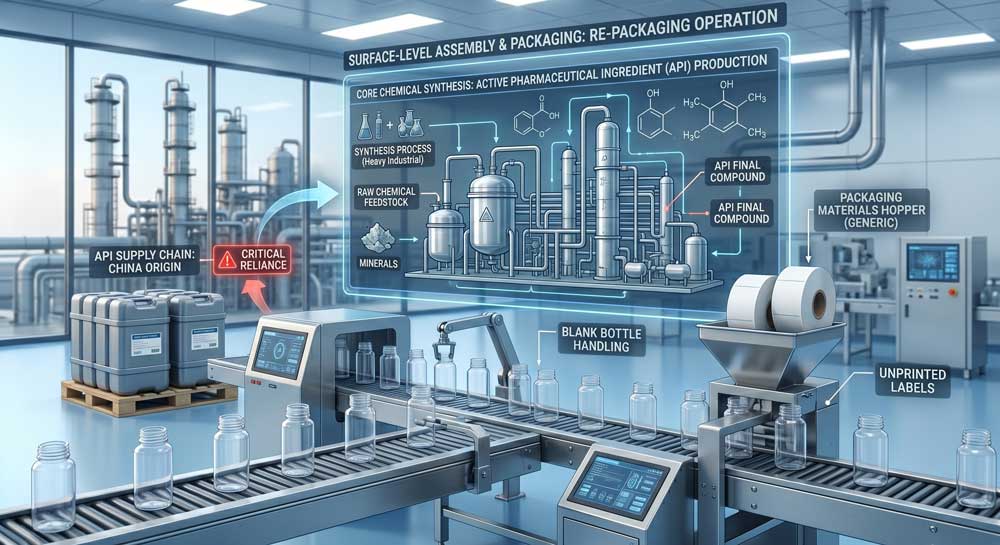
Take the pharmaceutical sector, for instance. It is frequently marketed as a global powerhouse. Yet, when I analyze the supply chain, it functions more like a massive packaging operation. A staggering majority of Active Pharmaceutical Ingredients (APIs) are imported directly from foreign chemical processing plants.
Building a true heavy chemical and industrial base requires uninterrupted power grids, massive water resources, and stringent environmental waste management. You cannot leapfrog heavy industrialization through subsidies alone.
Without owning the core production technology and raw materials, domestic manufacturing margins remain razor-thin. It is impossible to generate robust foreign exchange surpluses when you are merely assembling imported components. For deeper insights into these transitions, you can read my detailed guide on global supply chain shifts.
Pillar 2: The Decline of Remittances
For decades, foreign remittances have acted as a vital shock absorber. Millions of overseas migrant workers, particularly in the Gulf states, send massive amounts of cash back home annually. This money is pure foreign exchange inflow with zero import cost attached.
However, I see this critical pillar weakening rapidly. Geopolitical realignments and changing economic strategies in the Middle East are shifting labor demands. We are witnessing large-scale repatriations of migrant workers.
When these laborers return, not only does the domestic economy face a sudden surge in unemployment, but the crucial pipeline of foreign currency is permanently severed.
Table 2: Shifting Remittance Dynamics
| Factor | Historical Context | Current Reality |
| Labor Demand | High demand for infrastructure/construction | Transitioning to domestic workforce/automation |
| Geopolitical Trust | Stable and reliant | Increasing friction and labor quotas |
| Forex Impact | Consistent, reliable surplus | Projected double-digit declines |
Pillar 3: AI’s Disruption of IT Outsourcing
This is perhaps the most critical structural shift I am tracking. The IT outsourcing industry has historically generated a massive percentage of the nation’s foreign exchange. The business model was simple but effective: labor arbitrage. Global tech giants outsourced basic coding, software testing, and customer service to massive pools of low-cost, English-speaking graduates.
I firmly believe that generative AI is entirely dismantling this model.
Today, automated coding agents and AI architectures can generate, test, and deploy software in a matter of days—tasks that previously required dozens of offshore developers working for months. The cost savings of AI make offshore labor arbitrage obsolete. Tech companies in Silicon Valley are already aggressively downsizing their external contracts.

Table 3: The AI Threat to Outsourced IT
| IT Function | Traditional Outsourcing Model | The Generative AI Reality |
| Code Generation | Requires large teams of junior developers | AI agents auto-generate boilerplate code instantly |
| System Testing | Manual QA testing over weeks | Automated AI debugging in real-time |
| Customer Support | Massive offshore call centers | High-fidelity AI voice/text conversational agents |
If this industry continues to contract at its current pace, the resulting foreign exchange vacuum will be catastrophic. You cannot replace the loss of hundreds of billions in tech revenue overnight.
A Precarious Economic Future
My analysis concludes that bypassing foundational agricultural and industrial reforms to rely solely on service outsourcing and hot money is a highly dangerous macroeconomic strategy. The India foreign exchange crisis is not a temporary blip caused by a bad quarter; it is the mathematical result of an unbalanced economic model.
A true economic superpower is built on heavy industry, technological sovereignty, and a highly skilled, internally productive workforce. Until these foundational issues are addressed, the vulnerability to external shocks, capital flight, and technological disruption will only accelerate.
🔗 Reference URLs
- CEIC Data — Detailed historical and current data on India’s foreign exchange reserves composition and liquidity
- Press Information Bureau — Official government data outlining India’s 70%+ dependence on China for critical Active Pharmaceutical Ingredients
- The Economic Times — Crisil report detailing how rising oil imports are pushing India’s trade deficit into risky territory
- Trak.in — Analysis of the NSE IT Index decline and how generative AI is threatening India’s traditional IT outsourcing model
- NITI Aayog — Comprehensive Trade Watch report analyzing India’s merchandise and services trade imbalances
- ElevenLab — 5 Shocking Truths: How Chinese FDI in India Is Being Used to Kill Chinese Imports
- ElevenLab — 1 Ultimate Key to the Middle East Endgame: The Strait of Hormuz Toll Explained
- ElevenLab — Middle East Ground Invasion Strategy: 7 Crucial Tactics & Shocking Deceptions Behind the Iran Ceasefire