Strait of Hormuz Semiconductor Crisis: 5 Devastating Threats to the Global Tech Supply Chain
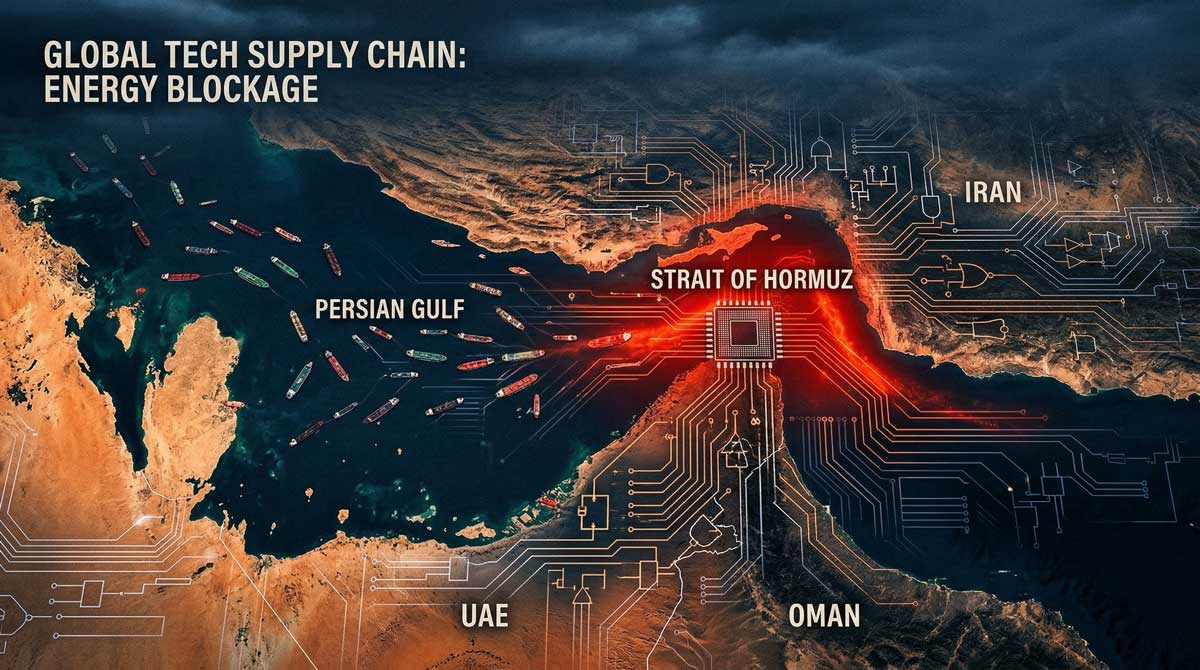
The Strait of Hormuz semiconductor crisis is no longer a hypothetical risk scenario — it is unfolding right now. What started as a geopolitical energy disruption in the Middle East in late February 2026 has rapidly escalated into the most significant structural threat to the global technology supply chain in years.
As tanker traffic through the Strait of Hormuz collapsed and QatarEnergy declared force majeure on its LNG deliveries, the world’s most advanced chip manufacturing hubs — South Korea and Taiwan — found themselves staring down a dual energy and materials crisis. For investors, supply chain managers, and anyone who uses a smartphone, AI tool, or data center service, this crisis demands urgent attention.
Table of Contents
Why the Strait of Hormuz Controls Your Smartphone
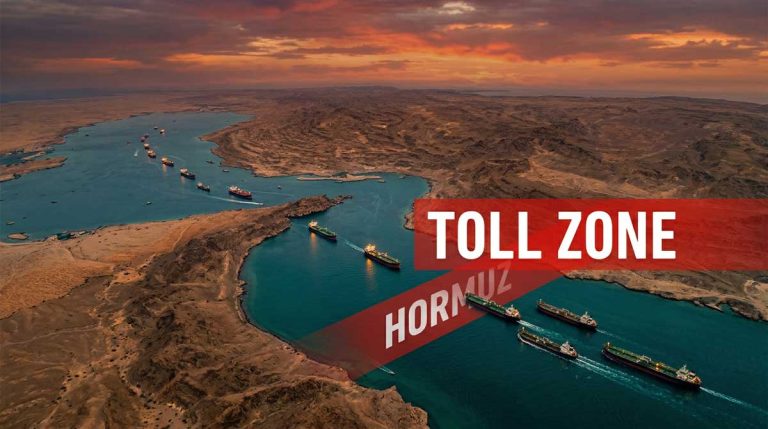
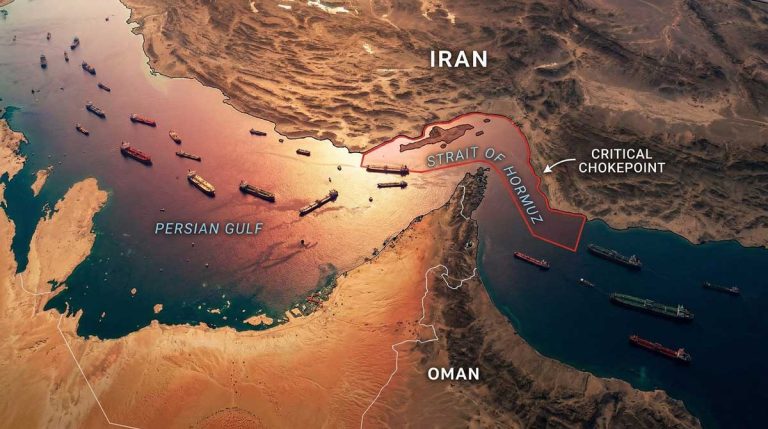
At only 33 kilometers wide at its narrowest point, the Strait of Hormuz is the single most important energy chokepoint on Earth. It normally carries roughly 20% of global crude oil and 20% of global LNG exports. When U.S. and Israeli strikes on Iran triggered the 2026 crisis, commercial shipping ground to a near halt almost overnight.
According to S&P Global Platts, crude tanker transits fell to just four vessels on March 1 — versus a daily average of 24 since January. Around 200 internationally compliant tankers, including nearly 8% of the global VLCC fleet, became stranded inside the Persian Gulf. Major oil and gas companies, including BP and Shell, suspended all Hormuz transits.
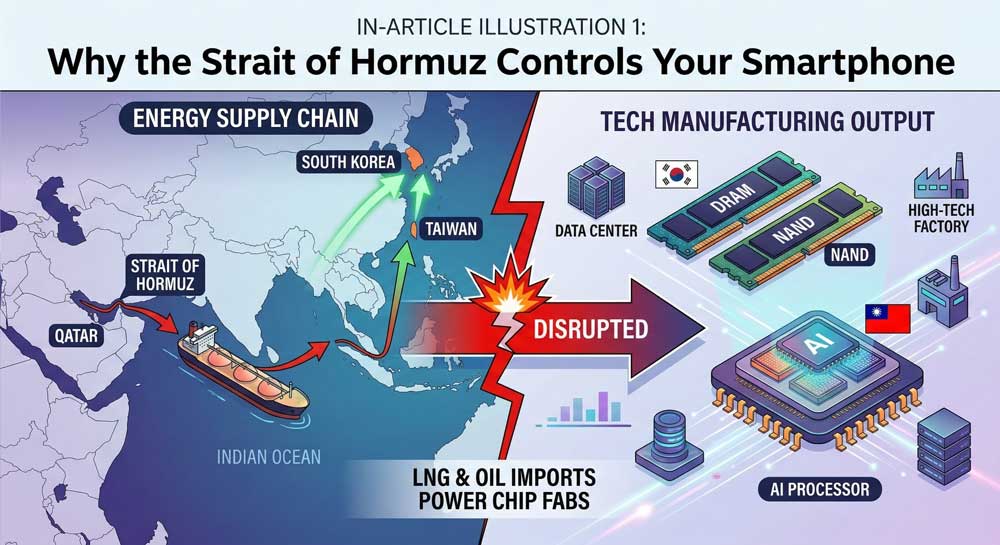
The disruption then ignited a second catastrophe: on March 4, 2026, QatarEnergy — the world’s single largest LNG producer, supplying roughly one-fifth of all global LNG — formally declared force majeure on contractual deliveries after Iranian drone strikes on the Ras Laffan complex. European gas benchmark futures surged 52% in a single session, matching the scale of the 2022 Russia-Ukraine energy shock.
The Hidden Energy Backbone of Global Tech
Here is the fact that most tech coverage ignores: the industries that appear most “digital” — AI, cloud computing, advanced chip fabrication — are physically the most energy-intensive manufacturing processes ever devised by humans.
TSMC alone currently consumes roughly 9% of Taiwan’s total electricity, a share projected to reach 24% by 2030 as it scales 2nm and next-generation chip production. Each new wafer fab being built in Taiwan requires approximately 200MW of continuous power to operate. Samsung’s fabs consume over 19 TWh per year, and SK Hynix is not far behind.
Both South Korea and Taiwan depend heavily on imported LNG to keep their power grids and fabs running — and the vast majority of that LNG originates in Qatar and the UAE, meaning it transits the Strait of Hormuz.
Chip Hub Energy Vulnerability at a Glance
5 Devastating Threats from the Strait of Hormuz Semiconductor Crisis
1. LNG Supply Collapse and the Power Grid Threat
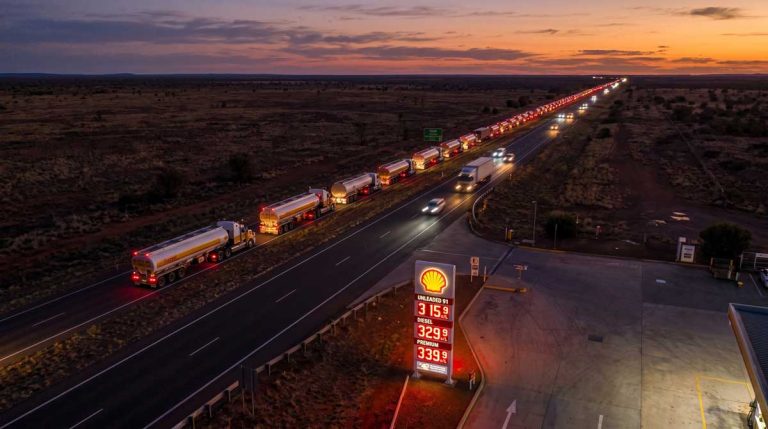
With QatarEnergy offline and Hormuz shipping near-frozen, Asia faces an LNG supply gap with virtually no short-term substitute. Alternative sources — U.S. and Australian LNG — require months of rerouting and are already trading at steep spot market premiums. Taiwan has activated emergency procurement protocols and is pursuing co-buying with South Korea and Japan, but reserve buffers are dangerously thin.
Chipmaking fabs cannot tolerate power instability. Even a brief voltage fluctuation can destroy millions of dollars worth of silicon wafers mid-process. If power grids are forced to implement rolling reductions, production line shutdowns — not merely slower output — become the risk.
2. The Helium Supply Shock Nobody Is Talking About
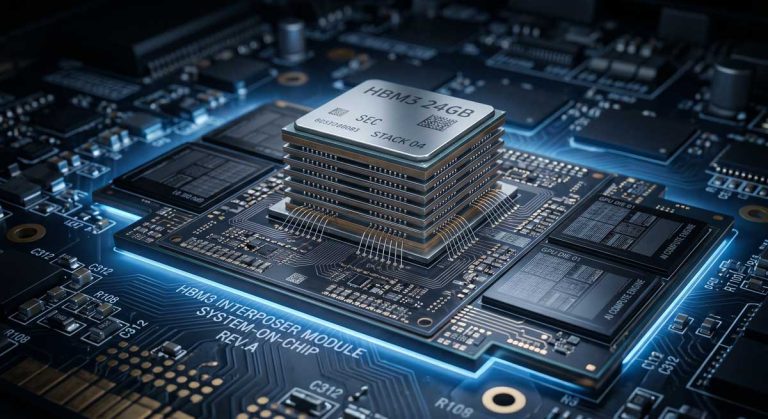
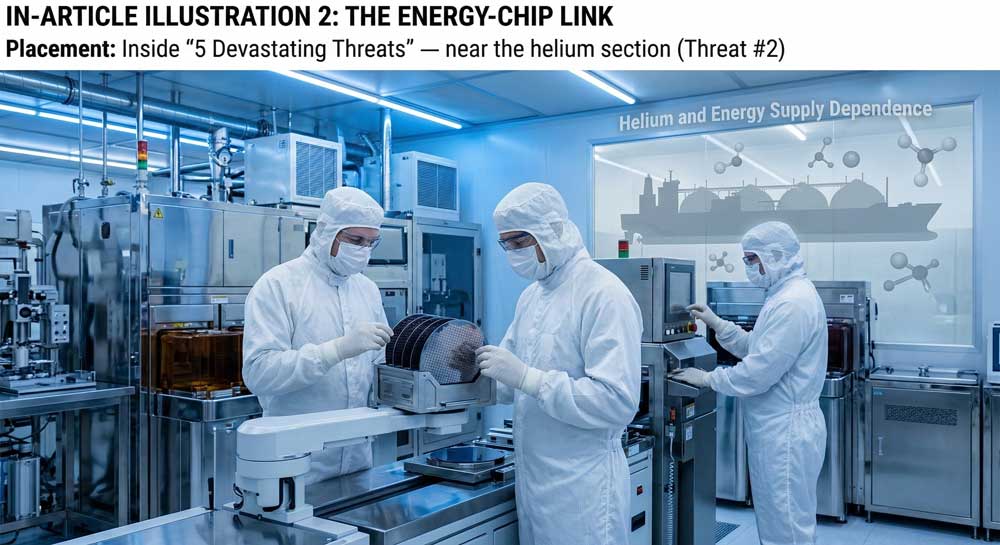
Beyond electricity, the Strait of Hormuz semiconductor crisis has exposed a second, less-visible supply chain fracture: helium. Helium is essential for cooling during semiconductor fabrication and has no viable substitute.
South Korea’s government warned that Qatar was responsible for a significant portion of its helium imports, and South Korea’s industry ministry identified 14 critical chip supply chain materials sourced from the Middle East, including bromine and chip inspection equipment. While SK Hynix stated it has sufficient inventory buffers, a prolonged crisis would exhaust those reserves.
3. Market Meltdown: Chips Lead the Selloff
Financial markets have delivered a blunt verdict. South Korea’s KOSPI index suffered one of its largest single-day drops on record, with Samsung Electronics and SK Hynix — which together account for roughly 40% of index weighting — leading the selloff. Taiwan’s weighted index fell sharply, with TSMC alone comprising approximately 45% of that benchmark.
Companies Most Exposed to the Strait of Hormuz Semiconductor Crisis
| Sector | Key Players | Primary Risk |
|---|---|---|
| Logic Foundries | TSMC, UMC | Grid instability → wafer loss, fab shutdown |
| Memory | Samsung Electronics, SK Hynix | Energy cost surge → margin compression |
| Chip Materials | Shin-Etsu, SK Materials | Helium, bromine, specialty gas shortages |
| AI Hardware | NVIDIA, AMD | Fab output delays → GPU delivery backlogs |
| Consumer Electronics | Apple, Sony, Dell | Component shortages → launch delays |
| Cloud & Data Centers | Microsoft, Google, AWS | Hardware procurement delays → capex overruns |
4. The AI Infrastructure Stall
NVIDIA and AMD design the world’s most powerful AI chips, but they manufacture nothing themselves — their entire output depends on TSMC and Samsung foundry capacity. If Asian fabs are forced to throttle production due to power constraints, the downstream effect is immediate: GPU delivery backlogs, AI server shortages, and delayed data center buildouts for hyperscalers like Microsoft, Google, and Amazon.
South Korea’s chip industry further warned that a prolonged conflict could deter big tech investments in Middle Eastern AI data centers — adding a demand-side headwind on top of the supply-side crisis.
5. The Structural Policy Failure That Made This Crisis Possible
The Strait of Hormuz semiconductor crisis is not purely an act of geopolitical bad luck. It is the foreseeable result of years of underinvestment in energy resilience by the world’s most critical chip manufacturing economies.
- Taiwan phased out nuclear power and restricted large-scale solar development, increasing rather than reducing reliance on imported LNG. TSMC’s power consumption per wafer already jumped 46% between 2016 and 2023 as chip complexity escalated.
- South Korea has faced persistent regulatory, siting, and permitting bottlenecks that slowed wind and solar expansion to a crawl.
- Meanwhile, Europe accelerated its energy transition after the 2022 Russia shock, and the United States expanded domestic production — giving both far greater insulation from Middle Eastern supply disruptions.
The result: the world’s most advanced fabs remain tethered to a 33-kilometer-wide waterway running through one of the most volatile regions on Earth.
How Long Can Asia Hold Out?
The critical question has shifted from “will the strait fully close?” to “how long can this low-flow, high-risk transit state persist?” Asia can absorb a short disruption through spot purchases and inventory drawdowns. A prolonged disruption is a different story entirely.
| Crisis Duration | Likely Semiconductor Impact |
|---|---|
| < 4 weeks | Manageable — spot LNG markets and reserves absorb shock |
| 1–3 months | Power cost pressure builds; fab efficiency drops; some output reduction likely |
| > 3 months | Grid instability risk; production line disruptions; AI hardware shortages cascade globally |
Taiwan has activated emergency energy protocols and is exploring a trilateral LNG co-procurement arrangement with South Korea and Japan. QatarEnergy itself indicated a restart could take at least a month, and achieving full operational capacity requires a further two weeks after restart.
The Bigger Picture: The AI Boom Runs on Gas Tankers
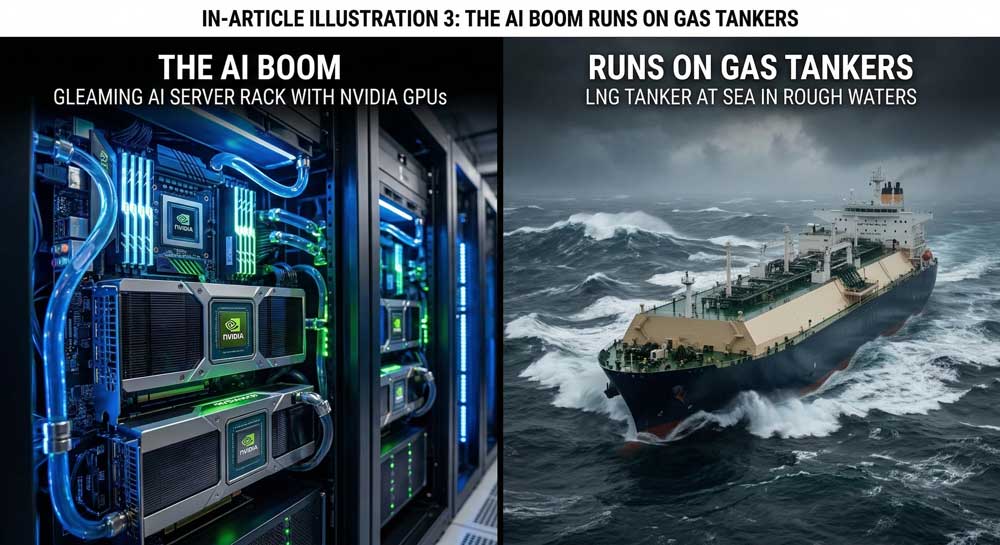
The deepest lesson of the Strait of Hormuz semiconductor crisis is not about this specific conflict. It is about the false assumption that modern technology industries have somehow transcended physical infrastructure.
They have not. TSMC’s most advanced 3nm chips are fabricated using EUV lithography machines that each consume up to 1.4MW of power per tool. Samsung’s global memory output requires continuous electricity at a scale that rivals small nations. All of it still depends, at the foundation, on LNG tankers passing through a narrow passage in the Persian Gulf.
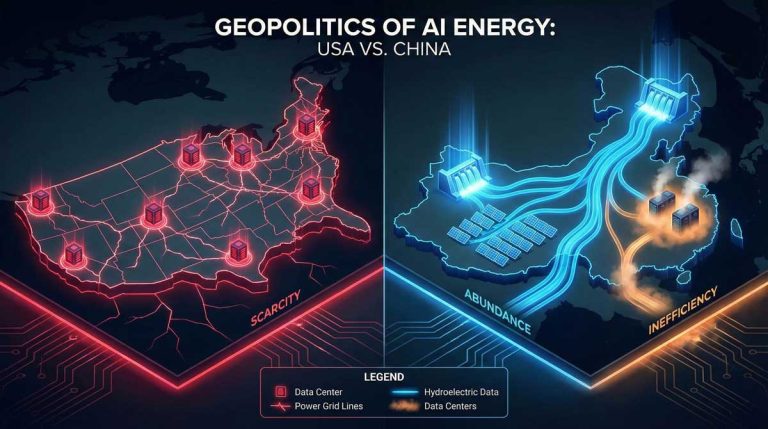
Until South Korea and Taiwan undertake serious, structurally sufficient transitions to diverse, domestically generated power — including nuclear, offshore wind, and utility-scale solar — the global AI and semiconductor boom will remain acutely vulnerable to exactly this kind of shock.
Authoritative Sources & Further Reading
- Reuters — QatarEnergy declares force majeure on LNG shipments
- Reuters — Asia scrambles for LNG as Qatar halts output due to Iran war
- Energy Intelligence — Qatar Declares Force Majeure on LNG Supplies in Historic Move
- Lloyd’s List — Around 200 compliant tankers stranded as Strait of Hormuz closure freezes Gulf traffic
- S&P Global — South Korea sees no LNG shortages despite Middle East supply disruptions
- Data Center Dynamics — TSMC could account for 24% of Taiwan’s electricity consumption by 2030
- Goldsea / Reuters — Loss of Helium from Qatar Can Hurt Chip Production, Warns South Korea
- CSIS — No One, Not Even Beijing, Is Getting Through the Strait of Hormuz
- SDxCentral — War in the Middle East Threatens Chip Supply Chain’s Access to Helium
- World Oil — Qatar shuts Ras Laffan LNG plant after Iranian drone strike
- ElevenLab — Chinese AI Models: 7 Powerful Ways They’re Dominating the Global Developer Market in 2026
- ElevenLab — 7 Harsh Realities of AI Job Displacement: Why 4,000+ Tech Layoffs Are Just the Beginning
- ElevenLab — Iran Economic Crisis: 5 Devastating Ways Inflation Is Crushing Families in 2026
- ElevenLab — Iran Oil Crisis Impact: 5 Proven Reasons It Won’t Trigger a 1970s-Style Disaster