Iran Economic Crisis: 5 Devastating Ways Inflation Is Crushing Families in 2026
The Iran economic crisis has reached an unprecedented tipping point. Millions of ordinary citizens are being forced to fundamentally alter how they survive — liquidating assets to pay rent, abandoning red meat, and watching decades of savings evaporate in real terms. What began as protests over the cost of living has evolved into a nationwide struggle against a failing economic system, compounded by currency collapse, geopolitical paralysis, and crumbling infrastructure.
Here is a closer look at how the Iran economic crisis is reshaping daily life in 2026.
Table of Contents
1. Two Decades of Declining Living Standards Fuel the Iran Economic Crisis
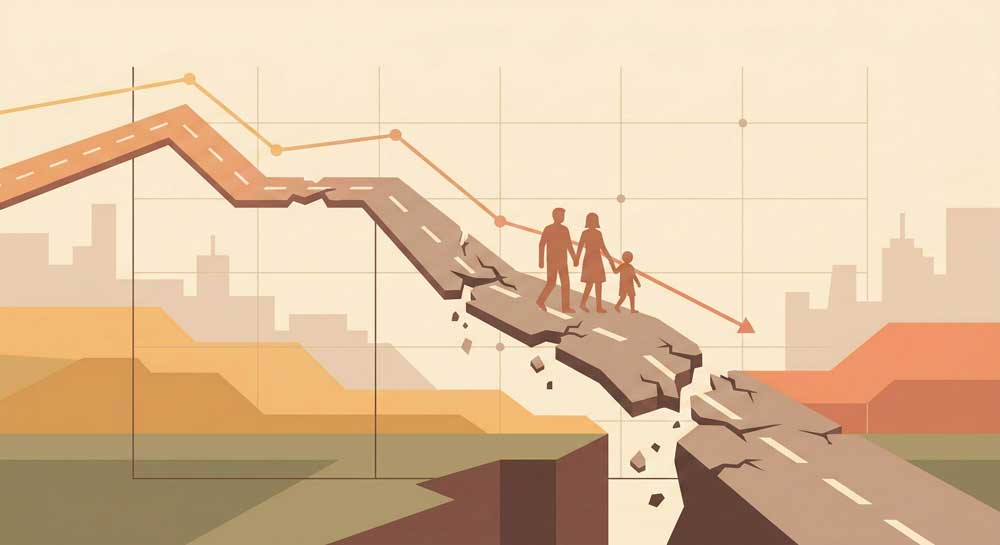
The Iran economic crisis is not a sudden shock — it is the culmination of two decades of structural deterioration. Analysis of official data shows that average household real purchasing power has fallen 25% in urban areas and nearly 50% in rural regions over the past 20 years.
Living standards improved through the late 1990s and mid-2000s, but reversed sharply as nuclear-related sanctions took hold. Iran has since been trapped in a stagflation cycle: hyperinflation, stagnant employment, and near-zero real GDP growth. The events of the past 12 months have dramatically accelerated this decline.
| Indicator | 2016 | 2020 | 2025/26 |
|---|---|---|---|
| Family food basket cost (indexed) | 1x | 4x | 30x |
| Annual food price inflation | — | — | ~100% |
| Urban household real spending (vs. 20 yrs ago) | -5% | -15% | -25% |
| Rural household real spending (vs. 20 yrs ago) | -20% | -35% | ~-50% |
| Open market USD/IRR (approx.) | ~33,000 | ~250,000 | ~700,000+ |
Source: BBC Persian analysis of Central Bank of Iran official data.
2. Digital Blackouts Devastate the Iran Economic Crisis’s Hidden Economy
For hundreds of thousands of Iranian women, Instagram and other social platforms were a critical economic lifeline. Government-imposed internet blackouts to suppress protests instantly severed these income streams — and recovery has been slow and incomplete.
Marjan, an artisan from Isfahan who has sold handmade crafts online for six years, describes the collapse: “Before the blackout, our monthly sales were around 300 million rials [~$185]. Now it’s not even 30 million [~$18.50].”
She and her husband are now considering selling their car to cover loans and rent. With nearly every sector of the economy struggling, finding a viable alternative is almost impossible.
| Metric | Before Blackout | After Blackout |
|---|---|---|
| Monthly sales (example seller) | 300M rials (~$185) | Under 30M rials (~$18.50) |
| Platform availability | Full access | Severely restricted |
| Consumer confidence | Stable | Collapsed |
This dimension of the Iran economic crisis is often overlooked: political repression directly translates into household income destruction.
3. Hyperinflation: The Iran Economic Crisis at the Dinner Table
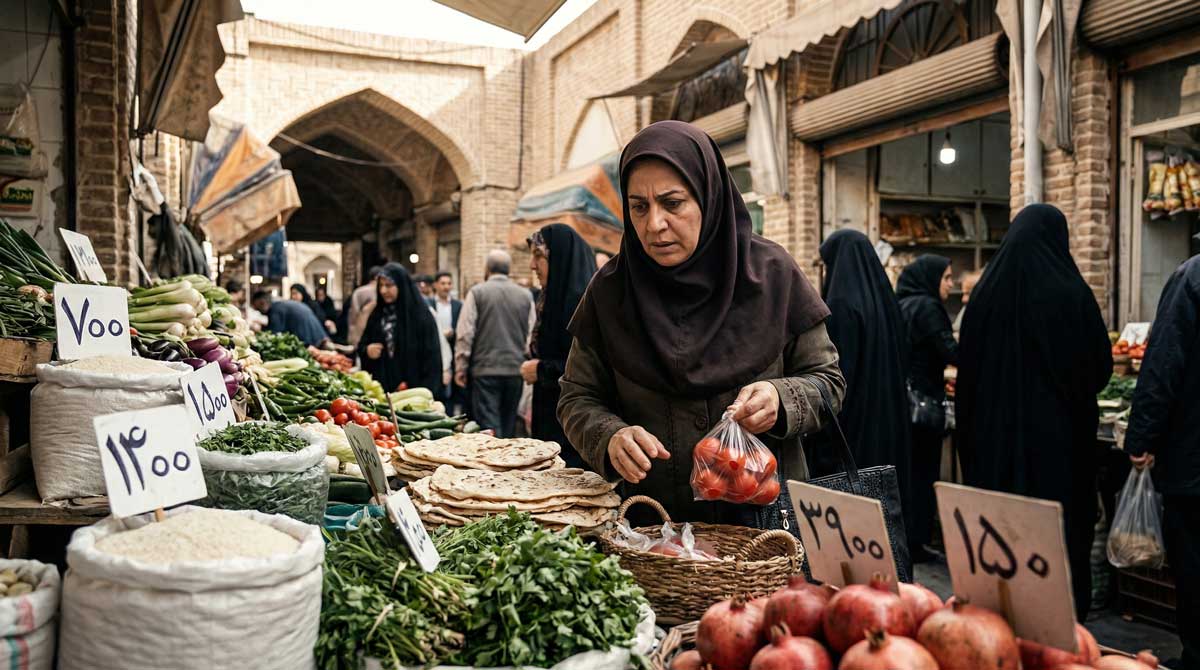
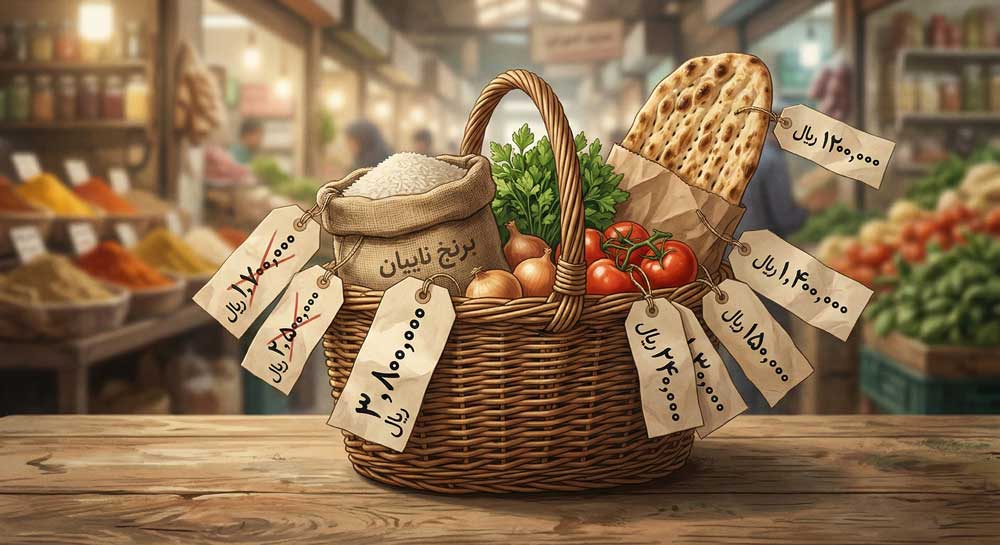
High inflation is the most visible face of the Iran economic crisis. Official data shows essential goods prices surged an average of 60% in the past 12 months, with food prices doubling. The average family food basket now costs 8 times more than five years ago and over 30 times more than in 2016.
Red meat has effectively disappeared from many Iranian households, replaced by chicken, cheese, and legumes. Central Bank of Iran data confirms that annual per-household beef and lamb consumption has fallen from 64 kg in 2004/05 to just 32 kg in 2024/25 — a 50% drop in two decades.
Table: Essential Goods Price Inflation (12-Month Snapshot)
| Item | Previous Price | Current Price | Change |
|---|---|---|---|
| Beef (per kg) | 7M rials (~$5.33) | 19M rials (~$14.46) | +171% |
| Iranian rice (per kg) | 1.7M rials (~$1.29) | 3.8M rials (~$2.89) | +124% |
| Fast food burger | 5M rials (~$3.81) | 12M rials (~$9.13) | +140% |
USD equivalents are approximate, based on volatile open-market exchange rates.
Mina, a 44-year-old Tehran mother of two, captures the absurdity: “In 2017, a full trip to Europe cost 200 million rials. Yesterday I checked a domestic flight for our family of four — just the tickets were 800 million.”
4. Currency Collapse: The Core Driver of the Iran Economic Crisis
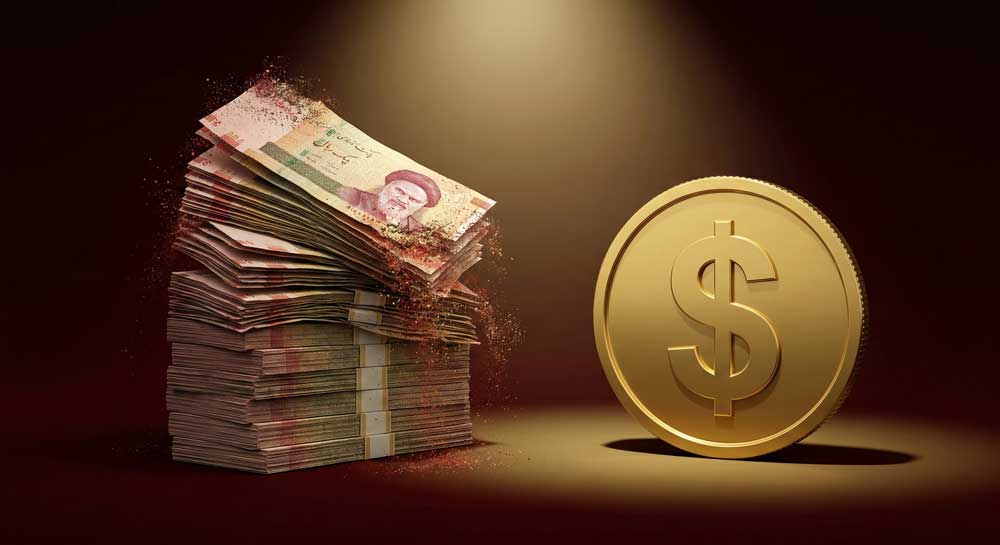
A structural root of the Iran economic crisis is the rial’s catastrophic devaluation. Since May 2018, when the Trump administration withdrew from the JCPOA and reimposed broad sanctions, the Iranian rial has lost over 95% of its value against the US dollar on the open market.
Anyone on a fixed income has experienced a slow-motion financial erasure. Sima, a recently retired senior civil servant, illustrates this precisely:
Table: Middle-Class Purchasing Power Erosion
| Year | Monthly Income (Nominal) | USD Equivalent | Lifestyle Reality |
|---|---|---|---|
| 2015 | 50M rials | ~$1,500 | Imported cars, frequent travel |
| 2020 | 130M rials | ~$520 | Significant budget tightening |
| 2025/26 | 300M rials (pension) | <$200 | Struggling to afford used vehicles |
“Ten years ago I could easily buy a new imported car,” Sima says. “Now I struggle just to upgrade to a slightly better used one.”
Amir, a 29-year-old English teacher from Karaj, puts it simply: “Inflation has basically become a monthly part of our lives. Prices go up at least 10% every month. These numbers are impossible to comprehend.”
5. Geopolitical Paralysis: Why the Iran Economic Crisis Has No Clear Exit
The Iran economic crisis cannot be separated from its geopolitical context. Since the 12-day Iran-Israel war in June 2025 — during which US airstrikes struck key Iranian nuclear facilities — the economy has been in suspended animation.
Farshid Shokrekhodaei, head of investment and financing at the Iran Chamber of Commerce, confirmed to Ilna news agency that “capital is flowing into foreign exchange and gold” rather than productive industries. No investor wants to expand. No business is creating jobs.
Compounding pressures include:
- Renewed US-Iran nuclear negotiations resumed February 2026, with military threats conditioning the talks
- Ongoing comprehensive sanctions blocking access to global financial systems and export markets
- Infrastructure collapse: factories face multi-week natural gas cutoffs every winter; cities endure rolling electricity and water blackouts in summer
- Capital flight: high-net-worth Iranians converting savings to hard assets or emigrating
Supreme Leader Ali Khamenei has described the US-Iran dynamic as a state of “neither war nor peace” — a strategic ambiguity that has proven deeply corrosive to economic confidence and business planning.
Parham, a 26-year-old from Tehran, reflects a widely held view: “Since people are only getting poorer, we are going to see a new wave of social unrest. This cannot go on much longer — for us or for the Americans.”
Sources & Further Reading
- World Bank — Iran Poverty Diagnostic & Lost Decade of Economic Growth (PDF)
- World Bank — Iran Economic Monitor: Poverty and Inequality Trends (PDF)
- IMF — Iran Staff Concluding Statement 2023
- Atlantic Council — Iran’s Economy Under Maximum Pressure
- Al Jazeera — Iran’s Economic Woes Driving the Protest Movement
- Radio Farda — Iran Inflation and Household Spending
- Trump Tariffs European Inflation: 5 Shocking Ways US Trade Barriers Are Crushing Eurozone Prices
- Alarming Pattern: Gold Price Crash in January Revealed (3 Historical Lessons)
- Blackstone AI Investment Australia: $15 Billion Bet on Infrastructure vs. Reality of Productivity Crisis
- Big Tech AI Spending Reaches $670B in 2026: Infrastructure Giants vs. Apple’s Strategic Pivot