Hormuz Strait Oil Disruption: 7 Critical Impacts Reshaping the 2026 Global Energy Market
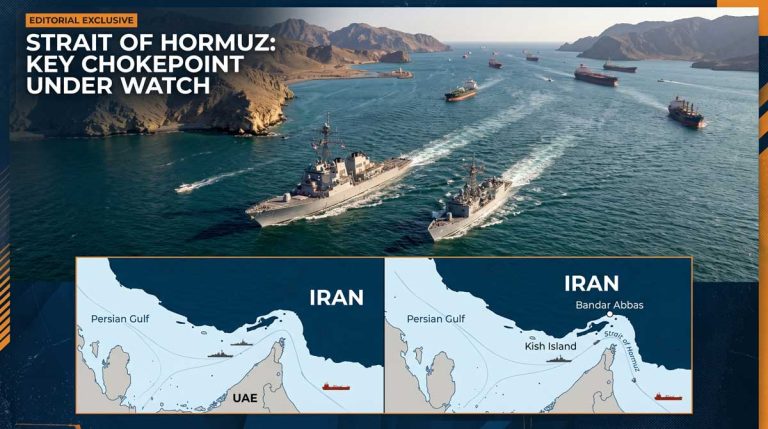
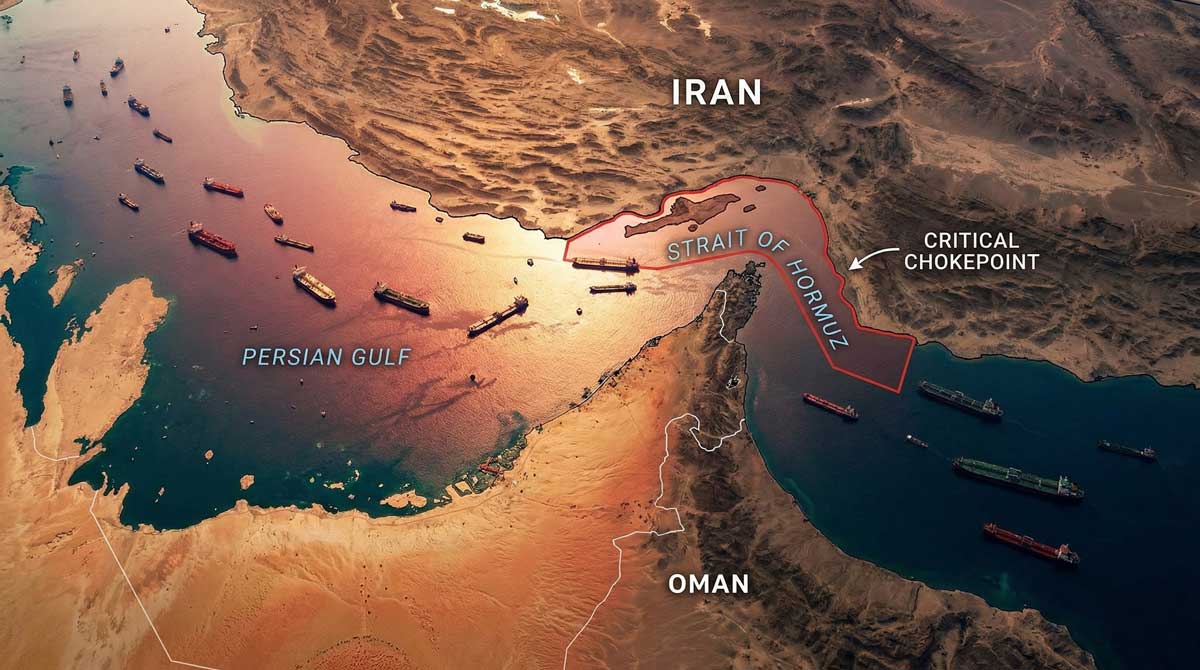
The Hormuz Strait oil disruption of 2026 has rapidl escalated from a regional military standoff into the most severe energy supply crisis since the 1970s oil shocks — and the worst may still be ahead. With Iran effectively blockading a chokepoint that handles roughly 20% of the world’s seaborne oil and LNG, global markets are lurching between panic and disbelief.
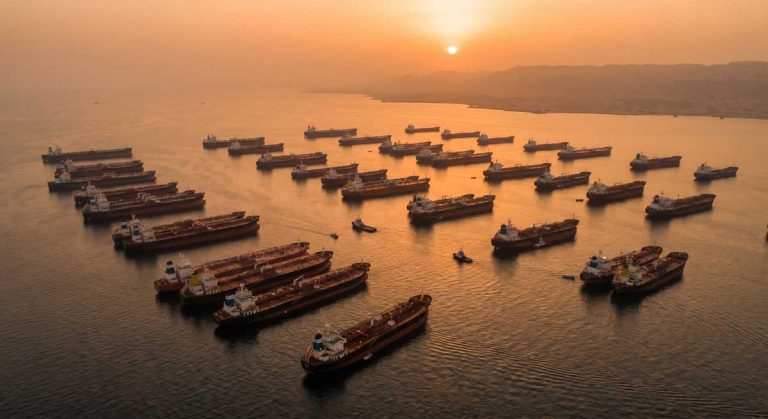
Ship traffic through the Strait has collapsed by over 80% according to maritime intelligence firm Windward, with more than 1,000 vessels anchored indefinitely in or around the Persian Gulf. Here is what you need to know — and what the markets are still pricing in wrong.
Table of Contents
Why the Hormuz Strait Oil Disruption Is Different This Time
Previous Hormuz “crises” were largely threat-based, but this disruption is kinetic and ongoing. Iran’s Revolutionary Guards have broadcast official warnings that “no vessel is permitted to pass,” and multiple tankers have been struck by missiles and drones since late February. The result is not a paper blockade — it is a functional one.
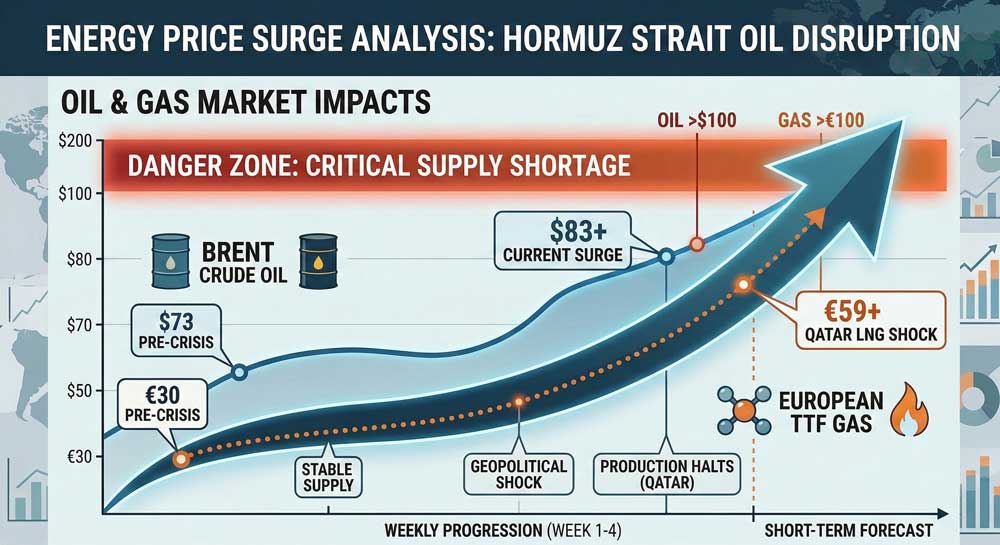
Wood Mackenzie analysts confirmed that the closure threatens 15% of global oil supply and 20% of global LNG supply simultaneously, a double shock with no modern precedent. CNBC’s energy desk described the potential worst case as a “1970s-style energy shock,” with Brent crude already surging more than 14% in a single week to $83.39/barrel by early March.
1. The Insurance Collapse That Overrides Political Promises
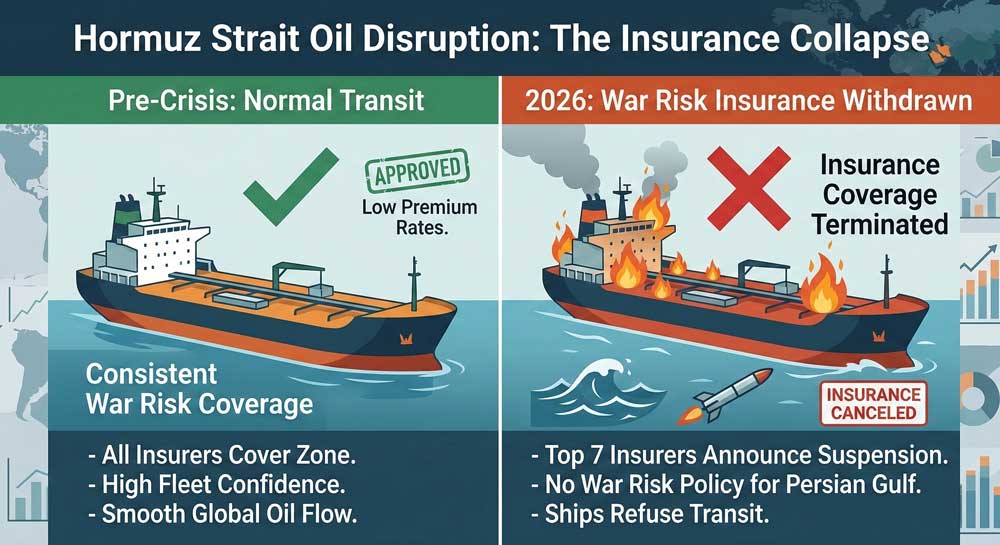
The single most important reason the Hormuz Strait oil disruption is not resolving quickly is not military — it is financial. The world’s 7 largest maritime war-risk insurance groups suspended Persian Gulf coverage within days of the crisis erupting, making it legally and commercially impossible for most fleet operators to transit the Strait regardless of political assurances.
U.S. leadership responded with two headline measures: underwriting war-risk insurance through the U.S. International Development Finance Corporation, and pledging U.S. Navy escorts for tankers. Markets gave these announcements a brief credit — Brent crude pulled back from a 10% spike to roughly 5% — before reasserting the upward trend. The critical insight is that no carrier group was visibly deployed, and private insurers, whose decisions ship crews actually act on, remained withdrawn.
This dynamic mirrors the 1987 “Tanker War,” when the Reagan administration reflagged Kuwaiti vessels under U.S. protection — a process that took weeks to operationalize even under far less hostile conditions.
2. The Fed’s Rate Cut Dream vs. an Energy Inflation Nightmare
The Hormuz Strait oil disruption has created a direct collision between the White House’s monetary policy ambitions and macroeconomic reality. With the U.S. Federal Reserve already under pressure to cut rates ahead of a scheduled May leadership transition, surging energy prices threaten to force the opposite outcome.
Current Fed signals are unambiguous: “If inflation remains persistently above target, rate hikes may be necessary” — a direct rebuke of the administration’s easing agenda. For Trump’s base, the political arithmetic is stark: rising fuel and heating costs erode household purchasing power fastest among lower-income Americans, threatening support ahead of November midterm elections. Keeping oil prices down is therefore not just economic policy — it is electoral survival strategy.
3. Iraq’s Storage Crisis: The First Forced Production Cuts
Iraq is the clearest example of how quickly a shipping blockade translates into production collapse. With onshore storage tanks overflowing and no empty tankers available for loading, Iraq has been forced to slash output at its largest fields:news.
| Oil Field | Production Cut (barrels/day) | Status |
|---|---|---|
| Rumaila | ~700,000 | Cutting |
| West Qurna 2 | ~450,000 | Cutting |
| Maysan Fields | ~350,000 | Cutting |
| Kirkuk | Significant additional | Under review |
| Total current | ~1.2M+ bbl/day | Active |
Iraqi officials warn that cuts could escalate beyond 3 million barrels per day — roughly two-thirds of total national output — if the blockade is not lifted within days. More alarmingly, analysts estimate that all seven major Persian Gulf producers collectively have only ~25 days of storage capacity before they face the same forced shutdown calculus. At that point, $100/barrel oil transitions from a tail risk to a baseline scenario, as confirmed by Wood Mackenzie and Wall Street strategists at CNBC.
4. The Qatar LNG Shock: A Second Crisis Stacked on the First
Just as the shipping freeze took hold, Iran-attributed drone strikes hit Qatar’s Ras Laffan and Mesaieed industrial complexes — the backbone of global LNG supply. QatarEnergy, responsible for roughly 20% of all global LNG exports, declared force majeure and suspended production.
European benchmark TTF gas prices surged by more than 70–85% in days, hitting multi-year highs above €50–59/MWh. The critical threshold to watch: if Qatar’s outage extends to “several months,” analysts project TTF could reach €100/MWh — revisiting the catastrophic 2022 European energy crisis peak.
| Energy Benchmark | Pre-Crisis Level | Current Spike | Worst-Case Projection |
|---|---|---|---|
| Brent Crude | ~$72–73/bbl | $83–85/bbl (+14%) | $100+/bbl |
| European TTF Gas | ~€30/MWh | €50–59/MWh (+70–85%) | €100/MWh |
| Asian LNG Spot | Stable | Surging | Acute shortage |
| Singapore Refinery Utilization | ~85% | ~60% (cut) | Further reductions |
The downstream effects are already visible: a major Singapore refinery has voluntarily cut operating rates from 85% to 60%, and more Asian refiners are expected to follow as feedstock becomes unavailable at any price.
5. Asia’s Strategic Reserve Reality Check
Asian nations are the primary victims of the Hormuz Strait oil disruption, with Japan, South Korea, India, and China collectively accounting for nearly 70% of all Hormuz oil shipments. Their resilience depends entirely on strategic petroleum reserves (SPR) — and the picture is dangerously uneven:
| Country | Oil SPR (est. days) | LNG Reserve (est. days) | Hormuz Dependency | Risk Level |
|---|---|---|---|---|
| Japan | ~254 | ~11 | >90% | Moderate (oil buffer offset by LNG fragility) |
| South Korea | ~207 | ~50 | ~70% | Moderate |
| China | ~110–140 | Limited | Moderate (has pipeline alternatives) | Managed |
| Thailand | ~50 | Very limited | High | High |
| Indonesia | ~30 | Very limited | High | Severe |
| Singapore | ~30 | Very limited | Very high | Severe |
| India | ~25–42* | Minimal | ~50% of crude, ~50% of LNG | Critical |
*India’s official figure ranges from refinery tank inventory (~10–14 days) to total crude-in-transit buffers (~6–8 weeks)
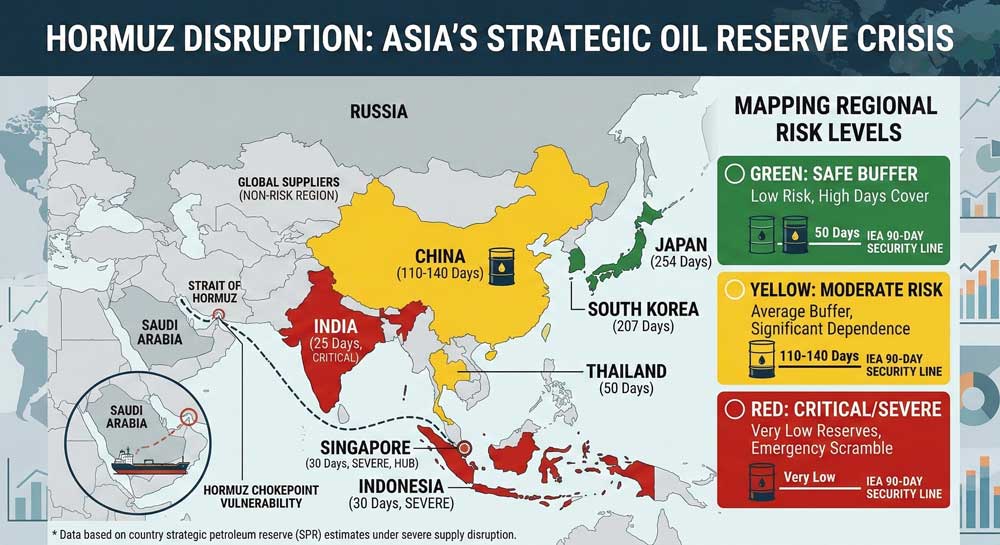
India presents the most complex risk profile. Officially, Indian authorities say refinery tank stocks cover roughly 10–14 days, with fuel product stocks adding another 5–7 days. The government is actively exploring Russian crude rerouting and alternative LNG spot cargoes. The more acute vulnerability is LPG and LNG, where over 80% of India’s LPG imports and ~50% of its LNG pass through Hormuz — and unlike crude, these cannot be easily substituted from spot markets on short notice.
6. Europe and Asia: The Coming LNG Bidding War
The Hormuz Strait oil disruption has set the stage for a brutal competition between two of the world’s largest energy-consuming regions. Europe, which rebuilt gas storage after the 2022 Russia-Ukraine supply shock, must now compete against Asian industrial economies for a sharply reduced pool of non-Qatari LNG.
Qatar and the UAE alone supply 99% of Pakistan’s LNG, 62% of India’s, and 53% of Bangladesh’s total LNG imports. Alternative suppliers — Australia, the United States, and others — require weeks to months to reroute cargoes and cannot fully bridge a 20% global supply gap. The result is a spot-market bidding war that will push energy costs higher for households and factories across both hemispheres simultaneously.
7. The Escalation Timeline: What Comes Next
Duration determines severity. Based on current analyst consensus from Wood Mackenzie, Rystad Energy, and Nomura:
- Under 14 days — Strategic petroleum reserves absorb most of the shock; Brent stabilizes in the $80–90 range; LNG spike is painful but temporary
- 2–4 weeks — Iraq and potentially UAE face forced production shutdowns; $100+/bbl oil becomes probable; European TTF approaches €70–80/MWh; global inflation expectations reprice sharply
- Beyond 1 month — Industrial output contracts across Asia; fertilizer prices surge (one-third of global fertilizer ships through Hormuz); global recession probability rises materially; Fed rate-cut scenario collapses entirely
The ABC reported that some economists caution that early price moves may reflect “temporary disruptions” rather than a sustained structural break. However, even cautious observers acknowledge that the longer the blockade holds, the harder any price reversal becomes — because restoring insurance coverage, crew confidence, and tanker positioning takes weeks even after political de-escalation.
Key Indicators to Monitor
For investors, analysts, and energy watchers, the earliest signals of market stabilization — or deterioration — will come from:
- Maritime war-risk insurance reinstatements by the major Lloyd’s and European syndicates
- U.S. carrier group deployments to the Persian Gulf (currently absent)
- Iraq’s operating rate trajectory — if cuts reverse, the production-capacity clock resets
- Qatar restart timeline — QatarEnergy’s force majeure language gives no fixed end date
- Fed language on inflation — any hawkish pivot confirms the energy-monetary policy collision
Authoritative Deep Links for Further Reading
- Reuters — QatarEnergy Declares Force Majeure on LNG Shipments (March 4, 2026)
- Wood Mackenzie — Oil Prices Could Hit $100/bbl as Hormuz Traffic Halts (March 2, 2026)
- CNBC — $100 Oil? Prolonged Hormuz Closure Could Spark 1970s-Style Energy Shock (March 1, 2026)
- CNBC — Which Countries Will Be Hit the Most by Hormuz Closure (March 3, 2026)
- Al Jazeera — Why QatarEnergy’s LNG Halt Could Shake Up Global Gas Markets (March 2, 2026)
- Bloomberg — Trump Says US Will Escort, Insure Oil Tankers Amid Iran War (March 3, 2026)
- Reuters — India Most Vulnerable to Prolonged Mideast Oil Disruptions (March 2, 2026)
- The Guardian — What Disrupting the Strait of Hormuz Could Mean for Global Cost of Living (March 2, 2026)
- Kpler — US-Iran Conflict: Hormuz Crisis Reshapes Global Oil Markets (Feb 28, 2026)
- Investing.com — Iraq Slashes Oil Output by Over Half as Storage Fills Up (March 4, 2026)
- FX Street — European Natural Gas Surges 85% on Qatar LNG Shock (March 3, 2026)
- Silver’s 50% Crash and 30% Rebound: 5 Critical Insights for 2026 Investors
- Alarming Pattern: Gold Price Crash in January Revealed (3 Historical Lessons)
- 7 Reasons Why Silicon Valley Pivots to Natural Gas Investment for AI Power