Cyrus the Great: 7 Timeless Leadership Lessons Iran Urgently Needs Today
Cyrus the Great didn’t just conquer an empire — he redefined what it meant to govern one. Over 2,500 years later, his legacy remains Iran’s most powerful and contested political symbol, equally revered under the Shah and the Islamic Republic alike.
Table of Contents
When a 23cm Clay Cylinder Stopped a Nation
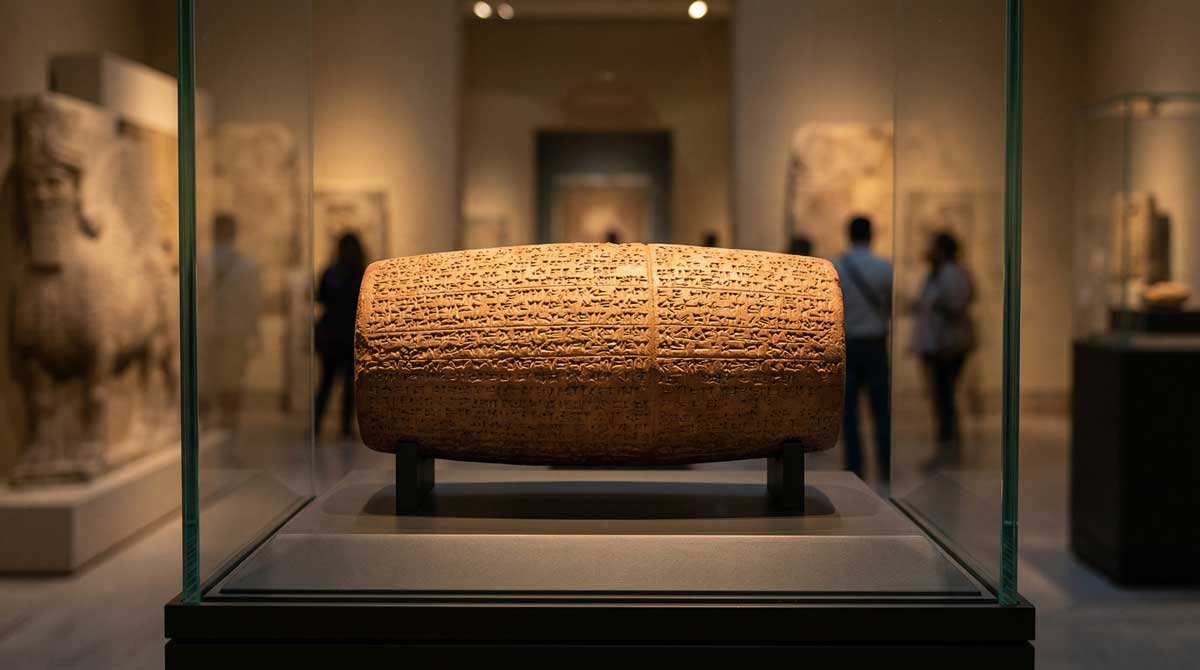
In 2010, Tehran came to a standstill for a piece of baked clay barely the length of a human hand. When the Cyrus Cylinder was loaned from the British Museum to the National Museum of Iran, hundreds of thousands of Iranians lined the streets from the airport just to witness its passage. The exhibition, originally planned as a short-term display, was extended twice due to overwhelming public demand, ultimately drawing over 500,000 visitors.
What drove this extraordinary outpouring? The answer lies deep within the Persian Empire’s founding philosophy — and in the enduring hunger of modern Iranians for the open, pluralistic society that Cyrus the Great once embodied.
Who Was Cyrus the Great? A Ruler Unlike Any Other
Born in the 6th century BCE, Cyrus founded the Achaemenid Dynasty — the first Persian Empire — after uniting fragmented Persian tribes and defeating the powerful Median, Lydian, and Babylonian kingdoms in quick succession. Yet history remembers him not primarily for his military campaigns, but for what he chose not to do after winning them.
Unlike the conquerors who preceded him, Cyrus the Great did not burn cities, enslave populations, or impose Persian religion on defeated peoples. He entered Babylon in 539 BCE without bloodshed — an event more resembling a ceremonial transfer of power than a violent conquest.
| Conqueror | Approach to Defeated Peoples | Legacy |
|---|---|---|
| Cyrus the Great | Preserved local religions, customs, and rulers | Called “Messiah” by freed Jewish captives |
| Nebuchadnezzar II | Mass deportations, destruction of temples | Symbol of oppression in the Hebrew Bible |
| Ashurbanipal (Assyria) | Systematic destruction of conquered cities | Feared but deeply resented |
| Alexander the Great | Mixed: cultural fusion but military suppression | Admired yet divisive legacy |
The Cyrus Cylinder: History’s First 7 Human Rights Principles
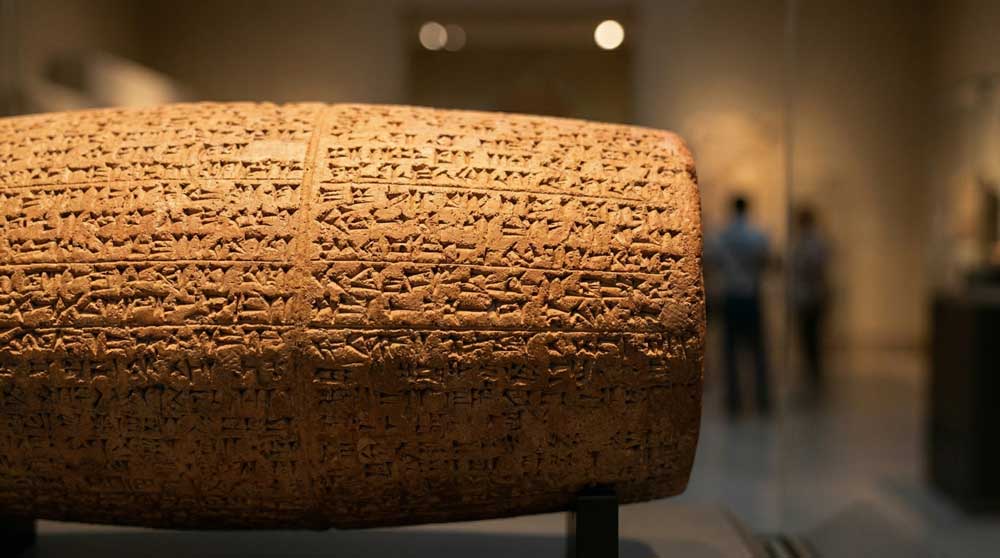
Discovered in 1879 by archaeologist Hormuzd Rassam at the ruins of Babylon’s Marduk Temple, the Cyrus Cylinder is now housed at the British Museum. Inscribed in Akkadian cuneiform, it records a set of political principles that were revolutionary for their age:
- Freedom of religion — all peoples had the right to worship their own gods
- Abolition of forced labor — compulsory service imposed by the previous king Nabonidus was immediately ended
- Right to return home — exiled populations were permitted to go back to their native lands
- Restoration of sacred property — looted temple statues and sacred objects were returned
- Protection of private property — “no house shall be demolished, no resident shall be plundered”
- Racial and ethnic equality — governance applied across all subject peoples without discrimination
- Self-declared as a “guardian of peace” — Cyrus positioned himself as a protector, not an exploiter
The United Nations recognizes the Cylinder’s provisions as paralleling the first four Articles of the Universal Declaration of Human Rights, and a replica stands at the UN headquarters in New York.
“The Cyrus Cylinder is often referred to as the first bill of human rights as it appears to encourage freedom of worship throughout the Persian Empire.” — Smarthistory
Freeing the Babylonian Captives: Leadership Through Compassion
Cyrus the Great’s most celebrated act was liberating the Jewish exiles — known historically as the “Babylonian Captives” — who had been forcibly relocated to Babylon by Nebuchadnezzar II following the destruction of Jerusalem in 586 BCE.
When Cyrus entered Babylon, these exiles had been in captivity for nearly 50 years. The community had fragmented: some had prospered through trade and commerce and were reluctant to leave; others desperately longed to return to Jerusalem and rebuild the Temple. Rather than forcing a single outcome, Cyrus the Great granted every individual the freedom to choose their own fate.
For those who chose to return, Cyrus provided:
- The original sacred Temple vessels looted by Nebuchadnezzar
- Food supplies sufficient for a two-year journey
- A formal royal decree protecting their passage
Historical accounts suggest the returning group comprised 42,360 Hebrews, along with 7,337 servants, 736 horses, 245 mules, 435 camels, and 6,720 donkeys. The freed captives were so moved that they declared Cyrus “the Anointed of the Lord (Yahweh)” — one of history’s most striking instances of a conquered people genuinely revering their conqueror.
How Cyrus Built a Multi-Ethnic Empire That Lasted 200 Years
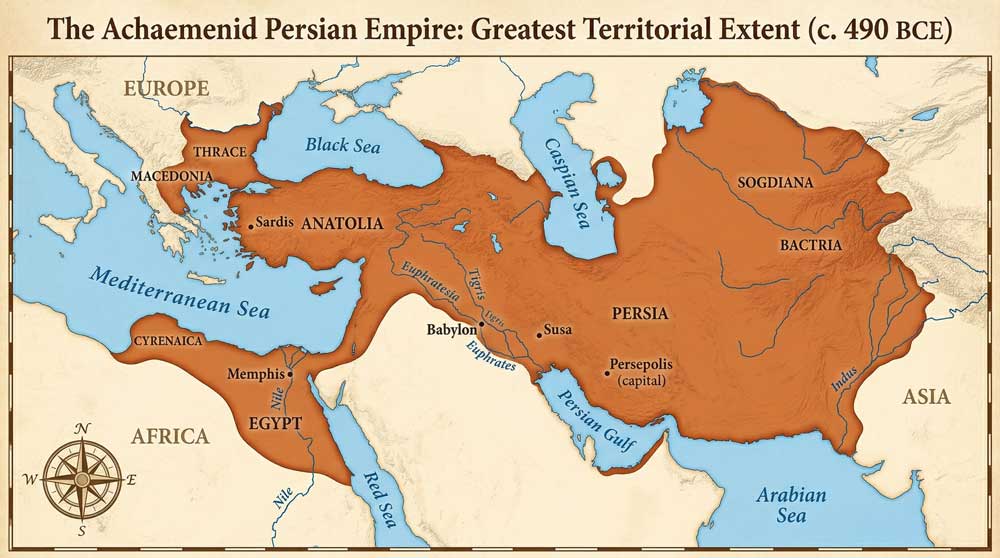
The administrative genius of Cyrus the Great lay in his ability to govern diversity at scale. The Achaemenid Empire stretched from modern-day Greece and Egypt to Central Asia — encompassing hundreds of languages, religions, and ethnic groups.
His system rested on three interlocking pillars:
1. The Satrapy System
The empire was divided into provinces (satrapies), each governed by a satrap — a trusted governor responsible for taxation, security, and local administration. Cyrus appointed his son Cambyses as King of Babylon while leaving other regional rulers in place, minimizing disruption and cost.
2. Centralized Oversight
To prevent corruption and regionalism, Cyrus instituted the “King’s Eye” — royal inspectors who toured the empire and reported directly to the central court, bypassing local governors. Military commanders were appointed separately from civil governors, ensuring no single official held unchecked power.
3. Multilingual Communication
Facing hundreds of spoken languages across his territory, Cyrus designated Aramaic as the imperial lingua franca while permitting local governments to use native languages for internal records. A dedicated relay postal network — precursor to the famous Persian Royal Road — ensured central commands reached the frontier rapidly.
| Administrative Feature | Purpose | Modern Equivalent |
|---|---|---|
| Satrapy system | Regional autonomy with central accountability | Federal state system |
| “King’s Eye” inspectors | Anti-corruption auditing | Independent oversight commission |
| Aramaic lingua franca | Cross-empire communication | English as global business language |
| Royal postal relay | Rapid information flow | National telecommunications network |
| Meritocratic appointments | Best talent regardless of birth | Civil service examinations |
Iran’s National Symbol Across Every Political Era
The enduring power of Cyrus the Great as an Iranian symbol is perhaps most evident in one striking fact: he is equally claimed by polar political opposites.
Under the Pahlavi Dynasty, Shah Mohammad Reza Pahlavi gifted a replica of the Cyrus Cylinder to the United Nations in 1970, presenting Persian civilization as a universal contributor to human rights. At the 2,500th anniversary celebrations of the Persian Empire in 1971, the Shah invoked the Cylinder’s language as the foundation of dynastic legitimacy.
Under the Islamic Republic, the 2010 homecoming of the Cylinder triggered a spontaneous national celebration that no government directive could have engineered. Ordinary Iranians, regardless of political affiliation, responded to the Cylinder as a symbol of the tolerant, open Iran they aspire to see.
This cross-ideological reverence sends a powerful message: the values that Cyrus the Great embodied — pluralism, openness, meritocracy — are not Western impositions on Iran. They are indigenous Persian values, etched in clay long before modern political categories existed.
The Uncomfortable Mirror: Ancient Tolerance vs. Modern Iran
History has a way of making the present uncomfortable. The same land that produced an emperor who freed 42,000 captives, protected 300 religions, and governed 10 million people across three continents through consent rather than coercion — today faces international isolation, economic sanctions, and deepening internal fractures.
Iran’s economy contracted sharply during the comprehensive sanctions period of 2012–2015, with crude oil exports falling by more than 50%. The Iranian President himself acknowledged in early 2026 that “the current economic situation is no longer under control”.
The contrast with the Achaemenid model of governance is stark:
What Cyrus the Great’s Legacy Really Means for Iran’s Future
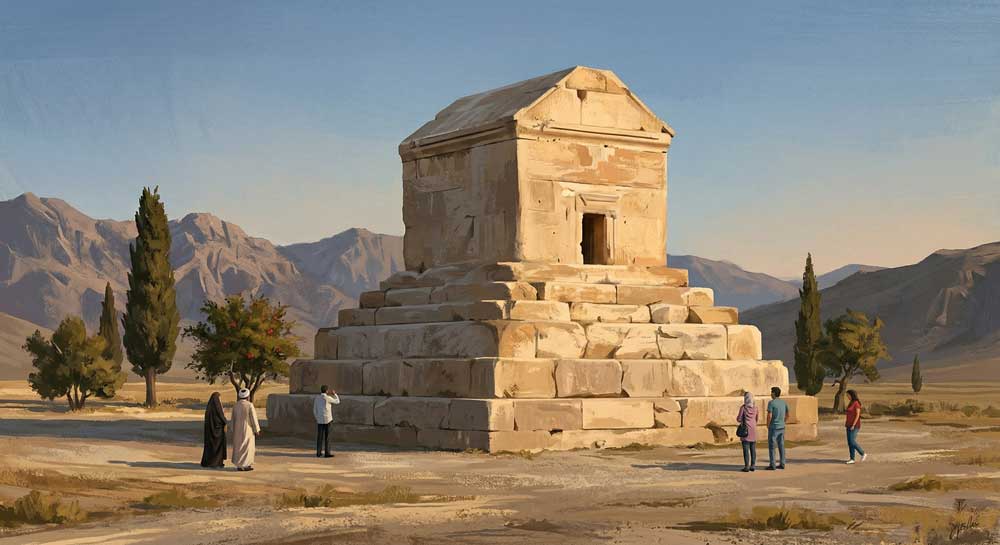
The lesson of Cyrus the Great is not that Iran needs a strongman emperor. It is that the foundational values of Persian civilization — religious tolerance, open governance, meritocracy, and cultural pluralism — have always been the source of Iran’s greatest periods of strength and influence.
Cyrus did not achieve a 200-year empire through suppression. He achieved it by making conquered peoples want to be part of what he was building. His subjects in Babylon, Lydia, Judea, and Egypt all became stakeholders in the empire’s prosperity rather than resentful captives.
The Cyrus Cylinder stands today not merely as a museum artifact, but as a 2,500-year-old blueprint. It represents a version of Iran that its own people — as demonstrated by the extraordinary scenes of 2010 — still deeply hunger for: open, pluralistic, confident in its identity, and respected in the world.
Further Reading — Authoritative Deep Links
- 🏛️ British Museum — Full catalogue entry for the Cyrus Cylinder: https://www.britishmuseum.org/collection/object/W_1880-0617-1941
- 📜 Smarthistory — Academic analysis of the Cylinder’s historical context: https://smarthistory.org/cyrus-cylinder/
- 🌍 Al Jazeera — The story behind the Cyrus Cylinder (2013): https://www.aljazeera.com/features/2013/4/25/the-story-behind-the-cyrus-cylinder
- 📰 BBC News — Cyrus Cylinder loaned to Iran by British Museum: https://www.bbc.com/news/entertainment-arts-11264102
- 🏛️ Encyclopaedia Iranica — Achaemenid Satrapies (academic deep-dive): https://www.iranicaonline.org/articles/achaemenid-satrapies/
- 📖 World History Encyclopedia — Bureaucracy in the Achaemenid Empire: https://www.worldhistory.org/article/767/bureaucracy-in-the-achaemenid-empire-learning-from/
- ⚖️ HumanRights.com — Brief history of human rights, Cyrus the Great: https://www.humanrights.com/what-are-human-rights/brief-history/
- 🗞️ The New Yorker — What makes the Iranian protests different: https://www.newyorker.com/news/q-and-a/what-makes-the-iranian-protests-different-this-time
- Hormuz Strait Oil Disruption: 7 Critical Impacts Reshaping the 2026 Global Energy Market
- Iran Internal Collapse: 4 Devastating Reasons the Islamic Republic Is Crumbling
- Iran Economic Crisis: 5 Devastating Ways Inflation Is Crushing Families in 2026