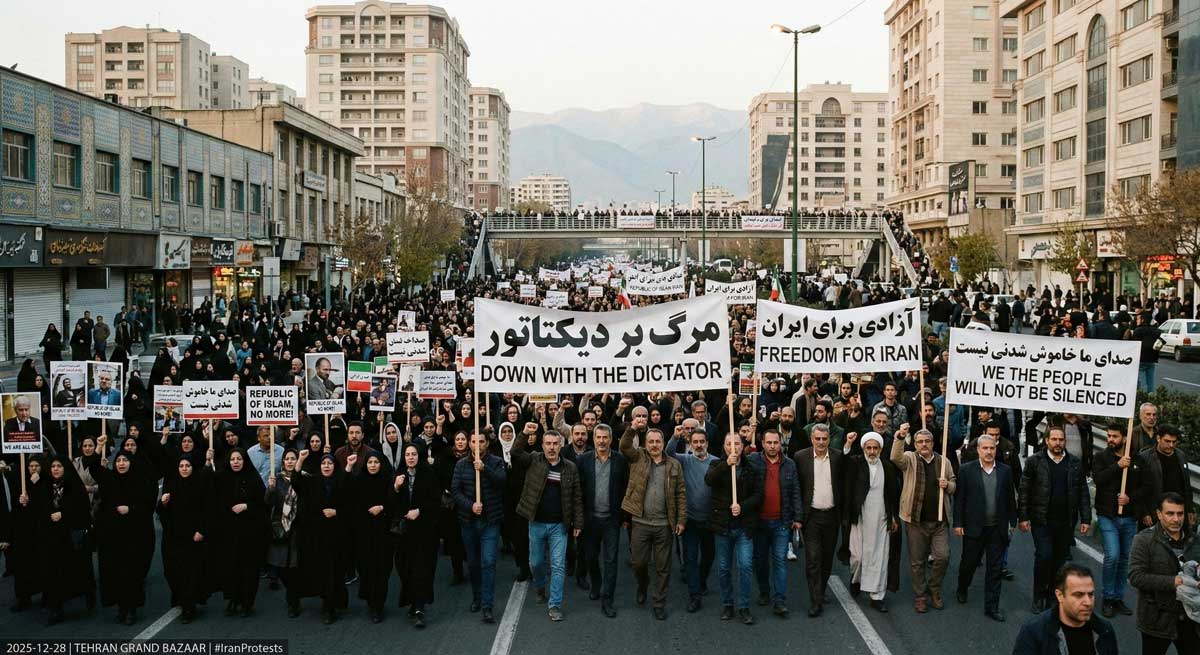
Iran Internal Collapse: 4 Devastating Reasons the Islamic Republic Is Crumbling
The sudden assassination of Supreme Leader Khamenei on March 1, 2026 — attributed to coordinated U.S. and Israeli strikes — triggered an immediate succession crisis, with Iran rushing to form an interim transitional council under Article 111 of its constitution. But to frame this as the cause of Iran’s unraveling would be a fundamental misreading of history.
The Iran internal collapse did not begin with missiles. It began with an empty wallet, a rigged economy, a security apparatus riddled with spies, and a population that no longer recognized itself in the state that claimed to represent it. What the world is witnessing today is not the sudden fall of a strong regime — it is the final unraveling of one that had been hollowed out for decades.
Table of Contents
1. Sanctions, Currency Collapse, and the Destruction of Everyday Life
The most visible symptom of the Iran internal collapse is the devastation of daily economic life. Under four decades of compounding international sanctions, the Iranian rial has undergone one of the most dramatic currency collapses in modern history — and the pace accelerated catastrophically in 2025–2026.
The Rial’s Freefall
| Period | Approx. USD / Rial Rate | Real-World Impact |
|---|---|---|
| 2010 | ~12,000 rials | Stable food prices; middle class intact |
| 2015 | ~35,000 rials | Creeping inflation; savings eroding |
| 2020 | ~250,000 rials | Middle class shrinking; protests begin |
| Late 2025 | ~1,420,000–1,470,000 rials | Mass impoverishment; hyperinflation |
| Jan 2026 | ~1,500,000 rials | Rate displays as “0” on some platforms |
| Mar 2026 | ~1,310,000 rials | Partial stabilization but near historic low |
Sources: Al Jazeera, EBC Forex, Iran Open Data
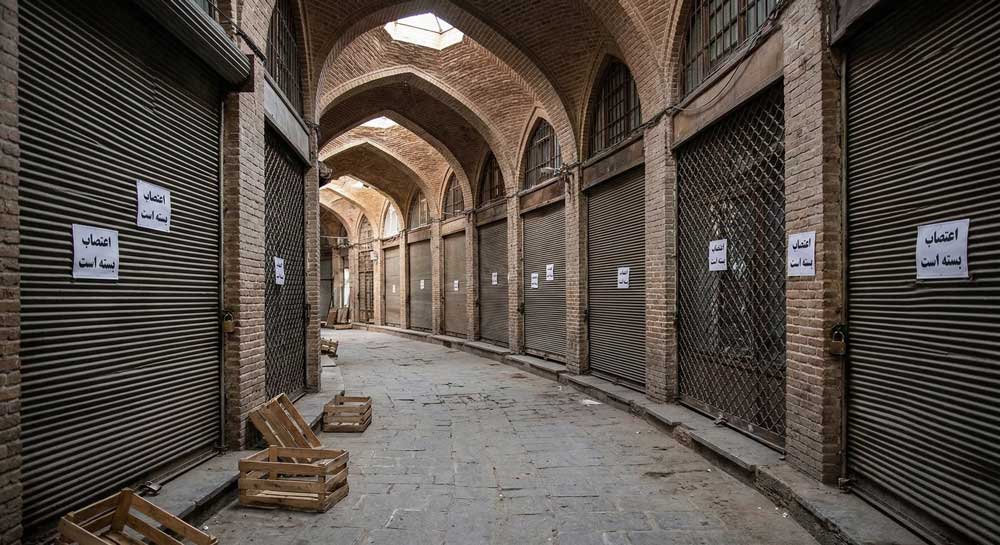
By January 2026, the rial’s value had fallen so far that at least one financial platform displayed its dollar equivalent as $0.00 — not literally zero, but a symbolic marker of collapsed purchasing power. Annual inflation reached an estimated 44% in early 2026, with food prices up more than 70% year-on-year. When chicken and cooking oil disappeared from shelves overnight after the central bank ended its subsidized dollar import program, protests erupted immediately.
The Three Pillars of the Livelihood Crisis
The Iran internal collapse at street level rests on three interlocking failures — not just inflation alone:
- Currency devaluation + hyperinflation — real wages lose value faster than they can be raised
- Structural unemployment — a formal economy unable to absorb educated graduates, with youth unemployment persistently elevated
- Brain drain and family fragmentation — an estimated 180,000 educated professionals leave Iran annually, with up to 65% of engineering graduates planning to exit within two years
Iran has ranked among the world’s worst nations for brain drain, losing an estimated $50 billion per year in human capital — a figure that dwarfs its petroleum export revenues. Since 2017, at least five major protest waves have erupted — each with economic grievances at the core: the 2017 economic uprising, the deadly 2019 fuel protests (over 1,500 killed by security forces), the 2022 “Woman, Life, Freedom” movement, and multiple rounds of labor and pension unrest that followed. The pattern is unmistakable: the Iran internal collapse at the social level has been ongoing for nearly a decade.
2. The IRGC’s Economic Empire: A Plunder Machine, Not a State
A regime that fails to deliver economic wellbeing can sometimes survive if its citizens believe resources are genuinely scarce. The Islamic Republic cannot make that claim. Iran holds the world’s second-largest natural gas reserves and significant oil wealth — yet ordinary Iranians have been systematically excluded from the dividend.
The reason is structural: Iran’s economy is not a failing market economy, nor a standard state-directed one. It is what one analysis calls a “plunder machine” — an economy designed to extract wealth for a privileged military-political class rather than to generate broad prosperity.
The IRGC’s Economic Footprint
| Sector | IRGC’s Role |
|---|---|
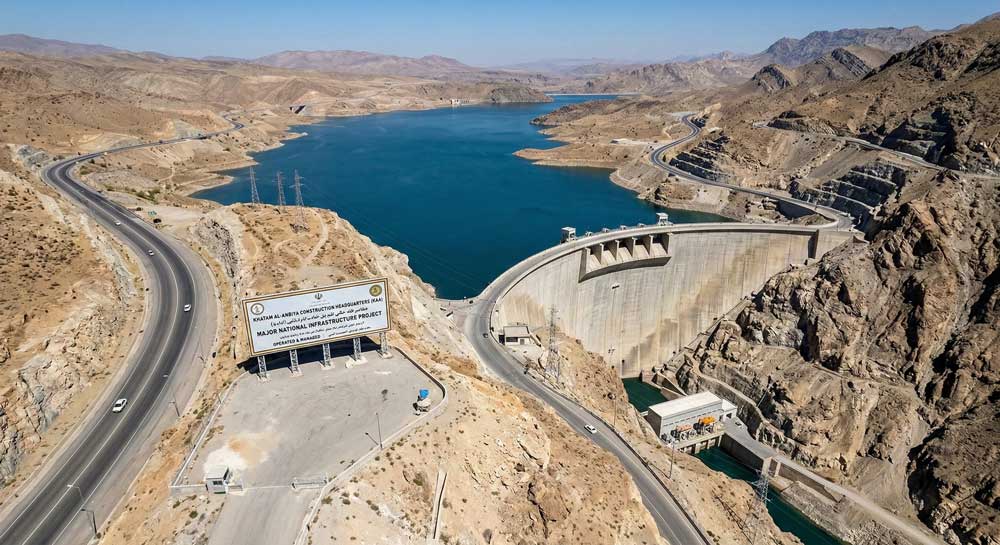
| Oil & Gas | No-bid contracts via Khatam al-Anbiya (KAA); Ministry of Petroleum awards billions annually |
| Construction | KAA controls dams, highways, metros, pipelines |
| Telecommunications | Dominant stakes in major operators |
| Banking | Shadow financial institutions shielded from regulation |
| Smuggling & Black Market | Controls ports and “ghost docks”; est. $20–25B annually — ~30% of total imports |
| Cryptocurrency | Controls energy-intensive mining operations via state energy access |
The IRGC controls an estimated one-third to two-thirds of Iran’s GDP, owns at least half of all government-linked companies, and controls 68% of Iran’s total exports. When former President Ahmadinejad — himself an IRGC officer — oversaw “privatization” of state assets, over $120 billion was transferred to IRGC-affiliated shell companies. Privatization became a euphemism for asset capture.
The South Pars gas field, shared with Qatar, illustrates the cost of this model perfectly. When international energy companies exited due to sanctions, KAA took over operations. The result: chronic delays, technical failures, and billions in foregone revenue. Qatar, drawing from the same reservoir, became one of the world’s wealthiest nations per capita. Iran did not.
Paradoxically, Western sanctions — intended to weaken the regime — often strengthened the IRGC instead. By restricting Iran’s access to international markets, sanctions pushed more commerce into the black-market networks the IRGC already controlled, concentrating economic power further. Legitimate Iranian businesses, unable to compete with a state-backed smuggler, were systematically destroyed.
3. Security Failure: The Regime That Could Not Protect Itself
While the economy crumbled and corruption metastasized, a third force accelerated the Iran internal collapse: the systematic, years-long penetration of Iran’s intelligence and military apparatus — primarily by Israel’s Mossad.
A Decade of Escalating Breaches
| Year | Event |
|---|---|
| 2007–2010 | Stuxnet cyberattack destroys Natanz centrifuges |
| 2010–2012 | Multiple nuclear physicists assassinated in Tehran |
| 2018 | Mossad extracts 100,000 classified nuclear documents from Tehran warehouse |
| 2020 | Chief nuclear scientist Fakhrizadeh killed by AI-guided remote weapon |
| 2021 | Natanz electrical grid sabotaged from within |
| June 2025 | IRGC Commander Salami, Chief of Staff Bagheri, and senior generals eliminated in Israeli strikes |
| Feb–Mar 2026 | Khamenei assassinated; IRGC commander killed again |
The depth of infiltration defied explanation through normal security failures alone. In 2012, former Iranian intelligence chief Ali Yunesi publicly warned that all senior officials should fear for their lives. In 2021, Ahmadinejad claimed that the top official tasked with catching Israeli spies was himself an Israeli spy. The Islamic Republic had been penetrated not just technically, but institutionally.
The security collapse carried three distinct consequences for the Iran internal collapse:
- Diplomatic deterrence evaporated — Iran’s missile parades and proxy network threats lost credibility when the regime could not prevent the targeted elimination of its own commanders on home soil
- IRGC prestige collapsed internally — the force that claimed to be Iran’s ultimate protector could not protect even its own leadership
- Civilian confidence shattered — each publicized assassination reinforced the message that no one in the regime was safe, feeding both despair among loyalists and emboldening among opponents
A government that cannot protect its generals, scientists, or Supreme Leader faces a legitimacy question no ideology or force can permanently answer.
4. The Deepest Fracture: Shia Revolutionary Identity vs. Persian Nationalism
The most structurally incurable driver of the Iran internal collapse is not economic or military. It is civilizational: the Islamic Republic was built on an identity its own population increasingly refuses.
Since 1979, the regime enforced a Shia theocratic identity — rooted in martyrdom theology, pan-Islamic solidarity, and the concept of Velayat-e Faqih (guardianship of the jurist). This was explicitly designed to displace the preceding Pahlavi model, which anchored Iranian identity in Persian civilization, ancient history, linguistic heritage, and secular nationalism.
Two Competing Visions of Iran
| Dimension | Islamic Revolutionary Identity | Persian National Identity |
|---|---|---|
| Foundation | Shia martyrdom, Twelve Imams, Supreme Jurist | Cyrus the Great, Persian Empire, 2,500 years of civilization |
| State model | Theocracy; religion governs law, culture, foreign policy | Secular nation-state; civil society and rule of law |
| Regional stance | Pan-Islamic solidarity; export the revolution | Persian cultural sphere; national interest first |
| Historical narrative | 1979 as the founding moment | Continuous Persian civilization predating Islam |
| Youth appeal (2020s) | Declining sharply — rejected as imposed | Rising rapidly — reclaimed as authentic |
These two frameworks are not merely different political preferences — they are mutually suppressive. For forty-six years, the regime erased Persian symbols from state identity. It could not erase them from memory.
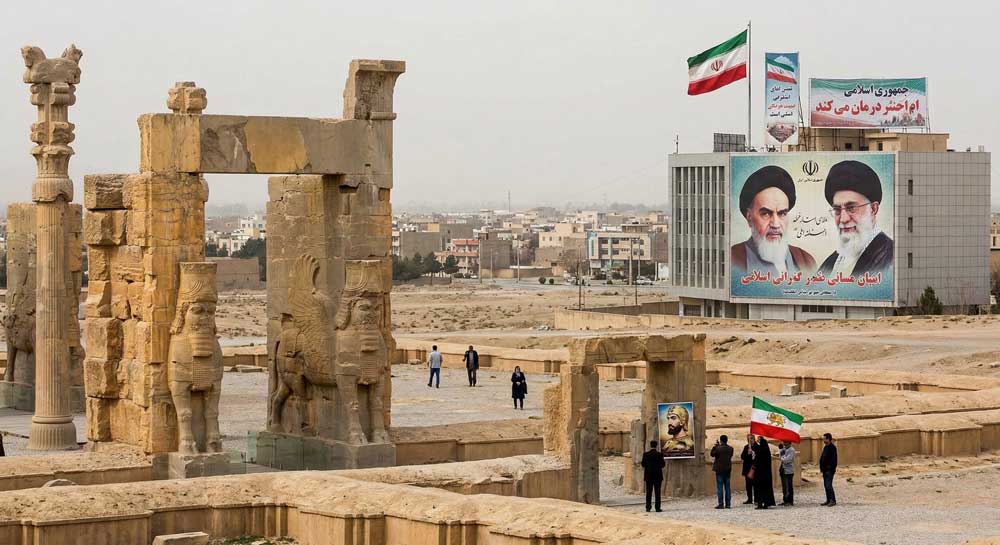
Iran’s younger generations overwhelmingly reject the theocratic governance structure — not Iran itself, but what the Islamic Republic has done to it. A 2023 poll found that 93% of Iranians had considered emigrating, with the highest concentration among the 20–35 age group. The 2022 “Woman, Life, Freedom” uprising was not just a protest against the hijab law — it was an assertion of Persian secular identity against Shia state compulsion.
As the regime fractures in 2026, Iranians are publicly revisiting Pahlavi-era symbols, pre-revolutionary Persian culture, and secular nationalist rhetoric. This represents not just political opposition, but the re-emergence of a suppressed civilizational identity — a population reclaiming who they were before the revolution redefined them.
What Happens Now? The Post-Khamenei Power Vacuum
With Khamenei’s death, Iran has formed an interim transitional council under constitutional Article 111, with the Assembly of Experts mandated to quickly select a new Supreme Leader. But the structural dynamics now point toward the IRGC as the ultimate power broker — not the clerics.
Prior to the strikes, CIA analysis assessed that Khamenei’s death would most likely result in the IRGC — not another ayatollah — consolidating power, potentially transitioning Iran from a theocracy into a de facto military dictatorship. The IRGC commander was killed alongside Khamenei, and his successor has not been named, creating a dangerous internal power struggle at the worst possible moment.
Three scenarios are now in play:
- IRGC consolidation — the Guards unify, suppress opposition, and govern through a hardline security state
- Factional fragmentation — competing IRGC, clerical, and reformist factions fight for control, leading to prolonged instability
- Regime transformation — internal defections and sustained popular uprising accelerate genuine political change toward a Persian nationalist or democratic model
The Iran internal collapse is not a future risk. It is an ongoing structural reality. The four causes — economic devastation, IRGC plunder, security penetration, and identity fracture — did not appear in 2025 or 2026. They accumulated across four decades, each weakening the next, until the house of termite-eaten wood finally met its match.
Authoritative Deep Links for Further Reading
- Reuters: Khamenei Killing Shatters Iran’s Order, Triggers Succession Race
- Al Jazeera: Iran Forms Interim Council After Khamenei’s Killing
- Reuters: CIA Assessed IRGC Could Replace Khamenei
- Brookings: The New Iranian Revolution Has Begun
- Lansing Institute: Iran’s Protests — Drivers, Actors, Consequences
- Mises Institute: Iran’s Economy Isn’t Failing — It’s a Plunder Machine
- Migration Policy Institute: Iran Brain Drain and Emigration
- Al Jazeera: Iran Currency Drops to Record Low
- Al Hurra: How Mossad’s Foreign Legion Breached Iran’s Nuclear Program
- Iran Economic Crisis: 5 Devastating Ways Inflation Is Crushing Families in 2026
- US Space Force Combat Deployment: 5 Powerful Realities Reshaping the Space Warfare Era
- Iran Oil Crisis Impact: 5 Proven Reasons It Won’t Trigger a 1970s-Style Disaster