Silver’s 50% Crash and 30% Rebound: 5 Critical Insights for 2026 Investors
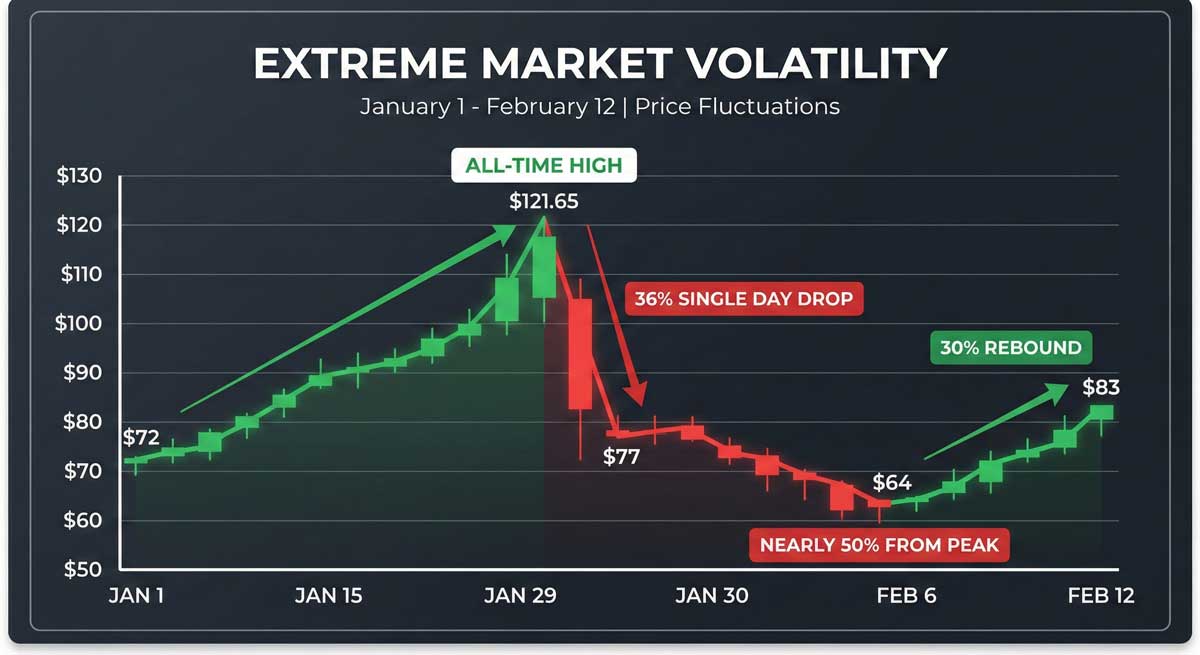
The precious metals market delivered one of its most volatile episodes in modern history during January 2026, with silver price volatility reaching levels unseen since the 1980 Hunt Brothers collapse. After surging to an all-time high of $121.65 per ounce on January 29—a stunning 67% gain in under a month—silver crashed 36% in a single day, marking the worst performance in four decades.
Currently trading around $83 per ounce, silver has staged a remarkable 30% recovery from its post-crash lows near $64. The critical question now: are institutional buyers establishing positions at these levels, or is this merely a temporary bounce in an asset that still trades 32% below its recent peak?
Understanding Silver Price Volatility: Why the Market Collapsed
The Kevin Warsh Effect
The immediate catalyst for silver’s historic plunge came on January 30, when President Trump nominated Kevin Warsh as the next Federal Reserve Chair. Warsh’s reputation as a hawkish policymaker who supports Fed independence directly contradicted the prevailing “weak dollar, easy money” narrative that had fueled precious metals’ explosive rally.
Market participants had positioned for continued monetary accommodation and dollar weakness. Warsh’s nomination forced an abrupt reassessment of these assumptions, triggering a violent unwinding of leveraged positions.
The Most Crowded Trade in Global Markets
Before the crash, silver had become dangerously overcrowded. Key warning signals included:
- Extreme positioning: Silver ETF options implied volatility exceeded 60%, levels only seen during the 2008 financial crisis and 2020 pandemic
- RSI indicators: Relative Strength Index readings showed extreme overbought conditions across multiple timeframes
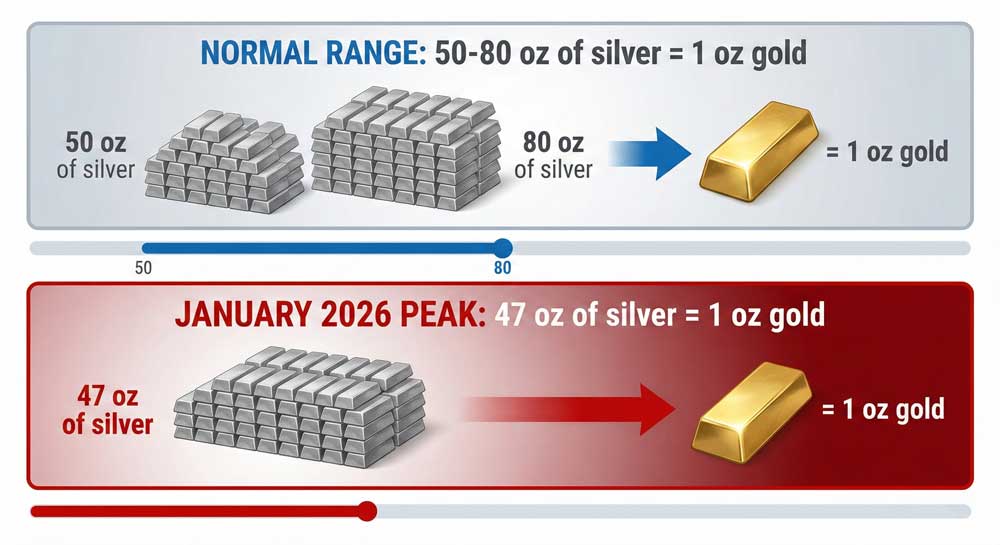
- Gold-Silver Ratio distortion: The ratio compressed to 47-49, far below the normal 50-80 range, indicating silver was severely overvalued relative to gold
“Silver’s deviation from its 200-day moving average exceeded 3.6 standard deviations before the crash, surpassing even the Hunt Brothers era extremes,” according to market structure analysis.
How Extreme Silver Price Volatility Created a Liquidity Crisis
When prices began falling, a cascading series of forced liquidations created what traders call a “liquidity vacuum”:
- Margin calls: Highly leveraged speculative positions faced immediate margin requirements
- Algorithmic selling: Program trading amplified downward momentum
- ETF outflows: The iShares Silver Trust (SLV), which had absorbed massive inflows throughout 2025, began experiencing accelerated redemptions starting in late January
- Physical-paper disconnect: The gap between futures prices and physical premiums widened dramatically as delivery concerns mounted
Silver’s Historic Price Action: January-February 2026
| Date | Price Level | Event | % Change |
|---|---|---|---|
| Jan 1, 2026 | ~$72/oz | Year opens | — |
| Jan 29, 2026 | $121.65/oz | All-time high | +67% (from $72) |
| Jan 30, 2026 | $77.50/oz | Warsh nomination crash | -36% (single day) |
| Feb 6, 2026 | $64.00/oz | Post-crash low | -47% (from peak) |
| Feb 12, 2026 | $83.00/oz | Current rebound level | +30% (from low) |
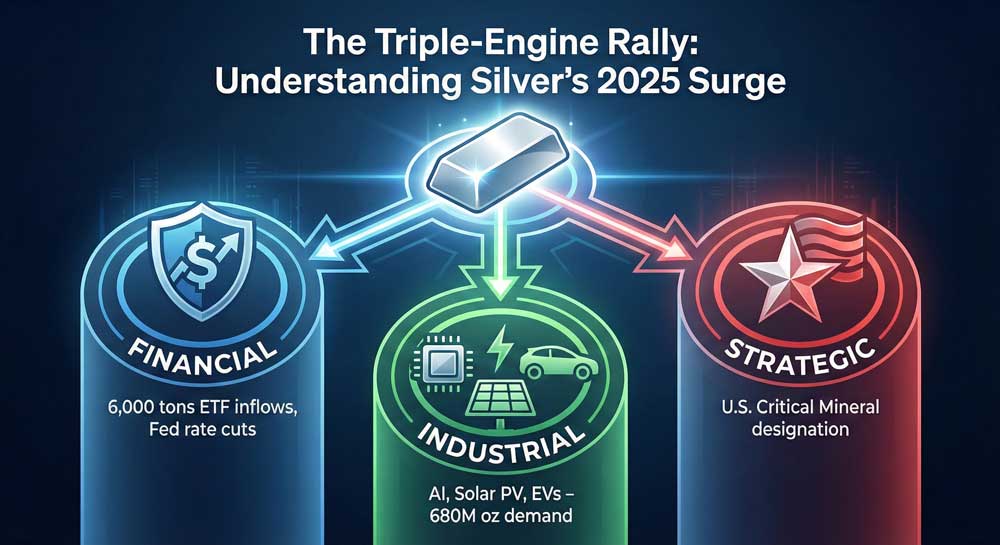
The Triple-Engine Rally: Understanding Silver’s 2025 Surge
To comprehend the crash, investors must first understand the unprecedented convergence of three distinct value drivers that powered silver’s ascent.
Financial Attributes: The Safe Haven Multiplier
Silver’s monetary history and high beta characteristics positioned it as “gold on leverage” during 2025’s risk-off environment:
- Fed rate cut expectations: Anticipated monetary easing reduced the opportunity cost of non-yielding assets
- Geopolitical risk premium: Escalating global tensions drove institutional capital into precious metals
- Record ETF inflows: Global silver ETFs accumulated approximately 6,000 tons (187 million ounces) in 2025, the largest annual increase since 2020
- Retail speculation surge: Social media-fueled FOMO drove unprecedented retail participation, particularly in Asia
Industrial Demand: The Technology Revolution
Unlike gold, silver’s superior electrical and thermal conductivity makes it irreplaceable across high-growth technology sectors:
Key Industrial Demand Drivers (2024-2031)
| Sector | Current Demand Share | Growth Rate | Primary Applications |
|---|---|---|---|
| Solar Photovoltaic | 29% of industrial use | 17% CAGR | Silver paste electrodes; projected 41% share by 2030 |
| Electric Vehicles | Growing to 94M oz by 2031 | 3.4% CAGR | Battery systems, sensors, charging infrastructure |
| AI & Data Centers | Record 680.5M oz in 2024 | 25%+ CAGR | High-performance semiconductors, server connections |
| 5G Infrastructure | Accelerating | Strong double-digit | RF components, base station electronics |
Critical Insight: Industrial fabrication reached a record 680.5 million ounces in 2024, driven primarily by AI-related hardware deployment. However, this strength contains the seeds of its own disruption.
Strategic Resource Revaluation
In November 2025, the United States officially designated silver as a “Critical Mineral,” fundamentally elevating its status from commodity to strategic asset. This classification recognizes silver’s essential role in:
- National security applications
- Renewable energy infrastructure
- Advanced manufacturing independence
- Technology supply chain security
This designation potentially opens the door for government stockpiling programs, though no concrete initiatives have been announced.
The Supply Crisis: Six Years of Deficits
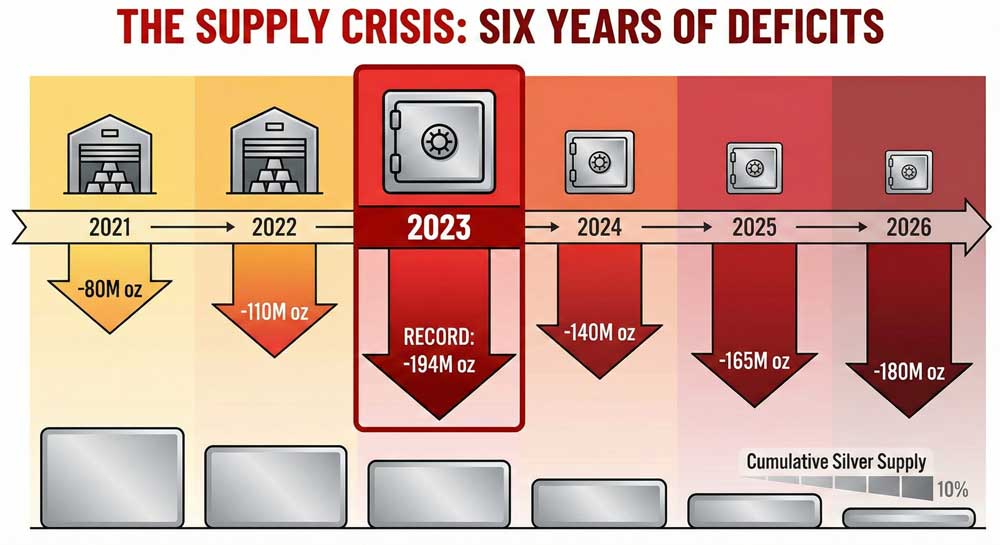
The silver market enters 2026 facing its sixth consecutive annual supply deficit, with projections indicating a shortfall of 67 million troy ounces. This persistent structural tightness reflects fundamental constraints:
Supply Constraints
- Mine supply rigidity: Declining ore grades, environmental regulations, and chronic underinvestment limit production growth
- Secondary supply lag: Recycled silver supply responds slowly to price signals
- Geographic concentration: Primary production concentrated in politically unstable regions
The Cumulative Deficit Picture
| Year | Annual Deficit (Million oz) | Key Driver |
|---|---|---|
| 2021 | ~100 | Post-pandemic recovery demand |
| 2022 | ~100 | Green energy acceleration |
| 2023 | 194 | Record deficit year |
| 2024 | 176 | Continued undersupply |
| 2025 | 95-117 | Investment demand surge |
| 2026 (proj.) | 67 | Sixth consecutive year |
COMEX Inventory Warning Signals
CME deliverable silver inventory remains critically depleted relative to open interest. As of early February 2026, approximately 102 million ounces of registered (deliverable) inventory backed roughly 366 million ounces of open interest in the March futures contract—creating a potential 264 million ounce delivery gap.
This structural mismatch was widely anticipated to trigger a “short squeeze” in January, but exchange-imposed position limits neutralized the setup, instead contributing to the “long squeeze” liquidation cascade.
The Substitution Threat: Silver’s Achilles Heel
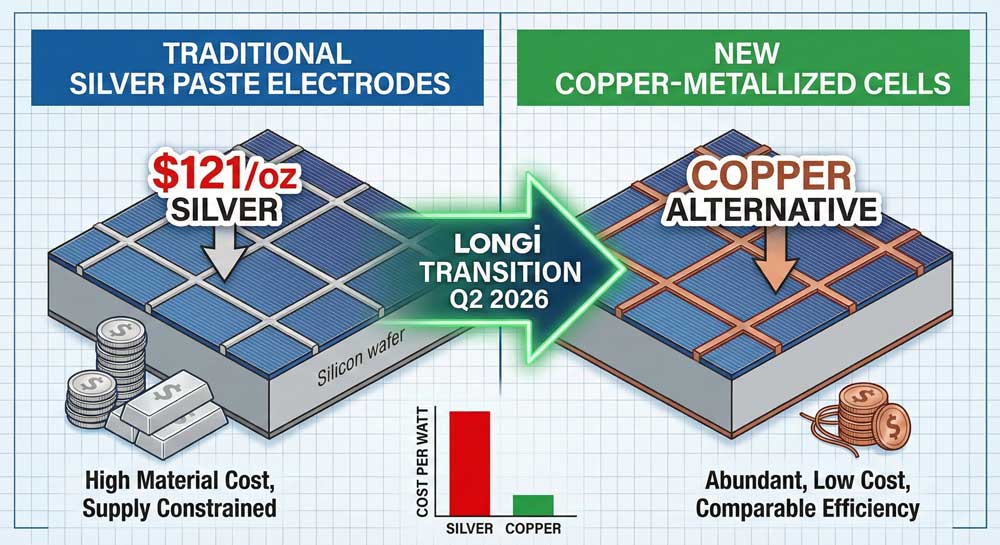
The rally to $121 per ounce accelerated a critical threat to silver’s industrial demand narrative: technological substitution.
China’s LONGi Solar, a leading photovoltaic manufacturer, announced in early January 2026 that it would begin mass production of copper-metallized solar cells in Q2 2026, directly responding to prohibitive silver costs. This development potentially undermines the assumption that solar demand provides an ever-rising floor for silver prices.
“The structural growth period for solar-driven silver demand may be approaching its conclusion,” warns Carsten Menke, Head of Next Generation Research at Julius Baer. “Global solar production capacity now exceeds what’s needed for energy transition goals, and manufacturers are aggressively pursuing silver-reduction technologies.”
Who’s Buying the Dip?
Despite devastating losses, several buyer categories have emerged at lower price levels:
1. Long-Term Physical Investors
Individual and institutional buyers viewing the 32% discount from peak prices as an attractive entry point for physical holdings. These buyers typically focus on 5-10 year holding periods and view silver’s industrial-monetary duality as insurance against multiple economic scenarios.
2. Industrial Hedgers
Solar manufacturers, electronics producers, and other commercial consumers locking in supply after being priced out during the spike above $100/oz. These buyers provide genuine demand support but cap upside at levels where substitution becomes economically viable.
3. Contrarian Speculators
Traders betting on mean reversion and the persistence of structural supply deficits. This category includes both sophisticated macro hedge funds and retail investors attempting to “time the bottom.”
4. Potential Strategic Accumulation
Unconfirmed reports suggest certain governments may be establishing strategic silver positions following the U.S. critical mineral designation. Russia previously indicated interest in adding silver to official reserves, though no concrete actions have been verified.
Market Outlook: The New Reality
Bearish Pressures
- Demand destruction at elevated prices: Current levels above $80/oz continue incentivizing substitution efforts
- Speculative capital exodus: Retail and institutional speculators suffered severe losses, potentially reducing participation for extended periods
- Fed policy uncertainty: If Warsh implements hawkish policies as Fed Chair, a stronger dollar and higher real rates would pressure all precious metals
- Technical damage: The failed breakout above $120 and subsequent crash created a massive resistance zone that will take significant time to overcome
Bullish Structural Support
- Persistent supply deficits: Six consecutive years of shortfalls continue tightening physical availability
- Technology megatrends: AI infrastructure, data center expansion, and EV adoption provide genuine long-term industrial support
- Low inventory levels: COMEX and London vault stocks remain near historic lows despite the price correction
- Strategic resource premium: Critical mineral status may eventually drive government stockpiling programs
Price Targets and Scenarios
Some analysts project silver could reach $160 per ounce in 2026 if supply constraints intensify and technology demand accelerates. However, J.P. Morgan analysts emphasize a critical distinction: “Silver lacks the central bank buying support that provides a structural floor for gold, making it vulnerable to deeper corrections during risk-off episodes”.
5 Critical Lessons for Silver Investors
1. Volatility Is the Price of Admission
Silver’s smaller market size, dual industrial-monetary nature, and vulnerability to speculative flows guarantee extreme volatility. The 2026 crash demonstrates that 30-50% drawdowns can occur within days, even in bull market contexts.
2. Understand What You’re Buying
Many retail investors suffered catastrophic losses by purchasing silver products at massive premiums to net asset value, then experiencing simultaneous collapse in both underlying prices and premium levels. Always distinguish between spot prices, futures contracts, ETF structures, and physical premiums.
3. The Leverage Trap
Margin trading, leveraged ETFs, and futures contracts amplify both gains and losses. The January 30 crash triggered margin calls that forced liquidations at the worst possible prices, turning paper losses into permanent capital destruction.
4. Technology Disrupts Industrial Demand
The rapid development of copper-metallized solar cells demonstrates that high prices accelerate innovation that undermines bullish demand narratives. Industrial silver demand is price-elastic over medium time frames.
5. Position Sizing Determines Survival
Silver’s extreme volatility makes it unsuitable as a core portfolio holding for most investors. Conservative position sizing (typically 2-5% of portfolio for sophisticated investors, less for others) ensures that inevitable drawdowns don’t compromise overall financial stability.
Conclusion: The Post-Crash Era
Silver has entered a new phase where financial speculation, industrial reality, and strategic policy considerations will compete to determine fair value. The days of simple “supply deficit = higher prices” narratives are over.
For investors considering silver exposure, the focus must shift from momentum trading to understanding fundamental value drivers: actual industrial consumption trends, substitution economics, and whether strategic resource policies translate into concrete demand programs.
The $80-85 range may represent a temporary equilibrium where physical buyers provide support while damaged speculative sentiment caps upside. Whether this floor holds or breaks will depend on developments in Fed policy, technology demand verification, and inventory dynamics over coming months.
Those who buy the dip should do so with clear risk management, realistic expectations, and recognition that the next move to new highs—if it comes—will likely take significantly longer than the euphoric rally that preceded the crash.
Related Sources & Further Reading
- Silver Institute: Global Silver Investment to Remain Strong in 2026
- Silver Institute: Silver Demand Forecast Across Key Technology Sectors
- J.P. Morgan Global Research: How Will Silver Prices Fare in 2026?
- CNBC: Silver Plunges 30% in Worst Day Since 1980 as Warsh Pick Eases Fed Fears
- Reuters: Rising Investment to Keep Global Silver Demand Steady in 2026
- Morningstar: Why Did Gold and Silver Prices Plunge?
- PV Magazine: Rising Silver Prices Drive LONGi’s Shift to Copper-Metallized Solar Cells
- Euronews Business: Gold Rebounds After Brutal Sell-Off
- The Financial System Explained: 5 Stages from Basic Lending to Global Markets
- Alarming Pattern: Gold Price Crash in January Revealed (3 Historical Lessons)
- 7 Reasons Why Silicon Valley Pivots to Natural Gas Investment for AI Power
- The $5 Trillion AI Investment Bubble: Can the Boom Outrun Reality?