Massive Asian Stock Market Outflows: 3 Devastating Reasons Why $52 Billion Has Fled
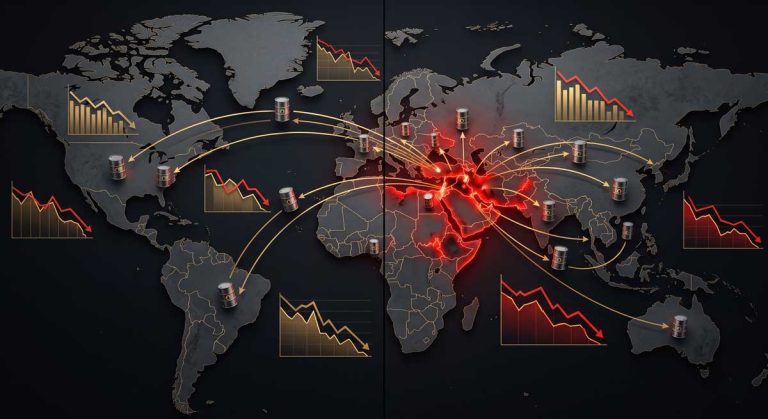
Asian stock market outflows have reached a scale not seen since 2009 — and the reasons go far deeper than simple panic selling. With Middle East conflict driving crude oil to multi-year highs, foreign investors have systematically unwound $52 billion in Asian emerging market positions, triggering circuit breakers in Seoul and erasing months of AI-driven gains across the region.
If you’re holding emerging market equities right now, this article breaks down exactly what’s happening, why it’s happening, and what the path forward could look like.
Table of Contents
The Historic Scale of This Selloff
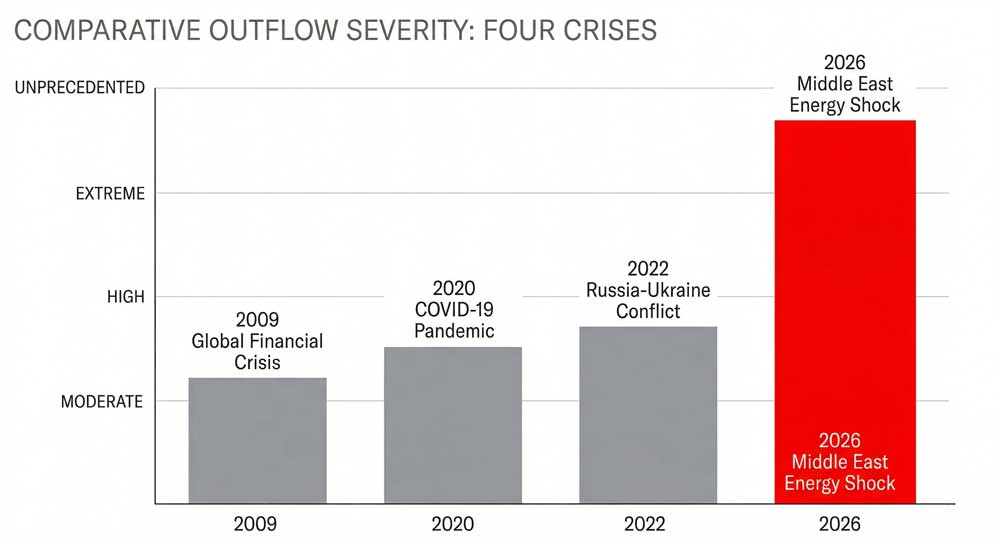
The numbers put the current Asian stock market outflows in sobering perspective.

| Crisis Event | Period | Outflow Severity | Key Catalyst |
|---|---|---|---|
| Global Financial Crisis | 2009 | Extreme | Subprime collapse |
| COVID-19 Pandemic | March 2020 | High | Global lockdowns |
| Russia-Ukraine Conflict | June 2022 | Moderate | European energy shock |
| Middle East Energy Shock | March 2026 | Largest since 2009 | Strait of Hormuz disruption |
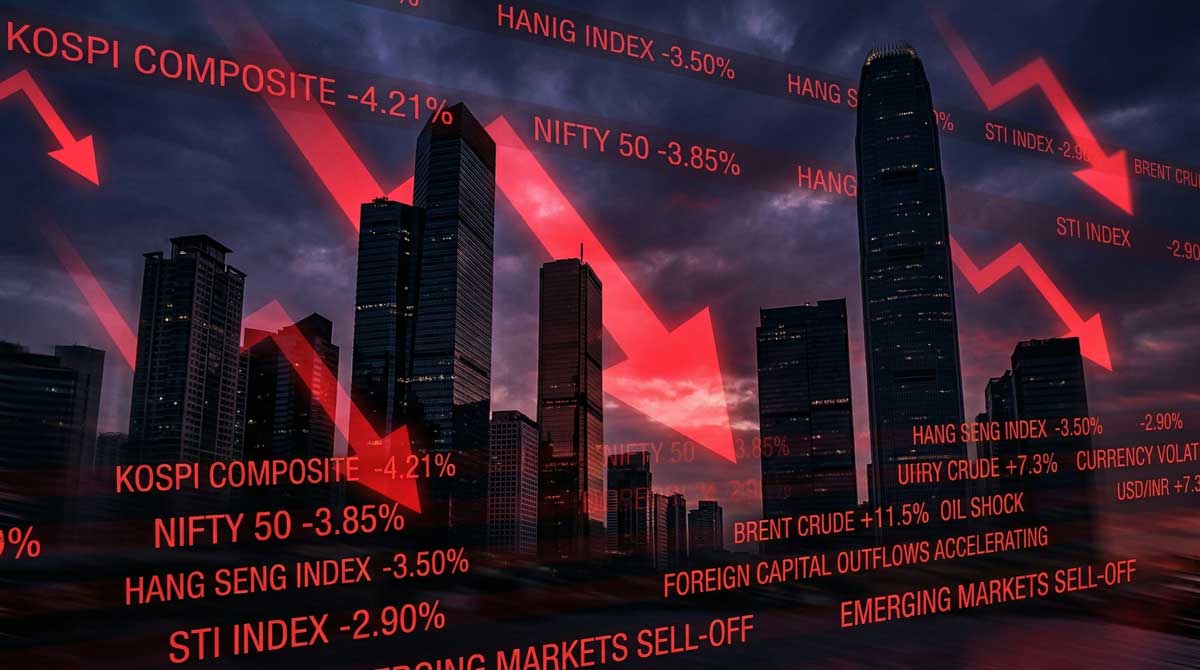
This month’s outflows are already more than double the levels seen during the Russia-Ukraine shock of 2022. South Korea’s KOSPI shed over 11% in a single session — deep enough to trigger a market circuit breaker — while the MSCI Asia-Pacific ex-Japan index fell 4.2% . Taiwan’s benchmark dropped 3.6% and Japan’s Nikkei fell 4.3% in the same session .
3 Devastating Drivers Behind the Outflows
This is not sentiment-driven panic. It is a structured, multi-factor capital reallocation with distinct macroeconomic logic.
1. The Oil Price Shock Crushing Net Importers
Asia accounts for roughly 80% of crude oil demand that transits the Strait of Hormuz. When that chokepoint faces disruption, the inflationary and growth damage to Asian economies is disproportionate compared to any other region on earth.
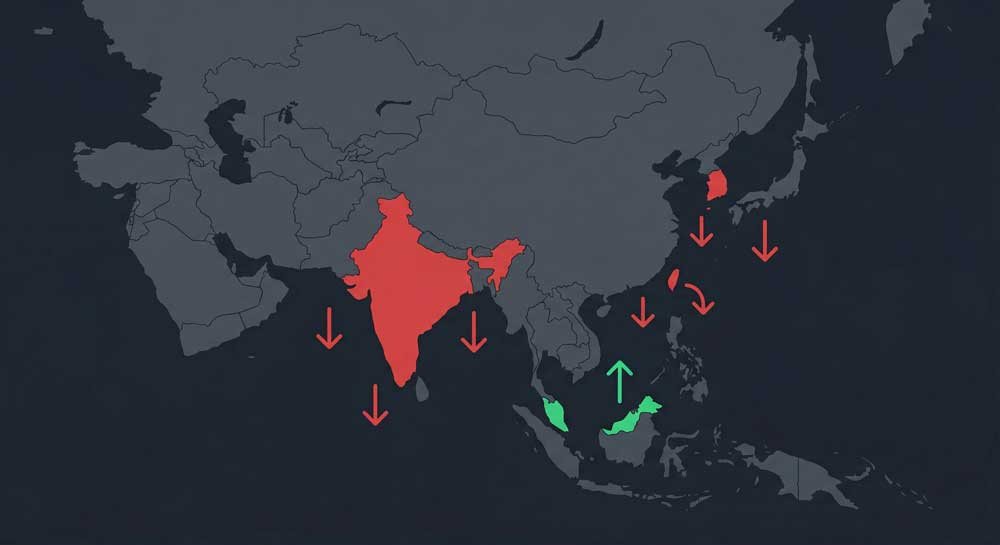
South Korea, India, Thailand, and the Philippines are the epicenter of outflows because their import bills explode when oil spikes — widening current account deficits, pressuring currencies, and squeezing corporate margins. As DBS Bank Senior Economist Radhika Rao noted, “the net oil trade balance is most adverse in Thailand, Malaysia, and Vietnam, with the pass-through to price pressures most material in Thailand and the Philippines.”
The macro domino effect unfolds rapidly:
- Import costs surge → trade deficits widen
- Currency depreciation pressure → USD demand rises for oil payments
- Inflation fears escalate → rate cut expectations delayed
- Corporate profit margins shrink → equity valuations re-rated lower
2. Tech Sector Profit-Taking and USD Strength
The selloff is not purely an energy story. As Tarek Horchani, Head of Prime Brokerage Dealing at Maybank Securities Singapore, explained: “Korea had been one of the strongest markets globally, up nearly 50% at its peak on the back of the AI and memory cycle, so positioning was crowded. When oil spikes and FX volatility jumps, global funds tend to de-risk quickly from the most liquid index heavyweights.”
Samsung and SK Hynix — two of the region’s most widely held stocks — bore the brunt of this positioning unwind. A stronger US dollar compounded the pain, as it always does for emerging market assets priced in local currencies.
3. The US Safe Haven Effect
While Asian markets collapsed, US equities held relatively firm. The structural reason is straightforward: the United States is a net energy exporter. Rising oil prices boost domestic energy sector revenues, partially offsetting broader economic drag and making US equities a natural destination for capital fleeing oil-exposed markets.
This creates a self-reinforcing cycle — as Asian markets fall, more capital rotates to the US, further strengthening the dollar, which then creates additional pressure on Asian currencies and equities.
Where Is the $52 Billion Going?
Not all Asian markets are suffering equally — and the rotation pattern reveals investor logic.
| Market | Energy Status | March 2026 Performance | Foreign Flow Trend |
|---|---|---|---|
| South Korea | Net importer | KOSPI –17% (2-day peak loss) | Heavy outflows |
| India | Net importer (85%+ oil imported) | Significant decline | Heavy outflows |
| Taiwan | Net importer | –3.6% | Outflows, chip-driven |
| Malaysia | Net exporter | KLCI –1.2% only | Flows relatively stable |
| Japan | Net importer | Nikkei –4.3% | Outflows |
Malaysia has emerged as a striking exception . As one of Asia’s few net energy exporters, the ringgit has held its gains, foreign outflows have been muted, and global funds have actively rotated in. CLSA Chief Equity Strategist Alexander Redman upgraded Malaysia specifically for this reason, noting: “Malaysia’s in a relatively good position because it runs a current account surplus, is a net exporter of oil and gas, and the proportion of energy in Malaysia’s CPI basket is not as high as others.”
Expert Perspectives: What Wall Street Is Saying
Major institutions are aligned on caution. Morgan Stanley strategists have recommended selling into any Asian equity rally, citing sustained vulnerability to oil supply disruption .
Bernstein Asia Quant Strategist Rupal Agarwal framed the reset clearly: “For markets to find a floor, we need signs of de-escalation on the war front or status quo which could then move the focus back to fundamentals. Given positioning was extreme on the way up, it would take some time for things to normalize.”
Christopher Forbes of CMC Markets pointed to one potential upside scenario: “The biggest upside catalyst is the record hedge fund short book. According to Goldman’s prime brokerage, shorts outpaced longs two-to-one in early February. If tensions ease quickly, a violent squeeze could follow.”

When Will Foreign Capital Return?
The core variable is geopolitical, not financial. A reversal in Asian stock market outflows requires one or more of these catalysts:
- Credible Iran ceasefire or de-escalation reducing Hormuz risk premium
- Oil prices retreating to levels that ease current account pressures
- USD weakening improving the relative attractiveness of Asian assets
- Strong earnings surprises from Asian corporates demonstrating real resilience
As of late March 2026, the diplomatic picture remains gridlocked. The US maintains that negotiations are ongoing while Iran has publicly rejected ceasefire overtures — leaving no near-term resolution catalyst on the horizon .
Until that changes, the “sell the rally” institutional consensus is likely to dominate positioning. Patience and selective rotation toward energy-neutral or energy-positive Asian markets — like Malaysia — appear to be the most defensible near-term strategy.
Key Data Summary
| Metric | Figure |
|---|---|
| Total outflows (Asia EM ex-China) | ~$52 billion |
| Historical comparison | Worst single month since 2009 |
| KOSPI peak 2-day loss | –17% |
| Asia’s share of Hormuz oil demand | ~80% |
| Malaysia KLCI March decline | –1.2% (regional outperformer) |
| Morgan Stanley stance | Sell rallies |
Authoritative Sources
- Reuters/Investing.com — Asia stock rout deepens as markets brace for energy shock
- The Straits Times — Global funds look to Malaysia as Iran war shakes up Asian assets
- Xinhua/China.org — Several Asian markets continue to see outflows of foreign funds amid Mideast tensions
- Morgan Stanley — Asia Equity Fund Commentary & Insights
- U.S. EIA — Strait of Hormuz World Oil Transit Chokepoints
- IMF — Asia and Pacific Regional Economic Outlook
- Institute of International Finance — Capital Flows Tracker
- The $5 Trillion AI Investment Bubble: Can the Boom Outrun Reality?
- 7 Reasons Why Silicon Valley Pivots to Natural Gas Investment for AI Power
- Alternative Asset ETFs: 5 Shocking Truths Behind the 72% Youth Investment Exodus from Traditional Stocks
- Labor Devaluation Exposed: 5 Shocking Reasons Why It’s More Dangerous Than Unemployment in 2026