Pakistan Iran Land Trade Routes Beat the Hormuz Blockade
Pakistan Iran land trade routes are reshaping the region’s economic geography. The Strait of Hormuz blockade was supposed to be the decisive blow — a stranglehold on Iran’s economic arteries that would force capitulation. Instead, Pakistan opened six overland corridors, and the calculus changed overnight.
This isn’t a minor diplomatic footnote. It’s a structural shift in how Middle Eastern trade flows, and it deserves serious examination.
Table of Contents
The Hormuz Blockade and Its Economic Impact on Iran
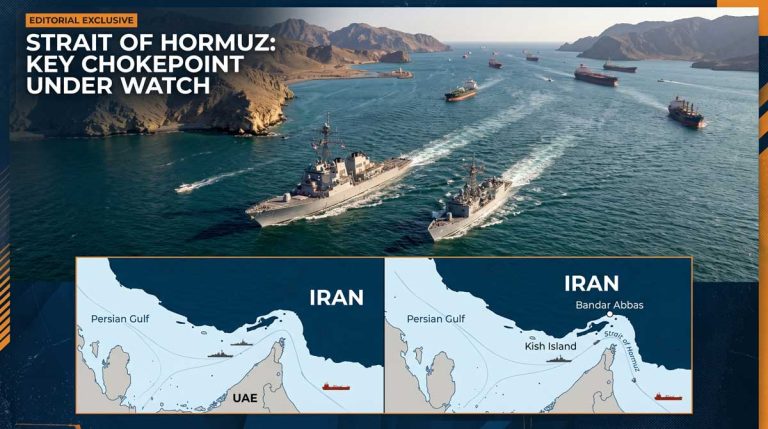
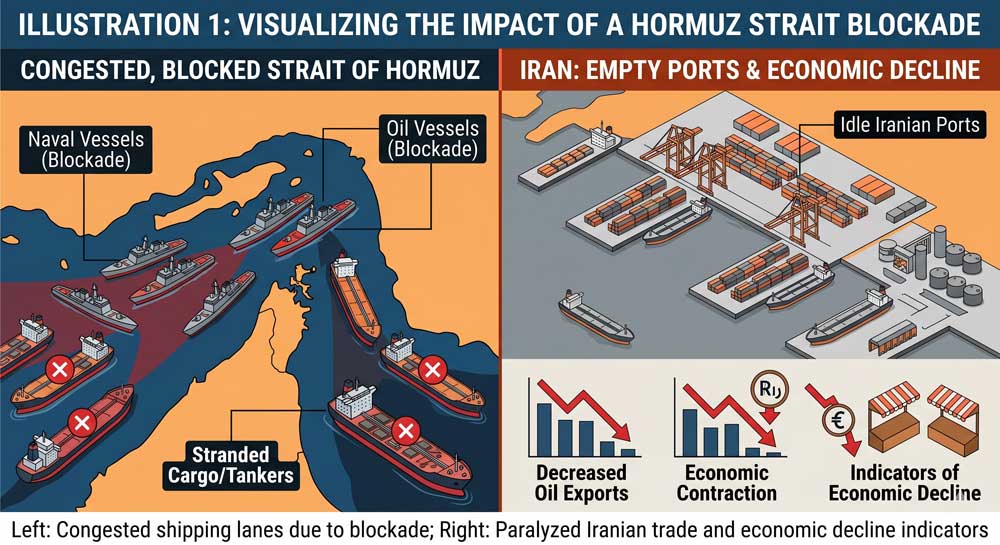
The Strait of Hormuz has long been Iran’s economic jugular. More than 65% of Iran’s fiscal revenue derives from oil exports, and over 80% of its foreign exchange earnings flow through that narrow waterway. When the United States intensified its naval presence to enforce trade restrictions, the consequences were immediate and severe.
Iran’s daily oil exports reportedly collapsed from approximately 1.85 million barrels to around 570,000 barrels — a drop that translates to hundreds of millions of dollars in lost revenue every single day. Beyond oil, food imports, pharmaceutical supplies, and industrial components all faced critical disruptions. Food inflation reportedly surpassed 100%, placing extraordinary pressure on ordinary Iranian households.
The strategic logic behind the blockade was straightforward: sustained maritime pressure would erode Iran’s economic base until political concessions became unavoidable. What this calculation underestimated was the resilience of regional partnerships.
| Economic Indicator | Pre-Blockade | During Blockade |
|---|---|---|
| Daily Oil Exports (barrels) | ~1,850,000 | ~570,000 |
| Sea-based trade coverage | ~90%+ | Severely restricted |
| Food inflation | Elevated | Exceeded 100% |
| Foreign exchange (oil share) | ~80%+ | Critically reduced |
Pakistan’s 6 Land Routes: What They Actually Are
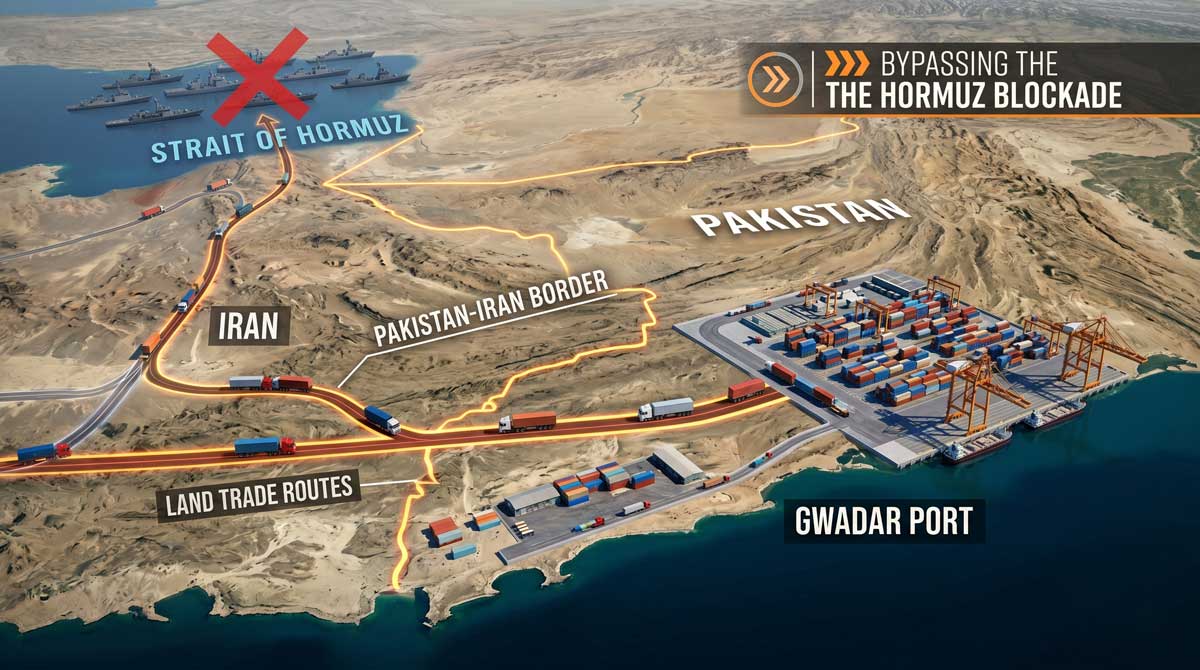
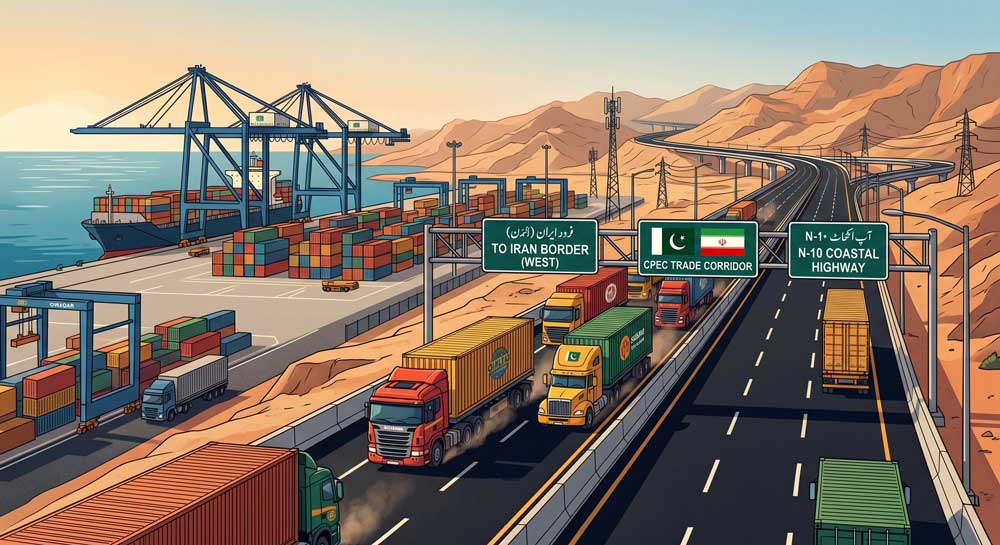
Pakistan and Iran share over 900 kilometres of common border — a geographic reality that most geopolitical commentary tends to overlook. When Pakistan formalised six overland trade corridors along this border and incorporated Gwadar and Port Qasim into the logistics network, it wasn’t improvising a workaround. It was activating infrastructure that had been quietly maturing for years.
Gwadar Port is the centrepiece of this network. Sitting within tens of kilometres of key Iranian border crossings, it allows cargo to be offloaded and cleared into Iran in as little as two hours under efficient conditions. Logistics costs drop substantially compared to alternative sea routes, and transit times are roughly halved. Thousands of Iranian shipping containers that had been stranded at Pakistani ports due to the blockade could finally move.
This is what a well-positioned regional partner looks like in practice — not just a diplomatic ally, but a functional logistics alternative when primary routes are severed.
| Route Feature | Sea Route (Hormuz) | Pakistan Land Corridors |
|---|---|---|
| US interdiction risk | High | Minimal |
| Transit time to Iran | Variable, exposed | Significantly reduced |
| Cost under blockade conditions | Elevated (risk premium) | Lower |
| Cargo currently blocked | Stranded at sea | Clearable overland |
| Port access | Hormuz-dependent | Gwadar + Port Qasim |
Why This Matters Strategically — Beyond the Immediate Crisis
I think the significance of this development is being systematically underestimated in mainstream coverage, which tends to frame it narrowly as an Iran story. It’s actually a regional trade architecture story.
For decades, Middle Eastern trade was functionally dependent on a single maritime chokepoint. That concentration of trade flow gave any power controlling the Strait of Hormuz enormous leverage over multiple nations simultaneously — not just Iran. The implicit threat extended to every country whose energy imports or exports transited that waterway.
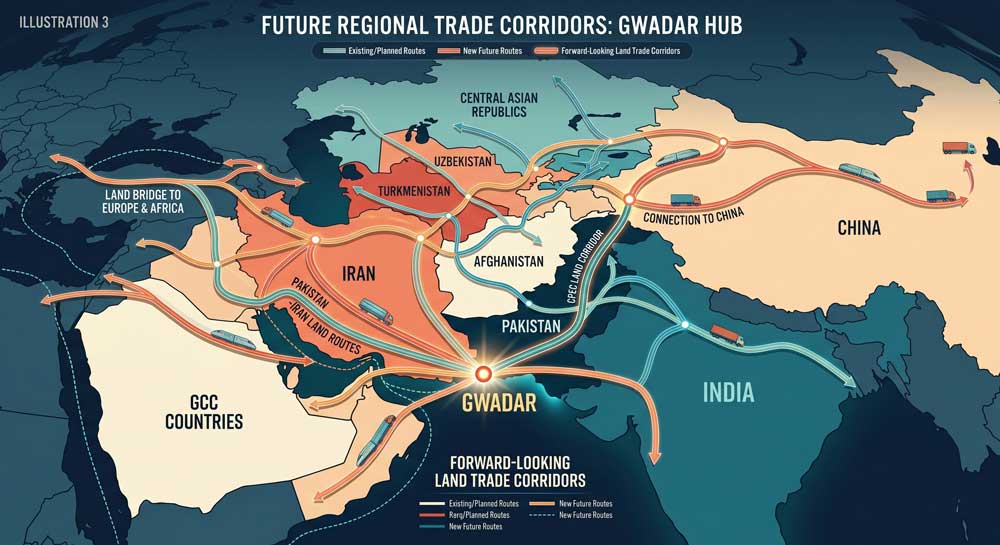
Pakistan’s land corridors introduce genuine redundancy into this system. Gwadar transforms from a strategic asset on a map into a functioning logistics hub connecting South Asia, the Middle East, and Central Asia. The China-Pakistan Economic Corridor (CPEC), often discussed in abstract infrastructure terms, demonstrates concrete utility: a diversified trade network that doesn’t depend on any single maritime bottleneck.
The geopolitical implications extend further. Pakistan strengthens its bilateral relationship with Iran while simultaneously elevating its own relevance as a regional trade facilitator. Countries that have watched sanctions-driven blockades with anxiety now have a clearer picture of what alternative connectivity looks like in practice.
The Limits of Unilateral Maritime Pressure
There’s a broader principle embedded in what Pakistan has done that I find compelling: unilateral maritime blockades are structurally less effective when target countries maintain viable land borders with cooperative neighbours.
History supports this. Sanctions regimes that lack genuine multilateral enforcement have repeatedly proven porous. The more economically significant the target country, the greater the incentive for neighbouring states to maintain trade relationships — both for humanitarian reasons and straightforward commercial interest.
| Approach | Unilateral Maritime Blockade | Regional Multilateral Cooperation |
|---|---|---|
| Enforcement mechanism | Naval presence | Mutual economic interest |
| Resilience to workarounds | Low (land borders exploitable) | High (distributed network) |
| Impact on civilian population | Severe (broad deprivation) | Mitigated |
| Long-term diplomatic cost | High (regional resentment) | Lower |
| Precedent set | Coercive dependency | Cooperative self-sufficiency |
The argument isn’t that blockades are never effective — they clearly impose serious costs. The argument is that when a country shares 900+ kilometres of border with a willing trading partner, the maritime pressure is partially but meaningfully offset.
What Comes Next for Regional Trade
The six corridors Pakistan has opened are not a temporary emergency measure. The infrastructure investment underlying them — Gwadar’s port capacity, the CPEC road network, the border crossing facilities — represents durable capability. As these routes are used more intensively, they will attract further investment and become more efficient.
I expect the practical effect over the coming years to be a gradual reorientation of regional trade flows. The Hormuz Strait will remain important — it handles an enormous volume of global energy trade and cannot be bypassed entirely. But for bilateral trade between Iran and its eastern neighbours, the land route alternative will become increasingly normalised.
For Pakistan, this is an opportunity to consolidate genuine regional influence grounded in something more sustainable than political alignment alone: physical trade infrastructure that other nations depend on. That kind of structural relevance is harder to sanction away than diplomatic relationships.
The Middle East’s trade geography is slowly being redrawn, one land corridor at a time. Pakistan’s decision to activate these routes during a genuine economic crisis for its neighbour is the kind of move that reshapes relationships and regional architectures for a generation.
Reference URLs
- Goldman Sachs Research — Trade’s New Reality: What it Means for Manufacturing and Supply Chains
- Council on Foreign Relations — International Sanctions on Iran
- Brookings Institution — “AT ALL COSTS”: HOW PAKISTAN AND CHINA CONTROL THE NARRATIVE ON THE CHINA-PAKISTAN ECONOMIC CORRIDOR
- Carnegie Endowment for International Peace — Pakistan at the Crossroads
- Reuters — US naval blockade squeezes Iran’s oil exports, forces crude onto floating storage
- Chatham House — The Strait of Hormuz energy crisis shows the EU’s carbon pricing is the right approach
- Atlantic Council — The India-Middle East-Europe Economic Corridor: Connectivity in an era of geopolitical uncertainty
- ElevenLab — 1 Ultimate Key to the Middle East Endgame: The Strait of Hormuz Toll Explained
- ElevenLab — Operation Epic Fury & the Middle East Geopolitical Crisis: 8,000 Airstrikes, 3 Market Warnings, and 1 Economic Tipping Point