RBA Interest Rate Hike: 5 Shocking Impacts of the 4.1% Surge
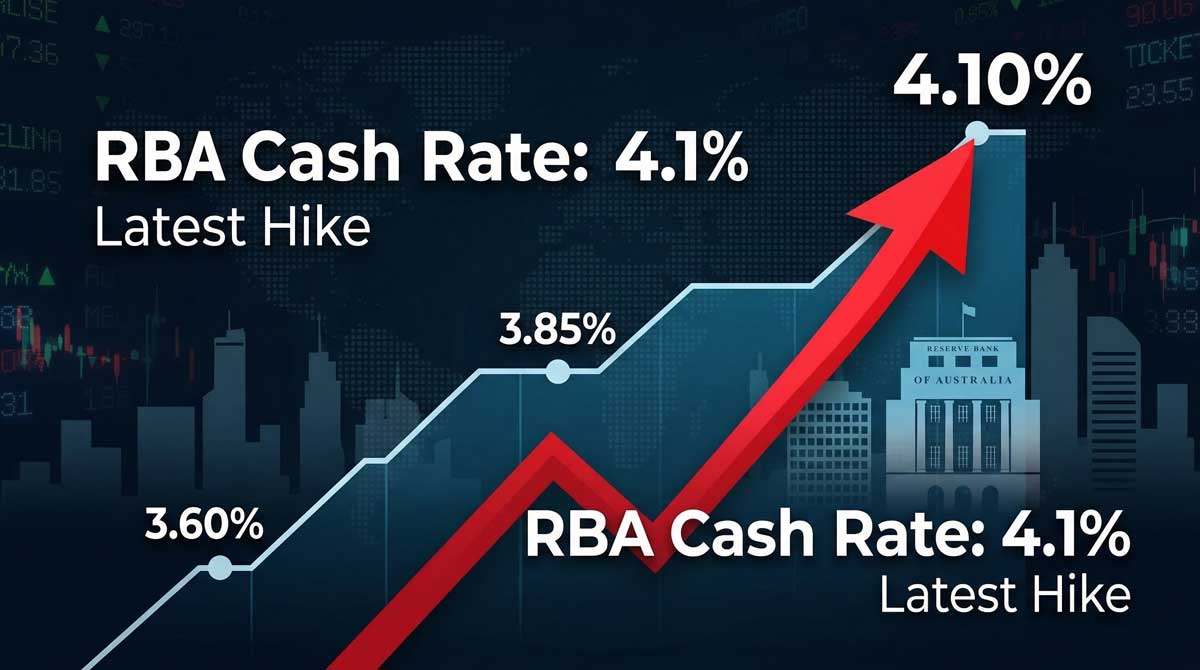
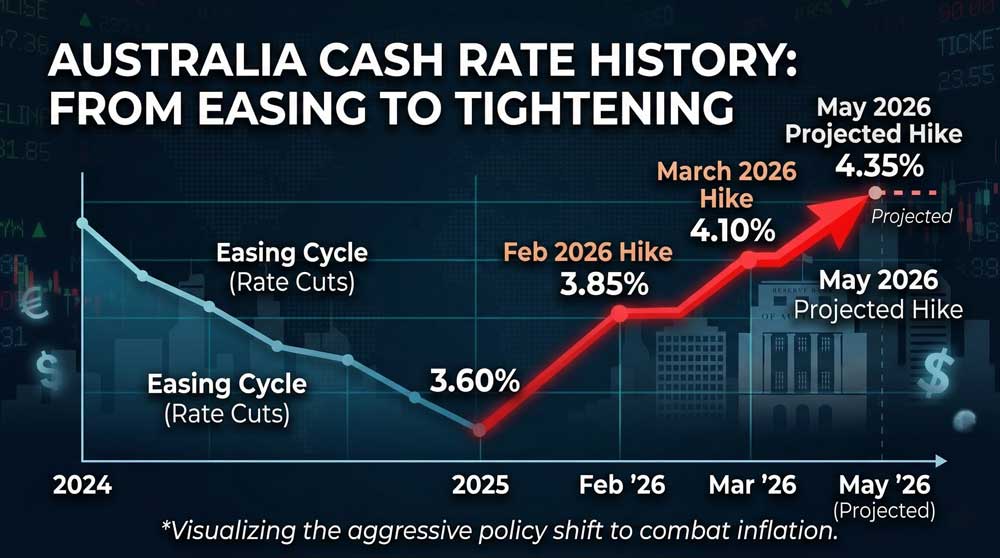
The global economic landscape is shifting rapidly, and the latest RBA interest rate hike is a clear testament to the pressures facing central banks today. On March 17, exactly as markets anticipated, the Reserve Bank of Australia (RBA) raised its benchmark cash rate by 25 basis points to 4.1% — the highest level since April 2025 and the second consecutive increase this year.
In February, driven by fears of deeply entrenched inflation, the RBA became the first central bank in the developed world to tighten monetary policy in 2026. Since then, escalating conflict in the Middle East has only intensified those inflationary anxieties. If you are navigating Australia’s financial markets, understanding the mechanics behind this decision is crucial.
Table of Contents
The Core Catalyst: Why the RBA Interest Rate Hike Happened
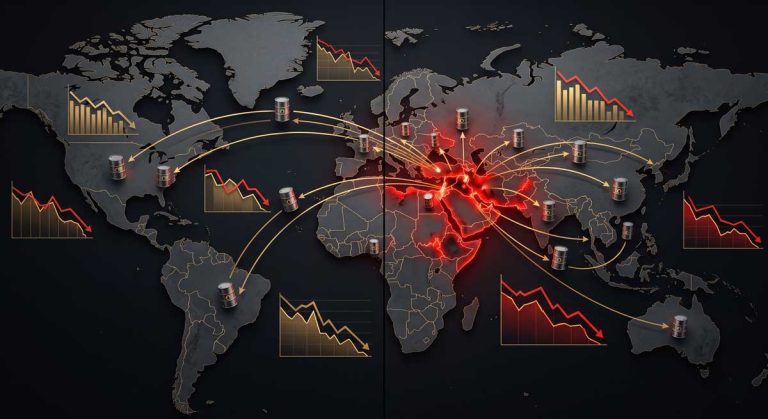
The primary driver of this RBA interest rate hike is Australia’s stubbornly high inflation, which continues to exceed the central bank’s mandated 3% ceiling. Compounding this, the ongoing Middle East conflict threatens to disrupt global energy markets and supply chains — potentially triggering a second wave of price surges.
The RBA’s official statement acknowledged that while inflation had cooled significantly from its 2022 peak, it experienced a concerning resurgence in the second half of 2025. The board noted that the highly uncertain Middle East situation could exacerbate both global and domestic price pressures, with Australian inflation likely remaining above the target band for “some time” — with risks tilted further to the upside.
The central bank reaffirmed its commitment to its dual mandate: “Australia’s monetary policy is well-positioned to respond to developments. The Monetary Policy Committee remains focused on price stability and full employment and will take all necessary measures to achieve this.”
Analyzing the Split Vote: A 5-4 Decision
Despite the resolute public statement, the decision was far from unanimous. The rate increase passed by the narrowest possible margin — five votes in favor, four against.
This razor-thin split reveals significant internal debate. Market analysts widely interpret the result as a signal that hawkish momentum may be waning, even as the official tone stays firm. The composition of the monetary policy committee is proving critical: with four dissenting votes already on the record, a single board member shift could flip the outcome entirely in May. The risk of a pause is very real.
Economic Indicators Driving the RBA Interest Rate Hike
Australia’s economy remains surprisingly resilient, giving the RBA the runway to maintain restrictive rates without immediately triggering a severe recession. The key data points that justified this RBA interest rate hike:
| Economic Metric | Period | Result | Market Forecast |
|---|---|---|---|
| Consumer Price Index (CPI) | Q4 2025 | 3.6% annual | Above 3% target |
| Monthly CPI Indicator | January 2026 | 3.8% | 3.7% expected |
| GDP Growth | Q4 2025 | 2.6% | Below 2.6% expected |
| RBA Inflation Peak Forecast | Mid-2026 | ~4.2% | Under review |
| Return to 2–3% target band | Late 2026–2027 | Projected | Subject to upward revision |
Strong GDP growth is a double-edged sword: it validates the hawkish stance but also means households and businesses have more capacity to absorb rate pain than in a weakening economy.
Deputy Governor Andrew Hauser’s Warning
The RBA’s current stance aligns directly with warnings issued by Deputy Governor Andrew Hauser just days before the decision. In a candid media interview, Hauser projected that inflation would remain uncomfortably elevated — likely only returning to the 2%–3% target range by late 2026 or 2027, and reaching the 2.5% midpoint by 2028.
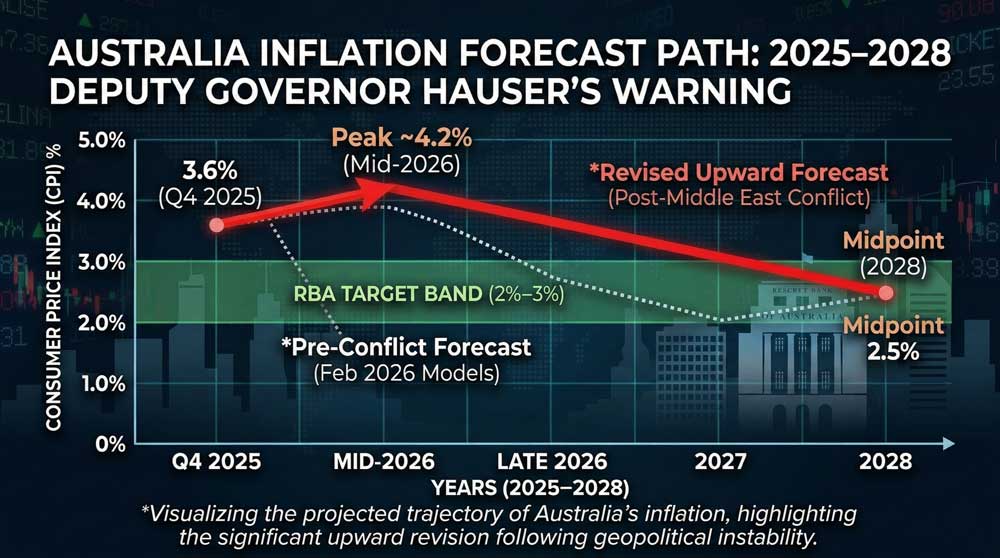
Back in February, the RBA had forecast headline inflation to peak at 4.2% around mid-2026 before easing to “slightly below 3%” by mid-2027. But Hauser explicitly warned those models are already outdated — they were drafted before the Middle East conflict escalated into its current phase. Upward revisions are now all but certain.
Market Reactions to the RBA Interest Rate Hike
Financial markets responded with measured recalibration — the hike was expected, but the narrow vote introduced a note of caution:
| Asset | Movement | Market Interpretation |
|---|---|---|
| S&P/ASX 200 | +0.11% | Relief rally; hike fully priced in |
| 3-year Australian govt bond yield | −8 basis points | Slower future hike path expected |
| Australian Dollar (AUD) | Slightly lower | Narrow vote read as less hawkish |
| May 2026 rate hike probability | ~50% | Markets evenly split on next move |
The bond market’s reaction is telling: falling yields despite a rate hike suggests traders believe the RBA is approaching the end of its tightening cycle. If the May hike proceeds, it would fully reverse the 75 bps of cuts delivered during the RBA’s brief six-month easing period last year.
Global Context: Super Central Bank Week
Australia’s RBA interest rate hike does not exist in a vacuum. This week has been dubbed “Super Central Bank Week” — with 21 central banks covering roughly two-thirds of global GDP announcing rate decisions in rapid succession.
Critically, this is the first major central bank meeting cycle since the Middle East conflict escalated, making it the most geopolitically charged monetary policy week in years. The RBA fired first among the top eight. Here’s the full schedule:
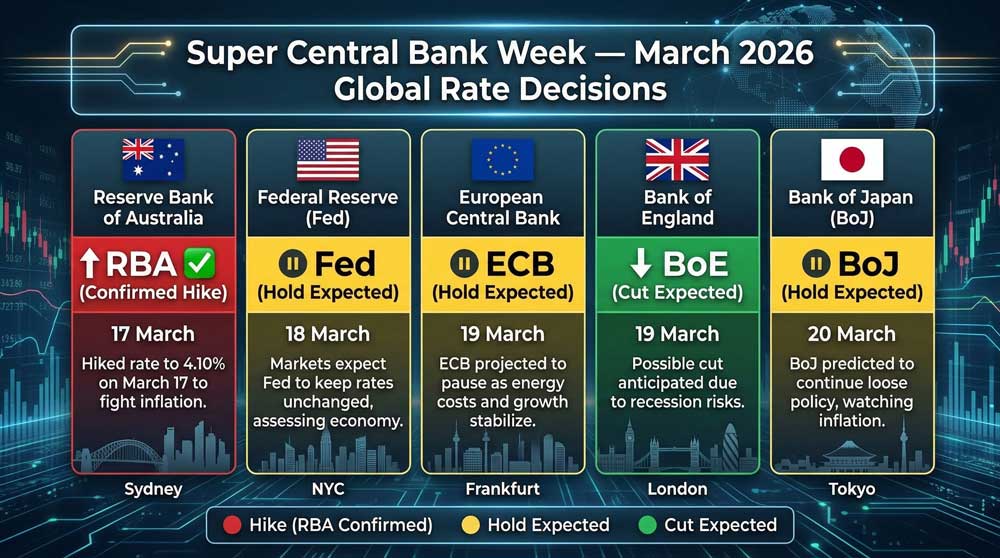
| Central Bank | Decision Date | Market Expectation |
|---|---|---|
| Reserve Bank of Australia | March 17 | ✅ +25 bps (confirmed) |
| U.S. Federal Reserve (Fed) | March 18 | Hold expected |
| European Central Bank (ECB) | March 19 | Hold expected |
| Bank of England (BoE) | March 19 | Hold expected |
| Bank of Japan (BoJ) | March 19 | Hold / minor adjustment |
The burning question: will the Fed, ECB, and BoE explicitly acknowledge Middle East conflict as an inflationary risk in their forward guidance — or downplay geopolitical uncertainty? The RBA has already laid its cards on the table.
What’s Next? Predictions for May 2026
Following this RBA interest rate hike, swap markets have repriced the May outlook significantly. Traders now assign approximately 50% probability to another 25 bps hike, which would push the cash rate to 4.35% — completely erasing last year’s easing cycle.
Three scenarios are plausible heading into May:
- Hike to 4.35% (~50%) — if Q1 2026 CPI comes in hot or energy price shocks materialize from the Middle East
- Hold at 4.10% — if the narrow vote signals board fatigue and incoming data softens meaningfully
- Surprise cut — highly unlikely given current trajectory, but possible if global growth deteriorates sharply
The 5-4 board composition will be the decisive factor. Watch for any personnel changes or public speeches from board members in the weeks ahead — they will telegraph May’s outcome more reliably than the data alone.
Authoritative Resources & References
- RBA Official Statement — March 2026 Monetary Policy Decision
- RBA Cash Rate Target — Historical Data and Implementation
- Australian Bureau of Statistics — CPI January 2026 Release
- Financial Times — Middle East Conflict and Global Inflation Risk
- IMF — World Economic Outlook: Geopolitical Risks and Price Stability
- Federal Reserve — FOMC Meeting Schedule and Statements
- The Great Capital Migration: Why Global Investors Are Fleeing Australian Assets in 2026
- BHP vs. CBA: Australia’s Market Duel and the Global Currency Reset in Motion
- 7 Reasons Why Silicon Valley Pivots to Natural Gas Investment for AI Power