5 Epic Reasons the Hong Kong Safe Haven Thrives After Dubai’s Collapse
The Hong Kong safe haven is witnessing an unprecedented era of global wealth migration — and March 13, 2026, is the day that made it inevitable.
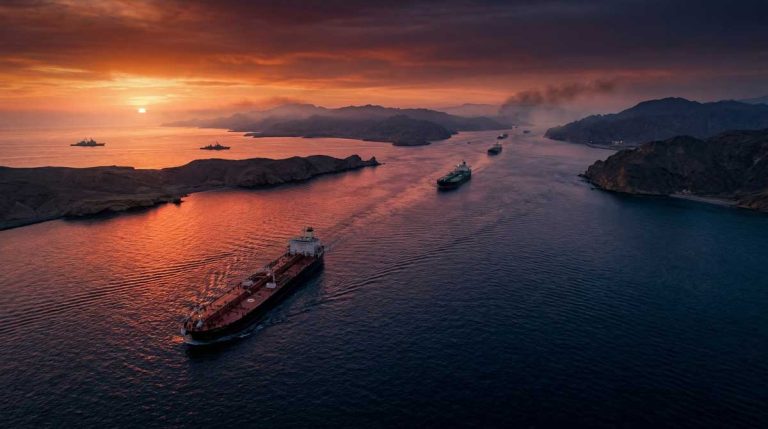
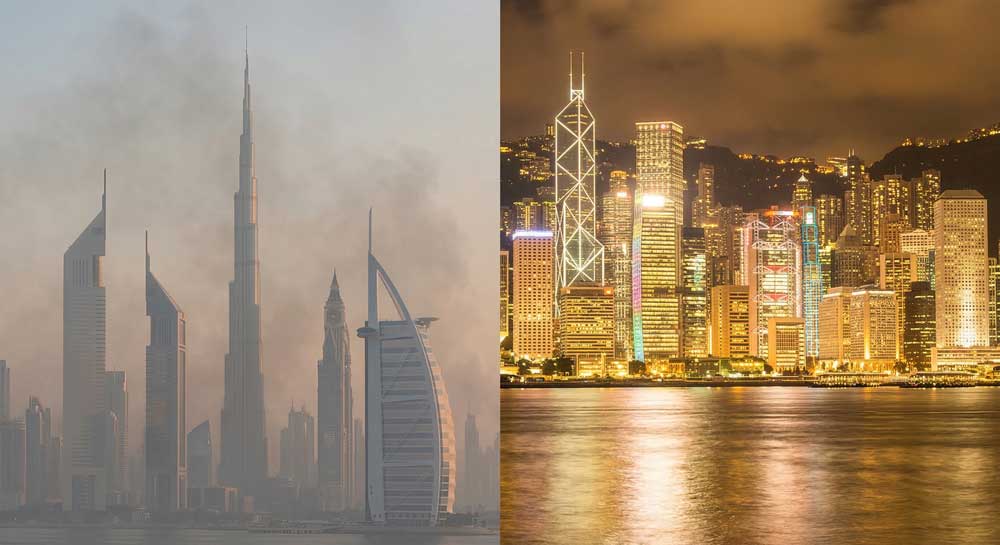
As Middle Eastern geopolitical conflict reached a boiling point, Dubai — the world’s presumed wealth playground — suffered a systemic confidence circuit breaker. Missiles breached the iconic Burj Al Arab. The Strait of Hormuz faced its most historic blockade. Global capital awoke to a brutal truth: the ultimate luxury isn’t a zero-tax penthouse. It’s genuine, systemic security.
This article explores exactly why the Hong Kong safe haven is emerging as the defining beneficiary of that realisation — and what it must do to make this opportunity permanent.
Table of Contents
The Dubai Illusion: How the “Neutral” Playground Crumbled in 11 Days
For five years, Dubai appeared invincible. In 2025, the UAE attracted over 9,800 migrating millionaires, leading the world for two consecutive years. Foreign direct investment surged past $45 billion — a 50% counter-cyclical surge — and Dubai’s luxury real estate volume effortlessly trampled records set by London and New York.
The city’s prosperity formula seemed flawless: zero taxes to lure capital, breathtaking landmarks to signal permanence, and political neutrality to hedge regional risk.
War is the most honest stress test. Within one week of escalation, three fatal bubbles burst simultaneously:
- The neutrality myth: Enjoying a Western security umbrella means inheriting Western adversaries. Iran’s strike strategy was deliberate — target the financial centre and tourist landmarks to trigger confidence collapse, not just physical destruction
- The liquidity trap: Dubai has the world’s most luxurious penthouses but no deep industrial base, no rule-of-law depth. When risk premiums spiked, a European investor accepted a 50% property haircut just to exit before liquidity disappeared entirely
- Logistical asphyxiation: As a hub handling 20% of global gold transit, airspace closure triggered immediate bottlenecks — gold at Jebel Ali Port was forced to trade at a $30/oz discount to spot. For a re-export economy, logistics paralysis is more lethal than the missiles themselves
The UAE absorbed approximately 50% of Iran’s total military fire, becoming the largest unintended casualty of a war it never chose.
Dubai vs. Hong Kong Safe Haven: A Tale of Two Hubs
| Economic Metric | Dubai Pre-Crisis | Dubai Post-Crisis | Hong Kong Safe Haven Edge |
|---|---|---|---|
| Real estate volume | AED 20.7B/week | AED 10.3B/week (▼49.9%) | Morgan Stanley: +10%+ in 2026 |
| Geopolitical stance | “Neutral” playground | Exposed proxy target | Sovereign-scale strategic depth |
| Capital liquidity | High in bull markets | Frozen amid panic | Deep institutional markets |
| Primary wealth driver | Zero-tax incentives | Capital flight desperation | Security + Development framework |
| Rule of law foundation | Developing | Undermined by crisis | Common law, 180+ years deep |
| University ecosystem | No QS Top-100 | No QS Top-100 | 5 QS Top-100 universities |
Why Capital is Flooding the Hong Kong Safe Haven
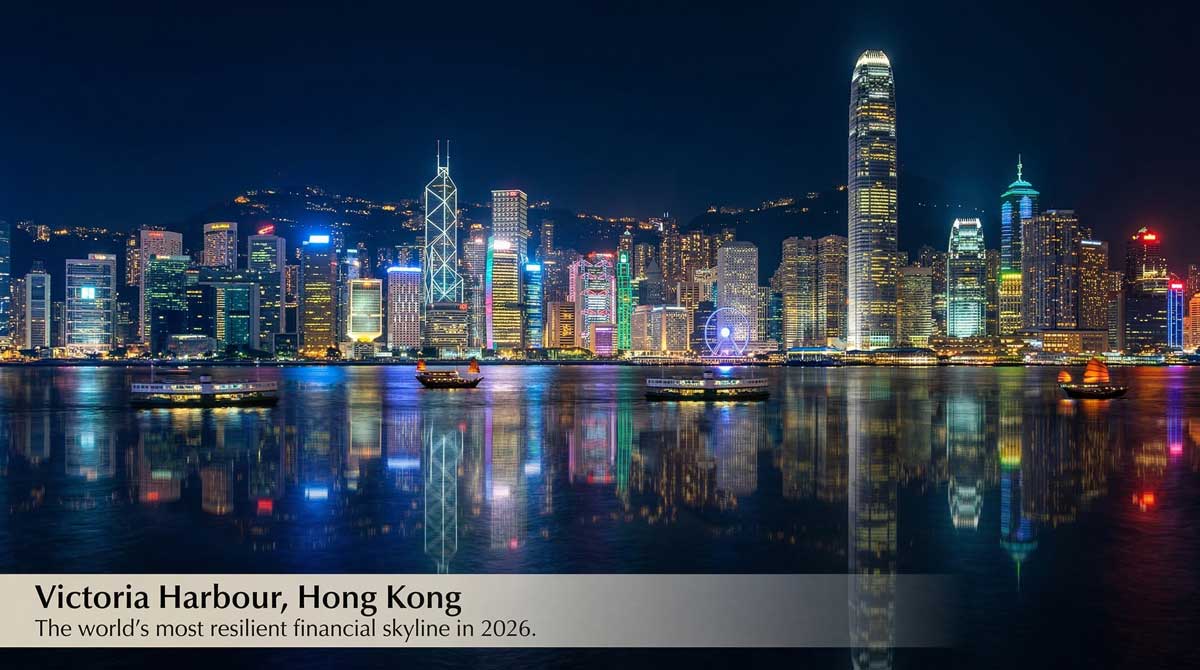
When Dubai’s Achilles’ heel was exposed, Victoria Harbour’s lights shone brighter than ever. Hong Kong Financial Secretary Paul Chan Mo-po immediately stepped forward with a systematic “safe haven” pitch — the first time this framing has been deployed so explicitly at an official level.
He didn’t avoid uncomfortable realities, openly acknowledging that Iranian capital might seek refuge in Hong Kong, and promising the SAR government would handle it with precision. That kind of candour signals institutional confidence.
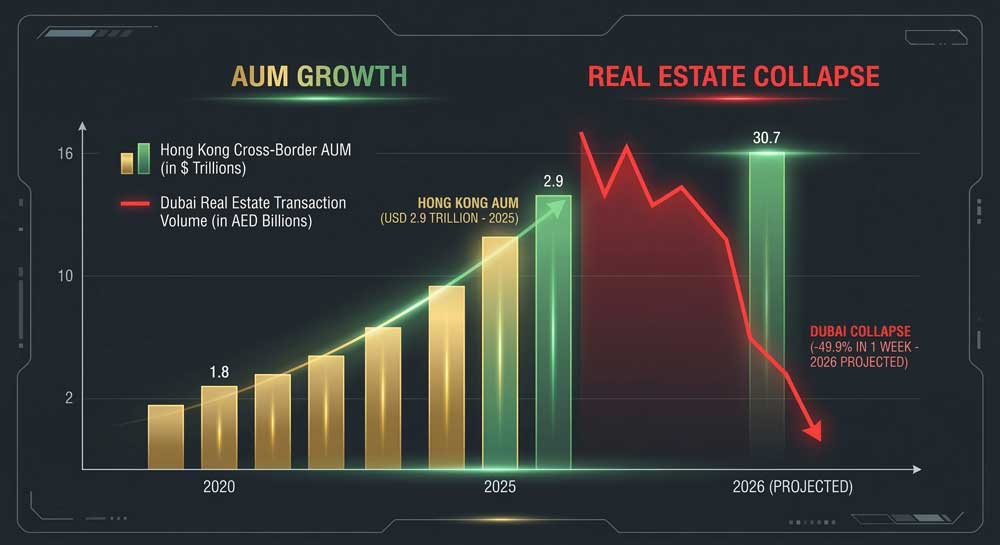
The data was already building the case before the crisis hit:
- IPO dominance: Hong Kong’s IPO market reclaimed the global #1 spot in 2025 — its first time in six years
- Wealth management throne: Cross-border AUM reached an estimated $2.9 trillion, officially dethroning Switzerland as the world’s largest cross-border wealth management hub
- Real estate resurgence: Morgan Stanley forecasts 10%+ property price growth in 2026, following a 4% rebound in 2025
- Elite demand surge: Lawyers report receiving 10+ calls per day from former Dubai-based clients asking a single question — how do I move my assets back to Hong Kong?
As one Hong Kong fund manager stated bluntly: “They left for Dubai to save on taxes. They’re coming back to Hong Kong to save their capital. Tax savings mean nothing when missiles are in the air.”
5 Epic Reasons the Hong Kong Safe Haven Will Dominate the Next Decade
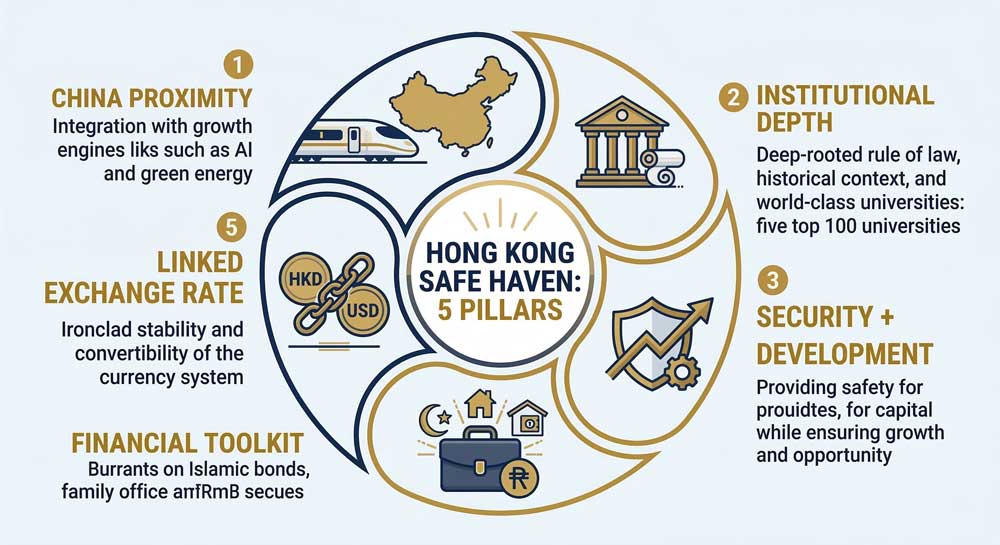
Reason 1: Unrivalled Proximity to China’s Growth Engine
No tax incentive in the Gulf can replicate Hong Kong’s position as the closest internationally recognised, liquid capital market to the world’s largest growth engine. Middle Eastern sovereign wealth funds deploying into China’s AI, green energy, and biotech sectors have one natural gateway — Hong Kong’s exchange.
Reason 2: Institutional Depth Dubai Cannot Buy
Hong Kong’s five QS Top-100 universities represent centuries of intellectual infrastructure. Ultra-high-net-worth individuals who educate their children here and root their family offices here aren’t parking capital — they’re planting generational flags. That’s the difference between hot money and permanent wealth.
Reason 3: The “Security + Development” Dual Dividend
Pure safe haven positioning attracts flight capital but loses it when global stability returns. Hong Kong is uniquely positioned to offer both — security from systemic rule of law and sovereign scale, plus development upside through China market access. That combination is structurally unreplicable.
Reason 4: A Rapidly Expanding Financial Toolkit
To capture Gulf wealth long-term, Hong Kong is accelerating Islamic bond (Sukuk) development, hyper-customised family office licensing, and RMB-denominated hedging instruments. Converting “temporary shelter” deposits into structural allocations requires the right products — and Hong Kong is building them fast.
Reason 5: The Linked Exchange Rate as a Trust Anchor
In an era of currency volatility and geopolitical shock, the Hong Kong dollar’s decades-long peg to the USD functions as a credibility signal that no newcomer financial centre can replicate overnight. It’s boring — and in 2026, boring is exactly what global capital wants.
Hong Kong Safe Haven vs. Singapore: Which Wins?
Both cities benefit from Middle East instability. But the competitive gap is real:
| Factor | Hong Kong | Singapore |
|---|---|---|
| China market access | ✅ Unmatched (Stock Connect, Bond Connect) | ⚠️ Limited |
| Wealth management entry threshold | ✅ More accessible | ⚠️ Higher minimums |
| Islamic finance infrastructure | ⚠️ Growing | ✅ More established |
| Family office incentives | ⚠️ Catching up | ✅ More mature framework |
| Geopolitical risk (2026) | ✅ Low | ✅ Low |
For capital seeking China exposure alongside security, Hong Kong wins. For capital seeking pure ASEAN diversification, Singapore competes strongly. The smart money increasingly holds positions in both.
The Bottom Line: A Civilisational Inflection Point
Dubai’s Sheikh Mohammed once turned desert into a global financial playground through sheer vision. Iran’s missiles altered that calculus in 11 days.
This is not merely one city’s misfortune — it is an era’s turning point. The “asset-light” prosperity model built on tax incentives and spectacular architecture, without the bedrock of systemic security and legal depth, has reached its structural limit.
For the first time in decades, global capital is actively pricing security as the primary asset class — not the background assumption. The Hong Kong safe haven, backed by common law tradition, sovereign-scale protection, deep capital markets, and direct China access, sits at the exact intersection of what the world now demands.
The opportunity is historic. But Hong Kong must remember: attracting capital and retaining it are two entirely different skills. Only by cementing the “Security + Development” dual narrative — not just a crisis shelter, but the world’s premier platform for wealth to grow safely — will this moment become a permanent upgrade rather than a temporary windfall.
Authoritative Reference Links
- Bloomberg: Asia-Gulf investment flows strengthen, but US-China risk looms
- South China Morning Post: DBS bets on Hong Kong as wealth fortress
- South China Morning Post: Chubb Wealth debuts in Hong Kong’s growing private wealth market
- Morgan Stanley: Asia Pacific Real Estate Outlook 2026
- HKMA: Cross-Border Wealth Management Statistics
- Knight Frank: The Wealth Report — Millionaire Migration Trends
- ElevenLab: Iran Oil Crisis Impact: 5 Proven Reasons It Won’t Trigger a 1970s-Style Disaster
- ElevenLab: Strait of Hormuz Semiconductor Crisis: 5 Devastating Threats to the Global Tech Supply Chain
- ElevenLab: 4th Oil Crisis: 5 Powerful Turning Points That Broke the $100 Barrier
- ElevenLab: Hormuz Strait Oil Disruption: 7 Critical Impacts Reshaping the 2026 Global Energy Market