1 Ultimate Key to the Middle East Endgame: The Strait of Hormuz Toll Explained
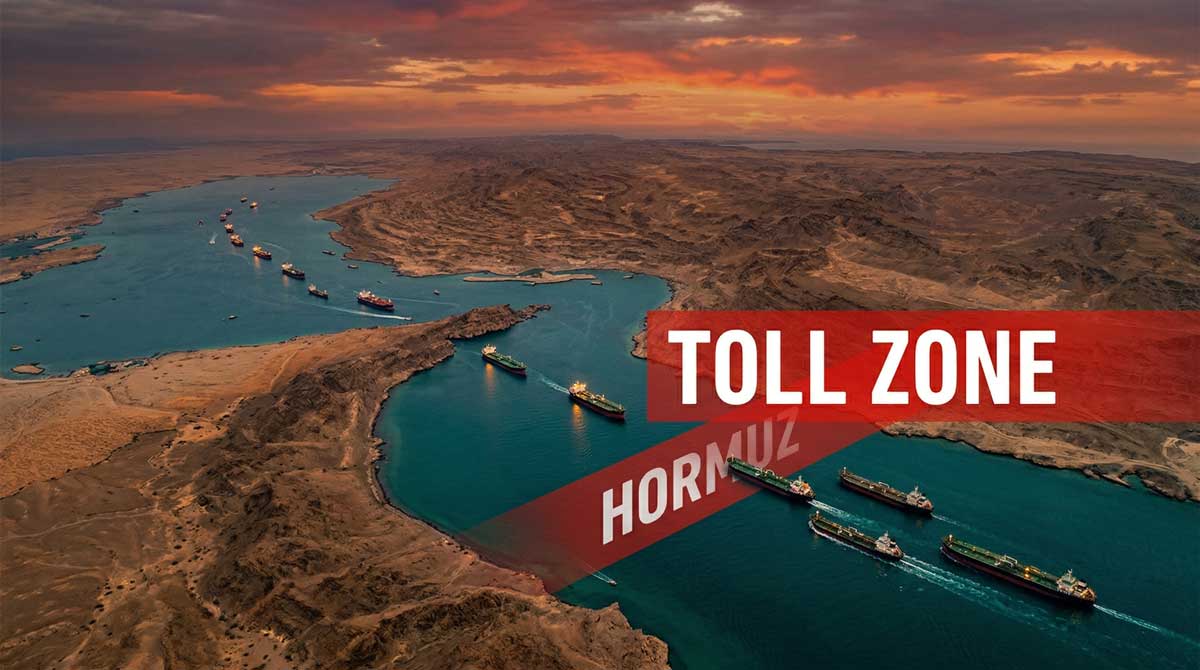
The Strait of Hormuz toll — once dismissed as an idle threat — is now a formal legislative reality, and it may be the single most decisive factor in determining how the Middle East conflict ends. Iran’s parliament has approved the measure, nearly 2,000 vessels are stranded on both sides of the strait, and every major power is quietly recalculating its position.
This is no longer a theoretical scenario. Understanding the toll’s economic architecture, political logic, and strategic implications is essential for anyone tracking global energy markets, geopolitics, or the future of maritime trade.
Table of Contents
Who Actually Controls the Strait?
Most people assume the Strait of Hormuz is open international waters. The legal and geographic reality is far more contested — and Iran has exploited that ambiguity with precision.
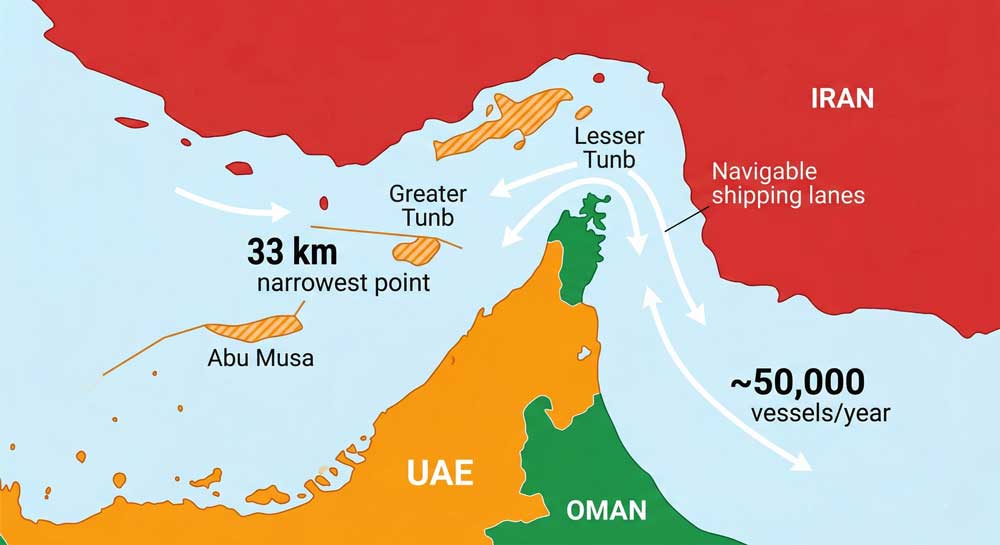
The strait’s navigable channels are divided between Iran to the north and Oman to the south. The UAE adds a third layer of jurisdictional complexity through its longstanding sovereignty dispute with Iran over three islands — Abu Musa, Greater Tunb, and Lesser Tunb — giving Abu Dhabi its own claim over passage rights. Because no binding legal framework ever resolved ownership, free transit became the default norm. That default is now being overturned by force.
Iran’s Revolutionary Guard Corps (IRGC) has already intercepted vessels attempting to use the strait without authorization, declaring it “closed” to unauthorized traffic. Iran’s parliamentary National Security and Foreign Policy Committee has since approved a formal eight-point management plan that includes a rial-denominated toll system, a ban on US and Israeli vessels, restrictions targeting sanctioning nations, and a legal cooperation framework with Oman.
The Financial Architecture of a Strait of Hormuz Toll
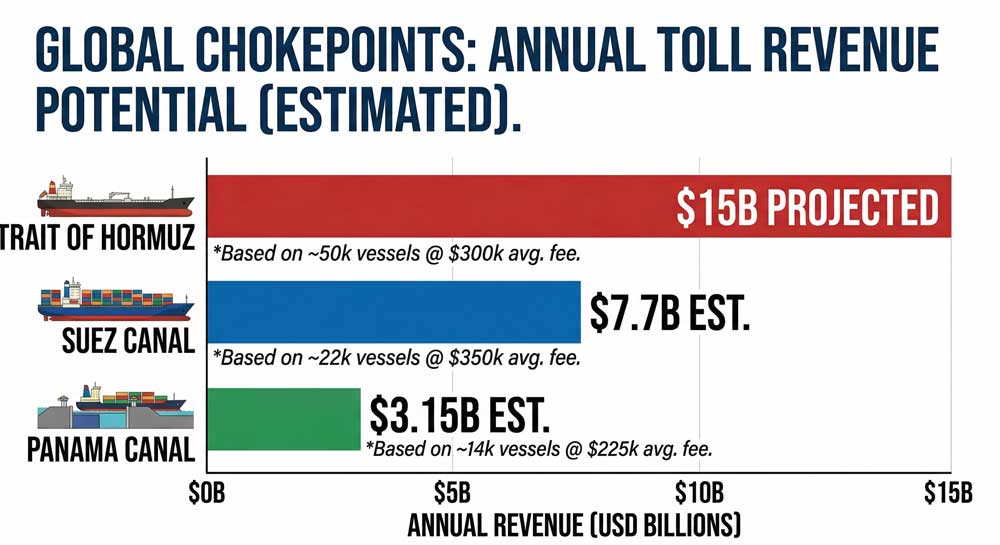
Iran’s opening bid of $2 million per vessel was always a negotiating position. The viable number is almost certainly lower — but still transformational. At a projected rate of roughly $300,000 per ship, comparable to major global chokepoints, the revenue math becomes extraordinary.
| Waterway | Avg. Toll Per Vessel | Annual Transits | Primary Controller | Est. Annual Revenue |
|---|---|---|---|---|
| Suez Canal | ~$350,000 | 22,000+ | Egypt | ~$7B |
| Panama Canal | ~$200,000–$250,000 | 14,000+ | Panama | ~$3B |
| Strait of Hormuz | ~$300,000 (projected) | ~50,000 | Iran / Oman | ~$15B |
With ~50,000 vessels transiting annually under normal conditions, a $300,000 toll generates a $15 billion annual revenue pool. Even after splitting with Oman, Iran retains close to $10 billion — achieved with minimal operational overhead.
For context: Iran’s 2025 budget allocated just over $6 billion to the IRGC in official line items, excluding substantial off-budget funding. The toll revenue would dwarf that allocation and fund the entire security apparatus several times over.
Iran’s Internal Power Play: Two Factions, One Strategy
Understanding why the Strait of Hormuz toll could actually end the conflict requires understanding Iran’s fractured internal politics. Two powerful factions — the IRGC and the elected civilian government — want different things. The toll plan elegantly satisfies both.
The IRGC’s Financial Imperative
The Revolutionary Guard controls both Iran’s military and a vast portfolio of economic enterprises. A prolonged conflict, fought on Iranian soil with senior commanders being eliminated in targeted strikes, is an institutional liability — regardless of public hardline posturing. A permanent toll regime allows the IRGC to declare a strategic victory (Iran now controls the world’s most critical energy chokepoint), secure a perpetual revenue stream, and withdraw from a war of attrition that is grinding down their assets.
President Pezeshkian’s Economic Rescue Plan
Iran’s elected government entered this conflict already managing a severe financial crisis:
- The rial hit approximately 1.66 million to 1 USD on the open market in early 2026 — a near-50% depreciation from the prior year
- Point-to-point inflation reached 62.2% in early 2026, with food costs averaging 72% higher year-on-year
- Annual inflation is projected to remain above 40–50% through 2026
President Pezeshkian’s government has publicly stated the economy cannot sustain a prolonged war. The toll plan is their solution — and the masterstroke lies in the payment mechanism. Iran’s plan requires tolls to be paid in Iranian rials. Every commercial vessel wanting to transit the strait would first need to acquire rials on international currency markets, generating a sustained flood of foreign exchange into Iran’s central bank. This functions as a de facto currency stabilization program disguised as a maritime fee.
The IRGC gets revenue. The government gets forex inflows and political cover. Both factions win from a single policy instrument.
Why the United States May Have No Choice
Accepting a Strait of Hormuz toll might look like a concession from Washington’s perspective. But the asymmetric military reality leaves limited alternatives.
The strait is only 33 kilometers wide at its narrowest navigable point. Iran doesn’t need to defeat a US carrier strike group in open battle — they only need to make free passage too costly and unpredictable. A handful of naval mines, drone swarms, or coastal anti-ship missiles can bottleneck ~20% of global daily oil supply regardless of American naval superiority nearby.
Trump has already publicly distanced the US from obligation to police the strait, suggesting oil-dependent nations secure their own transit — language that reads as tacit acceptance of the new reality rather than strategic confidence.
The Kharg Island Question
The remaining military wild card is a potential strike on Kharg Island, which handles ~90% of Iran’s crude oil exports, with around 1.5 million barrels shipped daily to markets — primarily China. At just 25 kilometers from the Iranian mainland, the island could theoretically be seized, but holding it against sustained Iranian counterattack would be a logistical nightmare. Most analysts view threats against Kharg Island as diplomatic pressure rather than operational planning.
The Biggest Losers: Gulf Arab Oil States
If the Strait of Hormuz toll becomes permanent, the nations most financially damaged are not the US or Israel — they are Saudi Arabia, the UAE, and Kuwait, which export the majority of their oil through the strait and would be paying tribute to a regional rival on every barrel.
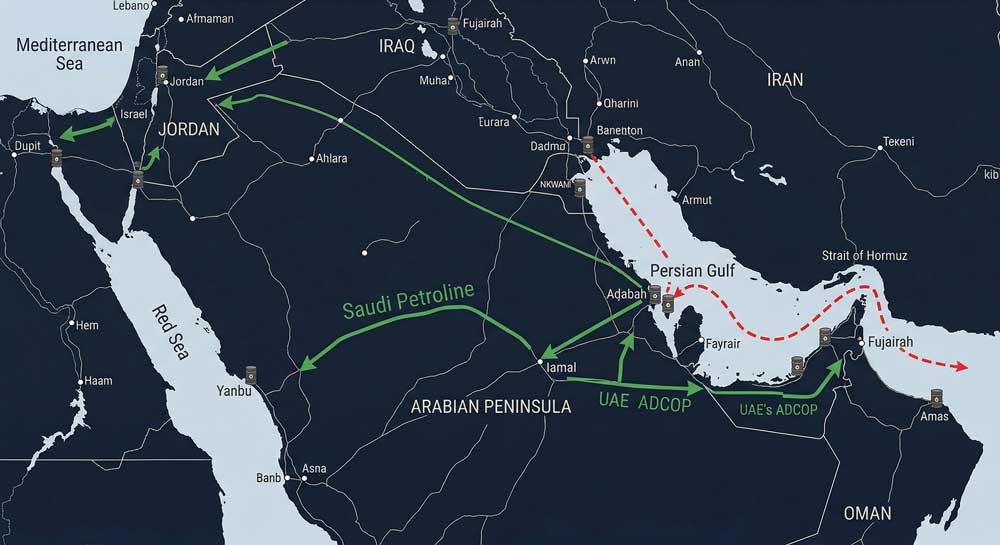
Both existing Saudi and UAE pipelines can only partially offset Hormuz disruptions — they were designed as emergency supplements, not full replacements. The Financial Times reports Gulf states are now urgently reassessing this infrastructure gap.
Proposed alternatives gaining serious traction include:
- Saudi East-West Pipeline expansion toward Red Sea terminals, including potential Neom corridor links
- UAE ADCOP capacity expansion at Fujairah’s Indian Ocean terminal
- Iraq–Mediterranean pipeline corridors via Jordan, Syria, or Turkey to reach European markets
- India-Middle East-Europe Economic Corridor (IMEC) integration combining pipelines with rail and trade links
As one Atlantic Council senior adviser put it: “I’m sensing a shift from hypotheticals into operational reality. Everyone is looking at the same map and they are drawing the same conclusions.”
The Likely Endgame Scenario
Based on the converging incentives, the most probable conflict resolution is not a formal signed peace treaty — it is a tacit mutual stand-down structured around the toll framework:
- Iran and Oman formalize joint toll authority over Hormuz passage at a negotiated rate well below the $2M opening bid
- IRGC declares strategic victory, secures permanent revenue stream, and draws down active combat operations
- Iran’s civilian government uses rial-denominated toll receipts to stabilize the currency and reduce inflation
- US-Israeli forces gradually withdraw without formally acknowledging defeat, framing it as mission completion
- Gulf Arab states accelerate pipeline diversification over the following 3–5 years, reducing but not eliminating Hormuz dependency
This outcome represents a meaningful strategic erosion of US influence in the Middle East — a region Washington has policed since the 1991 Gulf War — regardless of how it’s characterized domestically.
What This Means for Global Energy Markets
The Strait of Hormuz toll introduces a new, permanent cost layer into global energy pricing. With ~20 million barrels per day at stake, even a $300,000 per vessel toll cascades through oil prices, shipping insurance premiums, LNG contracts, and supply chain reliability calculations worldwide.
For investors, energy companies, and policymakers, the strategic question is no longer whether the toll becomes permanent — it’s at what rate, and how quickly bypass infrastructure can reduce its leverage.
Authoritative Sources
- U.S. EIA — World Oil Transit Chokepoints: Strait of Hormuz
- New York Times — Iran Moves to Formalize Toll Plan in Strait of Hormuz (March 2026)
- Al Jazeera — Tehran’s ‘Toll Booth’: How Iran Picks Who to Let Through (March 2026)
- Al Jazeera — Saudi, UAE, Iraq: Can Three Pipelines Help Oil Escape Hormuz? (March 2026)
- The Conversation — Kharg Island: Iran’s Energy Lifeline That Has Escaped Attack
- Iran Open Data — IRGC Budget Nearly Twice That of Army in 2025
- EBC — Iran Currency Crash: Rial at 1.66M per USD in Early 2026
- Business Standard — Gulf Nations Explore Oil Routes Beyond Strait of Hormuz (April 2026)
- The National News — Gulf States Must Invest in Hormuz Alternatives (March 2026)
- Chosun — Iran’s Parliament Approves Hormuz Strait Toll Plan (March 2026)
- 3 Secret Motives Behind the Dangerous UAE Strategy Against Iran in 2026
- Operation Epic Fury & the Middle East Geopolitical Crisis: 8,000 Airstrikes, 3 Market Warnings, and 1 Economic Tipping Point
- Strait of Hormuz Semiconductor Crisis: 5 Devastating Threats to the Global Tech Supply Chain