Iran US Blockade Strategy: 3 Deadly Moves Threatening Iran’s Survival in 2026
The Iran US blockade strategy has entered a brutal new phase — one that goes far beyond missiles and airstrikes. As of April 2026, the United States has deployed a three-pronged campaign designed not to win on the battlefield, but to strangle Iran economically, financially, and diplomatically until the government either collapses or capitulates.
I believe this shift represents one of the most significant strategic pivots in Middle East geopolitics in decades. The first phase of open military confrontation has effectively stalled. Now Washington is betting that economic suffocation will accomplish what bombs could not.
Table of Contents
Phase One Is Over — And Iran Did Not Lose
Before understanding where things stand today, it is worth being honest about the first phase of the conflict. I think the honest assessment is that Iran performed far better than most Western analysts predicted.
Despite suffering significant damage — air defense systems degraded, naval assets struck, and multiple leadership figures assassinated — Iran maintained political cohesion, continued launching retaliatory strikes, closed the Strait of Hormuz for weeks, and forced the United States to the negotiating table. That is not the outcome of a defeated country.
The US military’s own internal posture tells the story. In early April 2026, the Pentagon dismissed three senior generals in a single day for openly opposing continued military escalation. Among them were the Army Chief of Staff and the Army Training and Readiness Commander — both of whom argued the military was not prepared for sustained land warfare in Iran’s mountainous terrain. The fact that even the Army’s chief chaplain was reportedly removed for failure to maintain morale among combat-resistant troops underscores just how deeply anti-war sentiment had penetrated the ranks.
| General Removed | Role | Stated Reason for Removal |
|---|---|---|
| Randy George | Army Chief of Staff (4-star) | Opposed ground invasion of Iran publicly |
| David Hodne | Army Training & Readiness Commander | Said army was not ready for Iran operations |
| William Green | Chief of Chaplains (Brigadier General) | Unable to manage troop morale amid war fatigue |
When your own senior military leadership is being purged for recommending caution, that is not a sign of strength — it is a sign of strategic desperation.
The 3-Part Iran US Blockade Strategy Explained
With military options increasingly unattractive, the Trump administration pivoted to what Treasury Secretary Scott Bessent described on April 15 as the “financial equivalent of a bombing campaign”. In my view, this three-part strategy is more dangerous to Iran’s long-term stability than any single airstrike.
1. Maritime Siege at the Strait of Hormuz
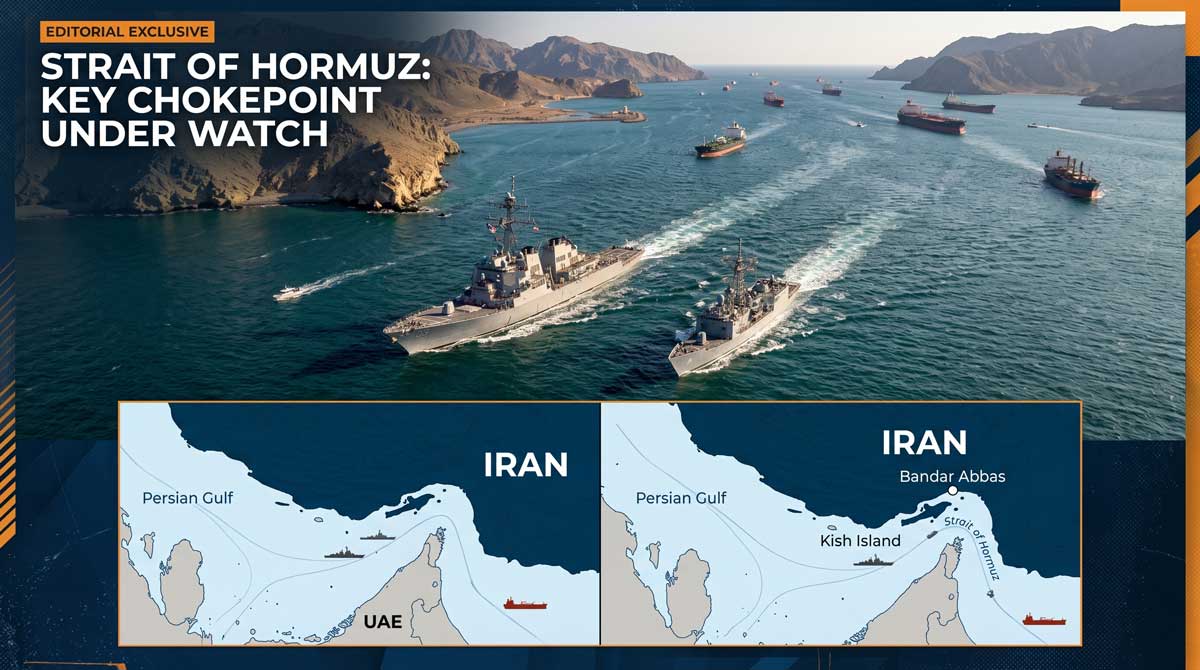
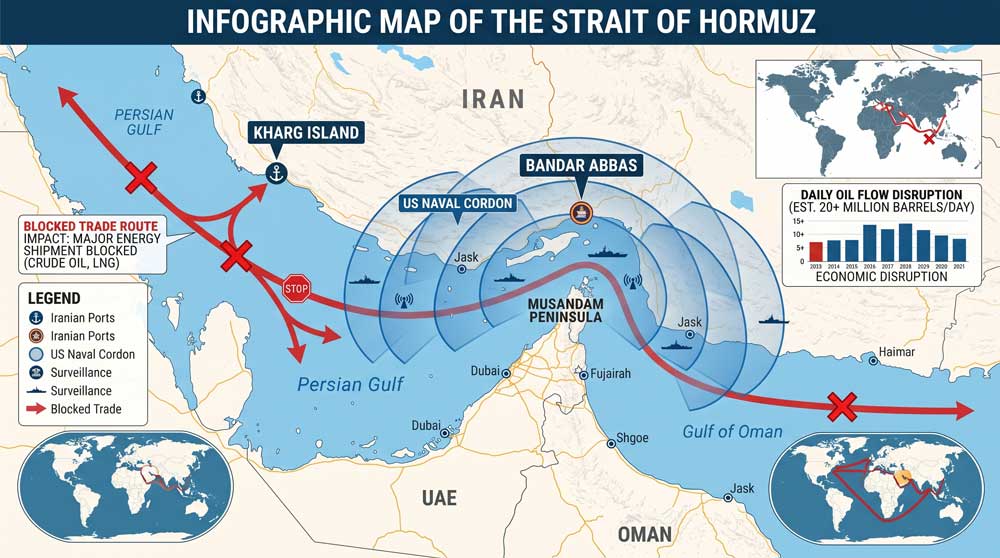
On April 13, the US activated a naval blockade deploying at least 15 warships and tens of thousands of personnel around the Persian Gulf, Gulf of Oman, and Strait of Hormuz. The stated objective: intercept all vessels entering or departing Iranian ports and coastal zones, regardless of flag or nationality.
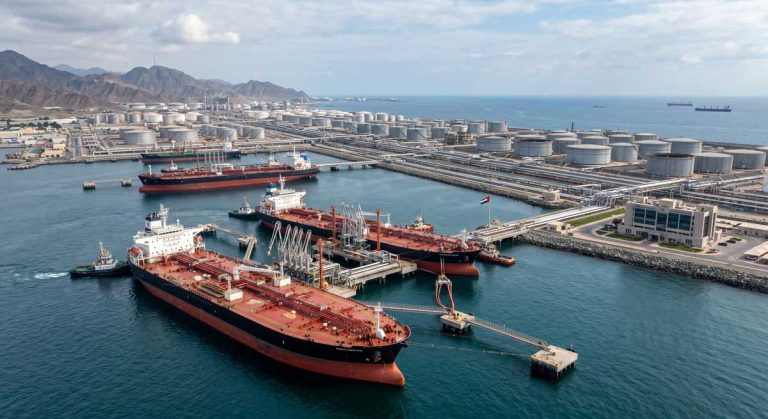
The primary targets are Iran’s key export arteries — Kharg Island, which handles an estimated 90% of Iran’s crude oil exports, and Bandar Abbas (Bandar-e Abbas), the country’s largest commercial port. According to CENTCOM, within 36 hours of implementation, the blockade had “completely halted economic trade going into and out of Iran by sea”.
Critically, the US insists it is not blocking the Strait itself for global shipping — only for Iranian-origin or Iranian-destined cargo. But in practice, the line is blurry, and Iran has already responded by threatening to close the strait entirely to all traffic, a move that would affect roughly 31% of the world’s seaborne oil trade.
2. Financial Strangulation and Secondary Sanctions
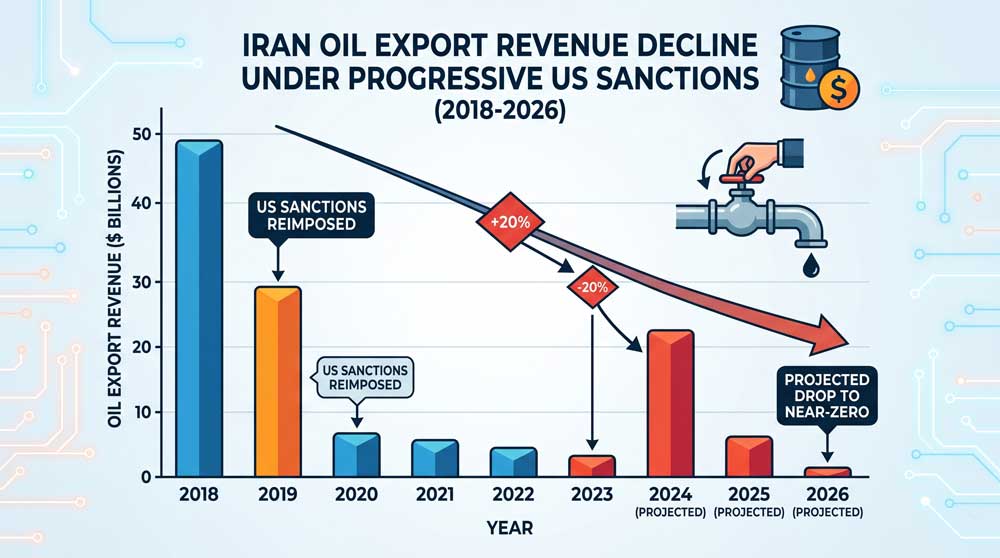
The second pillar targets Iran’s oil revenues and access to the international financial system. The Trump administration has revived and intensified secondary sanctions, threatening any country or company that purchases Iranian oil with expulsion from the SWIFT banking system and exclusion from US markets.
I think the implications of this are severe. Iran’s government budget is approximately 70% dependent on oil export revenues. If enforced rigorously, secondary sanctions could reduce that income to near zero — as they briefly did during Trump’s first-term maximum pressure campaign from 2018 to 2020.
| Sanctions Tool | Target | Potential Impact |
|---|---|---|
| Secondary sanctions | Countries buying Iranian oil (China, India, UAE) | Cuts Iran’s primary revenue source |
| SWIFT exclusion threats | Iranian banks and intermediaries | Freezes international financial transactions |
| Asset freezes | Overseas Iranian central bank reserves | Eliminates foreign currency buffers |
| OFAC entity listings | Shipping companies, tanker operators | Disrupts shadow fleet operations |
3. Total Sector-Wide Trade Isolation
The third and most sweeping measure is a comprehensive across-the-board trade embargo targeting Iran’s steel, aluminium, copper, petrochemicals, mining, shipping, banking, insurance, port logistics, and power sectors. In my assessment, this goes even further than the 2018–2019 maximum pressure campaign in both breadth and enforcement intensity.
Iran imports roughly 30% of its food supply and approximately 80% of its pharmaceutical products. Cutting off these supply chains does not merely damage the economy — it creates the conditions for a humanitarian crisis that could destabilise the government from within.
Why Washington Made This Shift
The strategic logic behind the Iran US blockade strategy is not difficult to understand. I think it reflects a cold-eyed recognition that the US military has lost the psychological initiative in this conflict.
Trump’s approval rating has fallen below 37% — driven in part by rising energy prices, war fatigue, and the visible absence of any clear victory. Every week of continued military stalemate strengthens Iran’s narrative that it can withstand American force. The economic chokehold is designed to flip that dynamic: to make Iran’s domestic population bear the cost of the government’s defiance, creating internal pressure that missiles cannot.
This is not a new playbook. It is almost identical to the strategy applied to Gaza — when a military campaign stalls, replace bombs with blockades. The international legal questions surrounding such an approach are substantial, and I believe the long-term reputational cost to the US of enforcing a siege that restricts humanitarian goods will be significant.
Iran’s Options for Breaking the Blockade
Iran is not without countermeasures. In my view, the country’s survival in this second phase depends entirely on how effectively it can route around the blockade.
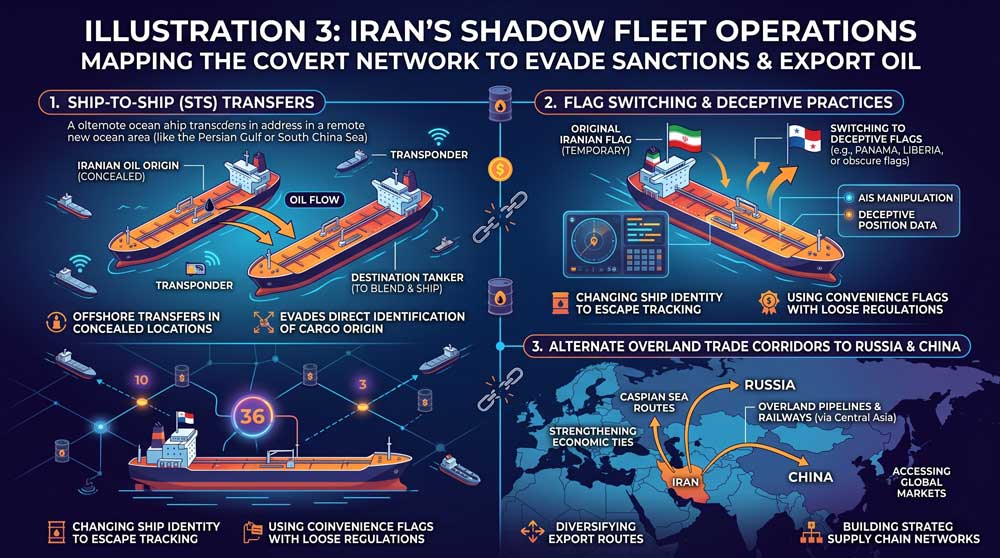
- Shadow fleet expansion: Iran has already developed a sophisticated network of sanctioned tankers, ship-to-ship oil transfers in international waters, and flag-switching operations. Sustaining and expanding this network is critical
- Northern and western land corridors: Overland trade routes through Iraq, Turkey, and into Russia and Central Asia can partially compensate for blocked sea lanes — but cannot replace them at scale
- Chinese and Russian economic lifelines: Beijing and Moscow have strong incentives to keep Iran economically functional. China absorbs the majority of Iran’s oil exports and has resisted US secondary sanctions pressure before
- Diplomatic counter-pressure: Iran can leverage the global economic damage caused by any Strait of Hormuz closure to build international opposition to the blockade
| Iran’s Strategy | Feasibility | Key Risk |
|---|---|---|
| Shadow fleet oil exports | Medium — already operational | US interdiction and Chinese compliance with sanctions |
| Land corridor trade (Russia, Iraq) | Medium | Limited capacity, high cost |
| Chinese bilateral oil deals | High | Chinese political caution under US pressure |
| Strait of Hormuz closure threat | High leverage, high risk | Triggers global energy crisis and justifies harder US response |
The Long Game: Who Blinks First?
I think both sides are now locked into a prolonged war of attrition that will last at least another 12 months, likely longer. The outcome will not be decided by a single military strike or diplomatic breakthrough — it will be decided by which side’s domestic political and economic situation deteriorates faster.
For Iran, the challenge is maintaining enough economic function to sustain its deterrence capability and prevent a domestic uprising born of deprivation. For the United States, the challenge is maintaining coalition discipline on sanctions enforcement while managing the oil price volatility that undermines Trump’s political standing at home.
I believe the single most important variable is China. If Beijing continues absorbing Iranian oil exports in defiance of secondary sanctions — as it has done previously — the blockade’s economic impact will be substantially blunted. If Washington successfully pressures China to comply, Iran’s position becomes genuinely critical.
The conflict has entered a phase of hybrid warfare — economic, financial, diplomatic, and psychological — that is far more complex than the initial military exchange. Neither side has a clean path to victory. What is clear is that Iran, despite facing conditions that would have broken many governments, has not collapsed. Whether it can sustain that resilience through an economic siege of this magnitude is the defining question of the next year.
🔗 Reference Sources
- Reuters — Strait of Hormuz traffic barely affected on first day of US blockade
- CBS News — Iran claims oil tanker transits Strait of Hormuz amid US blockade
- The Conversation — Would a US blockade of the Strait of Hormuz be legal?
- Hurriyet Daily News — Washington shifts strategy to economic battle on Iran
- Iran Primer — USIP — President Trump reimposes maximum pressure on Iran — full policy breakdown
- Council on Foreign Relations — What will Trump do about Iran — strategic analysis and scenario planning
- International Crisis Group — Strait of Hormuz flashpoint tracker — live conflict analysis
- ElevenLab — 1 Ultimate Key to the Middle East Endgame: The Strait of Hormuz Toll Explained
- ElevenLab — Strait of Hormuz Shipping Volume Hits an Incredible 7-Day High
- ElevenLab — 5 Harsh Realities of the US Oil Price Impact: Why Energy Independence Isn’t Enough