UAE OPEC Exit: 5 Brutal Truths Behind the Shocking Power Play
The UAE’s OPEC exit on May 1, 2026 is the most consequential shake-up in global energy markets in decades — and it has almost nothing to do with economics alone.
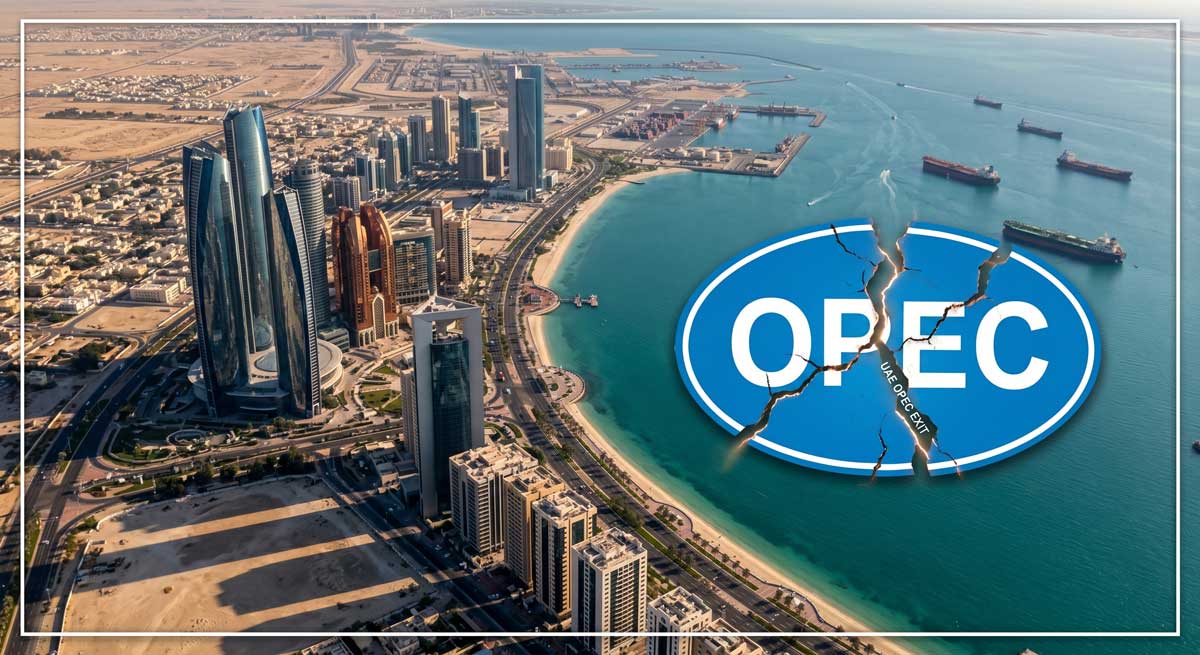
On April 28, 2026, the United Arab Emirates announced it would formally leave OPEC and the broader OPEC+ alliance effective May 1. The move ended nearly six decades of membership and blindsided energy analysts worldwide. But to understand what actually happened, you need to look beyond the official statement about “national interests” and “production policy.” This is a carefully calculated geopolitical pivot, and its implications reach far beyond oil prices.
Table of Contents
The UAE OPEC Exit Was Years in the Making
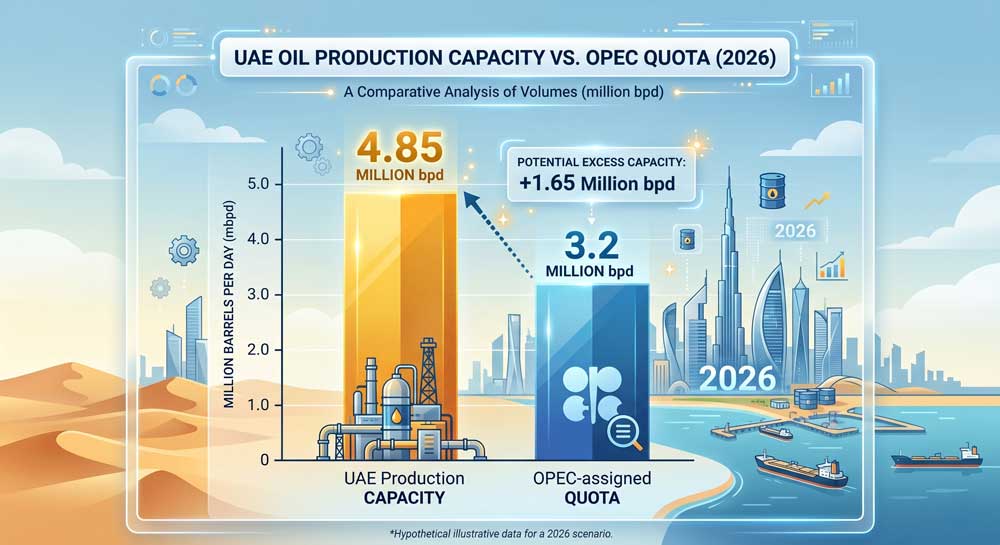
The immediate trigger may have been the regional conflict with Iran, but the frustration with OPEC’s quota system had been building for years. Before the exit announcement, the UAE had expanded its oil production capacity to approximately 4.85 million barrels per day (bpd) — yet its OPEC-mandated quota capped actual output at just 3.2 million bpd. That is a gap of over 1.6 million barrels every single day that the UAE was effectively prohibited from selling.
The UAE’s Energy Minister stated the country aims to reach 5 million bpd by 2027 and needs full autonomy to get there. Billions of dollars in infrastructure investment had already been committed to reach this capacity. Staying inside OPEC meant watching that investment sit idle at the behest of Saudi Arabia’s production management priorities — an arrangement that had become economically untenable and politically galling.
| Metric | Figure |
|---|---|
| UAE Production Capacity (pre-exit) | ~4.85 million bpd |
| UAE OPEC Quota | ~3.2 million bpd |
| Daily Production Foregone | ~1.6 million bpd |
| Target Production by 2027 | 5 million bpd |
| UAE Share of OPEC Output (pre-exit) | ~10–15% |
A Direct Challenge to Saudi Dominance
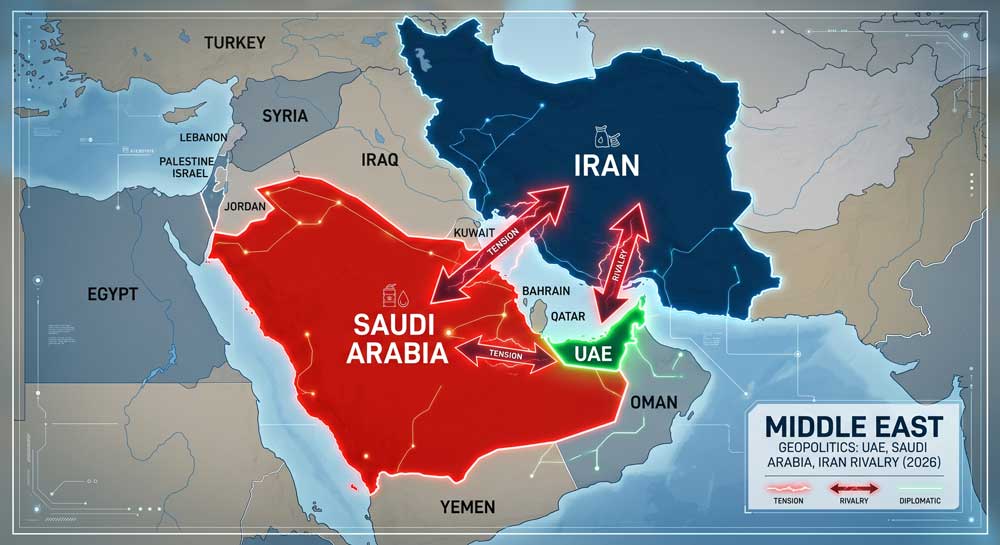
The UAE’s departure is, in practical terms, a declaration of war against Saudi Arabia’s grip on OPEC’s decision-making architecture. For decades, Riyadh has led the cartel as its largest producer, effectively setting the tone for production discipline across member states. The UAE was the third-largest producer inside OPEC. Its exit does not just reduce a headcount — it removes a significant counterweight that Saudi Arabia could previously count on to maintain the appearance of bloc unity.
The UAE’s departure reduces OPEC’s control of global oil supply from roughly 30% to 26%. That 4-percentage-point drop is not catastrophic on its own, but it signals a fracture that other dissatisfied producers may feel emboldened to follow. Once production discipline collapses in an institution like OPEC, it rarely reassembles cleanly.
The timing is particularly pointed. The exit came during a period of elevated oil prices driven by regional conflict. Saudi Arabia’s strategy of managing supply to sustain those prices is directly undermined by a major neighbour choosing to uncap its own output and flood the market on its own terms.
How the Iran Conflict Changed Everything
The Iran dimension of this story is impossible to ignore. The UAE has been on the receiving end of Iranian missile and drone strikes in the context of the broader regional conflict. That direct military exposure appears to have accelerated a shift that had already been underway — moving from studied neutrality to open alignment with Washington.
In January 2026, the UAE had explicitly barred the use of its territory for hostile actions against Iran, projecting a careful neutrality. By April 28, that posture was gone. The combination of military strikes and the economic opportunity created by conflict seems to have tipped the scales decisively.
Iran, for its part, has signalled clearly that it views the UAE’s cooperation with U.S. military positioning as crossing a red line, while simultaneously keeping diplomatic channels open. The UAE is threading a genuinely dangerous needle — using American backing to consolidate regional influence while remaining economically intertwined with Tehran, which was still the UAE’s second-largest trading partner as recently as 2025.
The UAE’s China Balancing Act
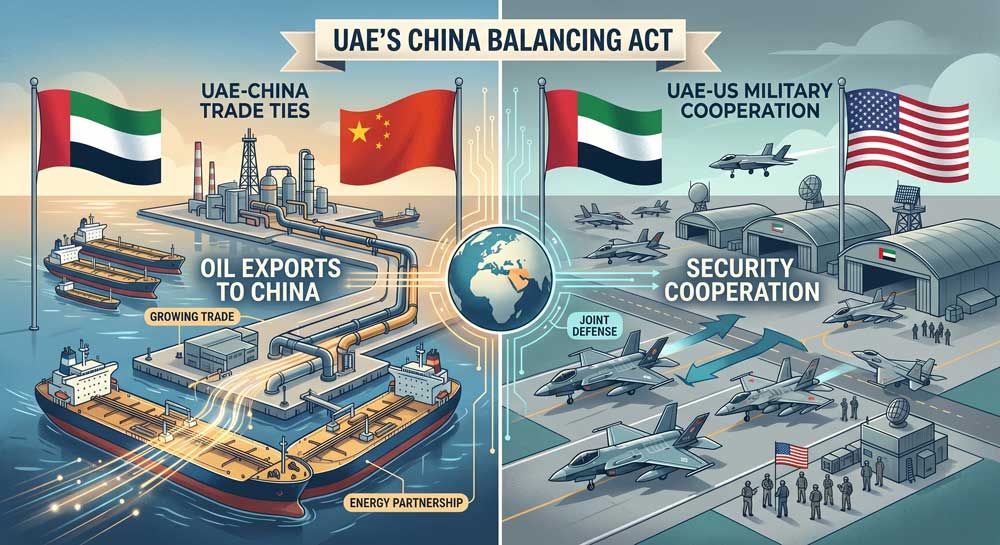
One of the more striking contradictions in the UAE’s recent foreign policy is the gap between its diplomatic overtures to Beijing and its structural alignment with Washington. Just weeks before the OPEC exit, Chinese President Xi Jinping met with Abu Dhabi’s Crown Prince, and both sides reaffirmed their “comprehensive strategic partnership”. The UAE ambassador to China publicly described 2026 as a milestone year in bilateral relations.
So why does the UAE keep Beijing close while clearly tilting toward Washington on the fundamentals?
The answer is straightforward: the UAE needs buyers for its oil, and Asia — led by China — is the only market large enough to absorb its expanded production at scale. This is not geopolitical affinity. It is commercial necessity. The UAE cannot afford to antagonise its largest customer base even as it bets its security architecture on the United States.
The renminbi oil settlement discussions that periodically circulate in the media serve a specific function: they give the UAE leverage in negotiations with Washington. Brandishing the threat of de-dollarisation costs Abu Dhabi nothing and creates genuine discomfort in Washington. But converting that threat into action would mean severing the U.S. security relationship that underpins the entire UAE state model. That is not a trade any Abu Dhabi decision-maker is seriously considering.
What the UAE OPEC Exit Means for Global Oil Markets
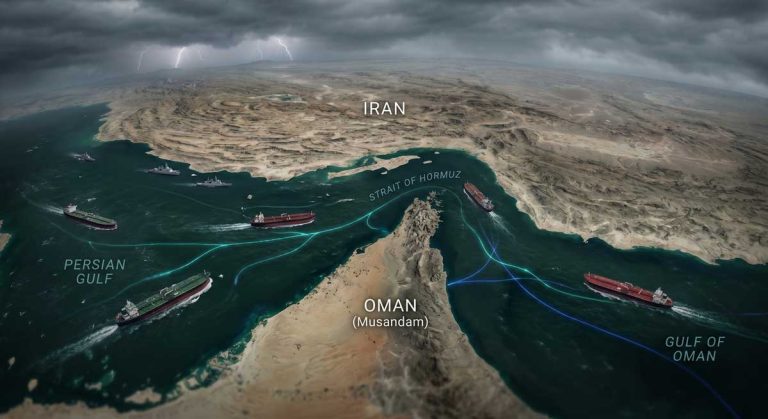
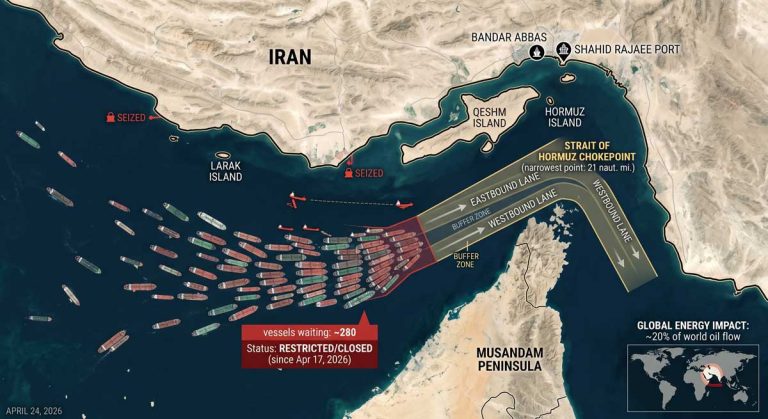
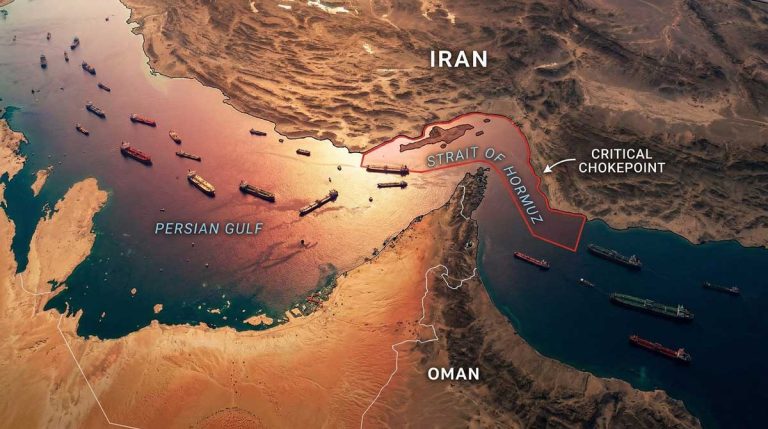
The immediate market impact of the UAE’s exit is constrained by one geographic reality: Iranian control over the Strait of Hormuz continues to limit how much oil the UAE can actually export. The UAE has been routing some exports through the Fujairah terminal on the Gulf of Oman, bypassing the strait, but current throughput falls well short of its production ambitions.
However, the longer-term picture is where this gets consequential. If and when the Hormuz situation normalises, the UAE could inject an additional 1.6 million bpd into global markets — roughly 1.5% of global supply — with no OPEC quota constraining it. Combined with the production expansion plans targeting 5 million bpd by 2027, this positions the UAE as a significant downward pressure on global oil prices over the next two to three years.
| Scenario | Estimated UAE Output | Global Supply Impact |
|---|---|---|
| Current (Hormuz disrupted) | ~3.3 million bpd | Limited |
| Post-conflict, OPEC exit complete | ~4.0–4.5 million bpd | Moderate downward pressure on prices |
| Full capacity by 2027 | ~5 million bpd | ~1.5% of global supply added |
For investors and energy market participants, the structural takeaway is clear. The OPEC cartel that commanded 30% of global supply is now weaker at its core. Any investment thesis premised on OPEC’s ability to sustain elevated prices through coordinated cuts needs to be revisited. Saudi Arabia retains significant leverage, but its authority inside OPEC has just taken a credibility hit it will struggle to recover from quickly.
The Broader Geopolitical Signal
What makes the UAE’s move so significant is not just the oil market mechanics — it is what this behaviour model tells us about how smaller but resource-rich states navigate great power competition. The UAE has spent three decades building itself into a node of American military, economic, and political infrastructure in the Gulf. That embedded relationship is not reversible on short notice, regardless of which direction diplomatic rhetoric points on any given week.
The OPEC exit, viewed through this lens, is less a surprise and more an inevitable expression of the UAE’s actual strategic identity: a state that has chosen to maximise its leverage by being indispensable to the U.S. security architecture in the Gulf, using economic diversification and diplomatic flexibility as tools — not as genuine alternatives to that core alignment.
Whether this strategy serves long-term regional stability is another question entirely. A more fragmented OPEC, a UAE emboldened by U.S. backing, a weakened Iran, and a resentful Saudi Arabia is not a recipe for a stable Gulf. The next chapter of this story will be written not in diplomatic communiqués but in production figures, oil prices, and the eventual shape of whatever post-conflict order emerges from the current Middle East disruption.
Reference URLs
- Reuters — UAE leaves OPEC in blow to global oil producers’ group — full Reuters coverage of the April 28 announcement
- Al Jazeera — UAE quits OPEC: What that means for the Gulf, energy markets and beyond — detailed market and geopolitical analysis
- CNBC — UAE to leave OPEC May 1 — energy minister statement and production capacity context
- Gulf News — UAE to Exit OPEC and OPEC+ by May 2026 — official UAE government rationale and energy strategy
- Eurasia Review — The UAE Prepares For Expansion But Faces Pullback — analysis of UAE-US-Iran triangular dynamics
- HeyGoTrade — How the UAE Leaving OPEC Reshapes Oil Prices and US Energy Stocks — investor-focused market impact analysis
- Middle East Institute (YouTube) — Mending the Rift: Iran and the UAE’s Post-War Ties — expert panel on post-conflict Iran-UAE relations
- ElevenLab — UAE Exits OPEC: 7 Powerful Reasons This Changes Global Oil Forever
- ElevenLab — 3 Secret Motives Behind the Dangerous UAE Strategy Against Iran in 2026
- ElevenLab — Strait of Hormuz Control: 7 Shocking Reasons Iran Lost Its Ultimate Strategic Card