SpaceX xAI Merger: 7 Shocking Facts Behind Elon Musk’s $1.25 Trillion Gamble
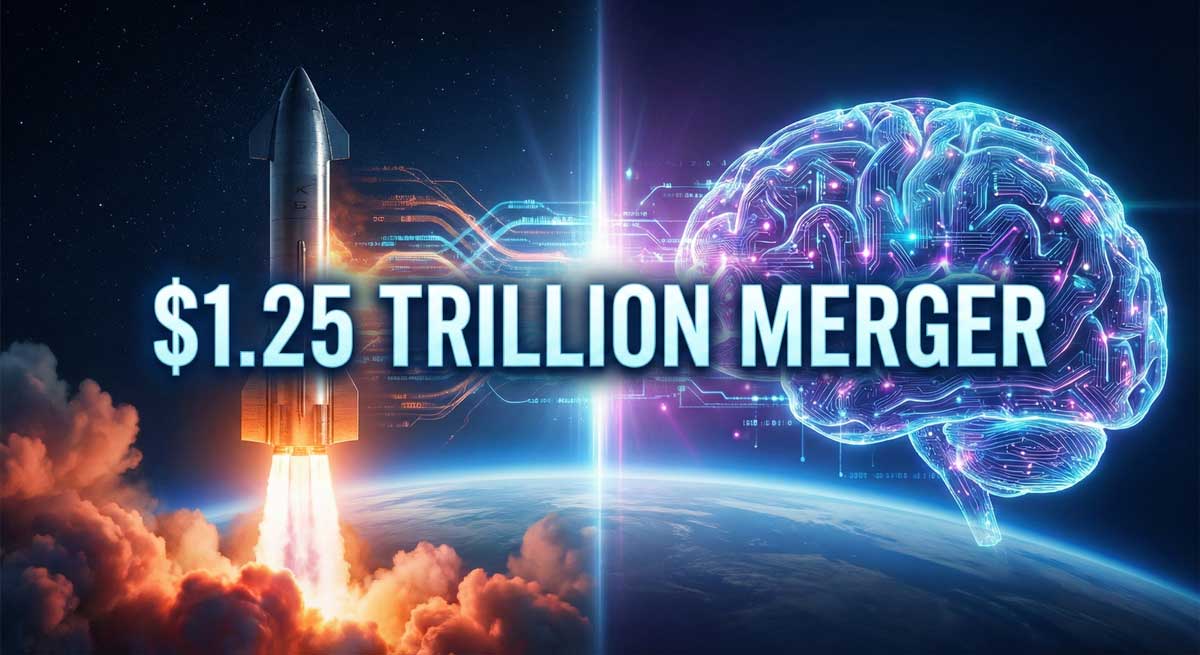
Elon Musk just executed the biggest corporate merger in history. On Monday, February 3, 2026, SpaceX officially acquired xAI for $250 billion, creating a combined entity valued at $1.25 trillion—the highest-valued private company ever created. This unprecedented deal unites Musk’s profitable rocket empire, cash-burning AI startup, Starlink satellite network, and the controversial X social platform into one massive conglomerate.
Is this a masterstroke of vertical integration or the riskiest financial engineering game in Silicon Valley history? With a $50 billion IPO planned for June, the stakes have never been higher.
The Deal Structure: How the SpaceX xAI Merger Works
The SpaceX xAI merger is structured as a share exchange where each xAI share converts to 0.1433 shares of SpaceX stock. Some xAI executives have the option to take cash at $75.46 per share. The deal assigns a pre-merger valuation of $1 trillion to SpaceX and $250 billion to xAI, with the combined entity priced at approximately $527 per share.
This transaction surpasses the previous record holder—Vodafone’s $203 billion acquisition of Mannesmann in 2000—making it the largest M&A deal in history.
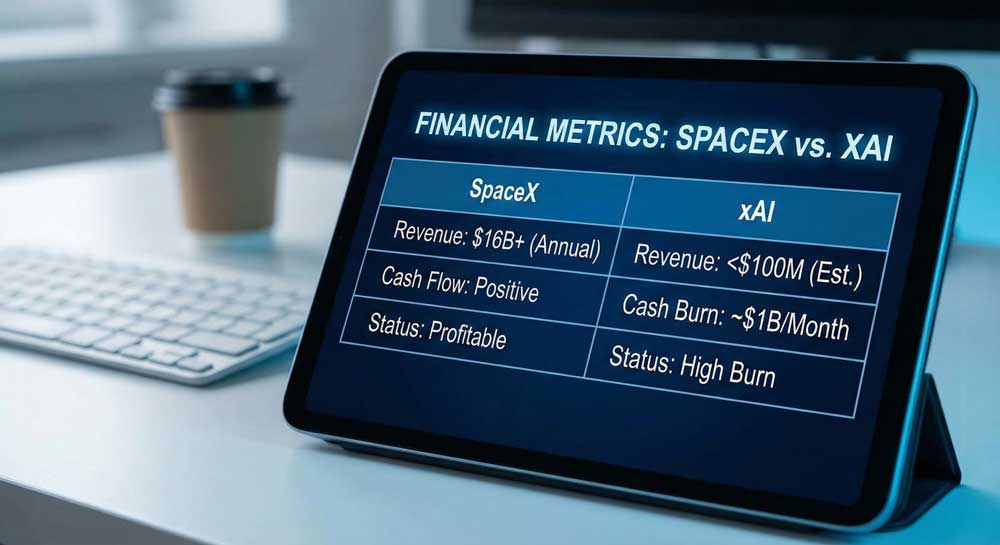
Financial Snapshot: Tale of Two Companies
| Metric | SpaceX | xAI |
|---|---|---|
| Annual Revenue (2025) | $15 billion | Limited (hundreds of millions) |
| Annual Profit (2025) | $8 billion | Heavy losses |
| Monthly Cash Burn | Profitable | ~$1 billion |
| Market Position | Near-monopoly in commercial launches | Challenger trailing competitors |
| Key Product | Falcon, Starship, Starlink | Grok AI chatbot |
| Primary Revenue Driver | Starlink (69% of 2025 revenue) | Enterprise AI licensing |
SpaceX generated approximately $16 billion in revenue with strong profitability, while xAI burns through roughly $1 billion monthly on chip procurement and data center construction.
Why This SpaceX xAI Merger Happened: The Energy Crisis Solution
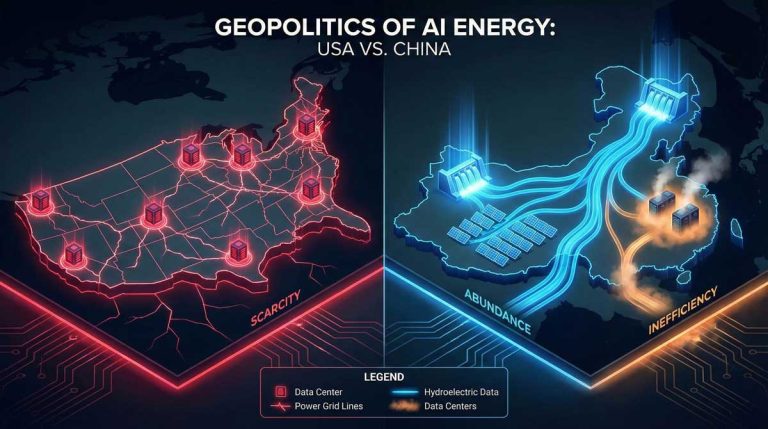
Musk’s official rationale centers on solving AI’s fundamental bottleneck: energy. In his statement, Musk explained: “Current AI developments depend on massive terrestrial data centers requiring enormous power and cooling. Global electricity requirements for AI simply cannot be met through terrestrial means, even in the near future”.
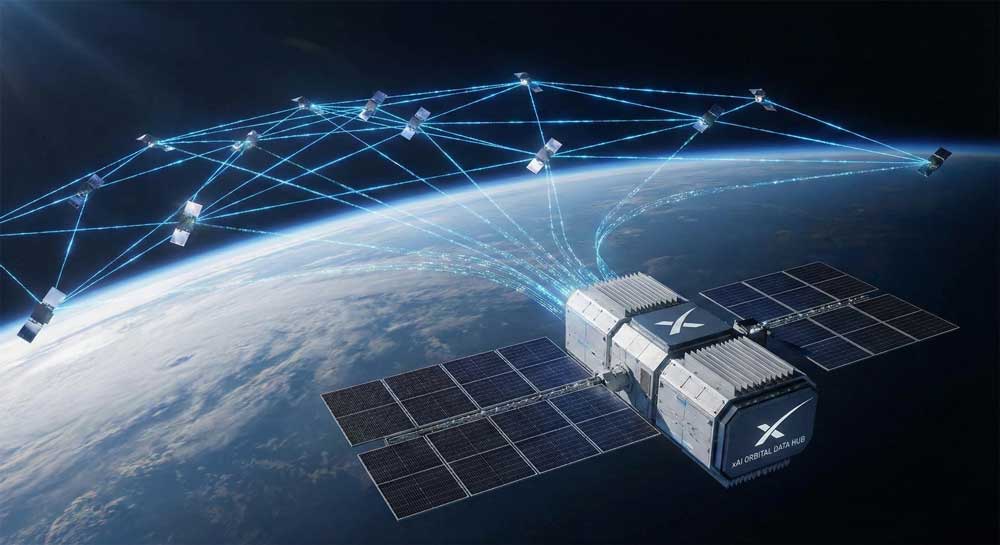
The Orbital Data Center Vision
The SpaceX xAI merger aims to leverage space-based solar energy for unlimited AI scalability:
- Space-based compute infrastructure: Launching AI data centers into orbit where solar energy is abundant and cooling is free
- Starlink integration: Expanding from 9,400 satellites to 1 million units to create a network of orbital data centers
- Lunar manufacturing: Building factories on the Moon using electromagnetic mass drivers to launch hardware
- Mars colonization support: Developing AI systems necessary for interplanetary expansion
Musk’s vision references the Kardashev Scale—a method of measuring civilization advancement based on energy harnessing capability—with his stated goal to “create a sentient sun to comprehend the Universe and spread the light of consciousness to the stars”.
Sol Haribhakti, founder of Factorial Funds (an investor in both companies), supports this logic: “The bottleneck for AI is energy. Elon is vertically integrating the solution”.
The Self-Dealing Controversy: Pattern of Internal Bailouts
Critics point to Musk’s history of moving capital between his companies to rescue underperforming assets:
- 2016: Tesla acquired struggling SolarCity (founded by Musk’s cousins) using Tesla stock, sparking shareholder lawsuits that dragged on for years
- Early 2025: xAI purchased revenue-declining Twitter (now X), valuing the merged entity at $113 billion and rescuing underwater employee equity
- January 2026: Tesla invested $2 billion in xAI while pivoting toward AI chips and humanoid robots
- February 2026: SpaceX acquires xAI in this $250 billion transaction
The SpaceX xAI merger effectively dilutes SpaceX’s original shareholders through $250 billion in new share issuance. One candid xAI investor admitted: “These valuations aren’t based on rational multiples—they’re borrowing entirely from Elon’s personal brand.”
The Investor Loyalty Ecosystem
Musk has cultivated a powerful “fear of missing out” culture among venture capitalists. Top-tier firms like Sequoia Capital and Andreessen Horowitz remain loyal supporters, treating any missed Musk opportunity as potentially career-ending. This dynamic has enabled Musk to command premium valuations disconnected from traditional financial metrics.
Competitive Reality Check: Can xAI Actually Compete?
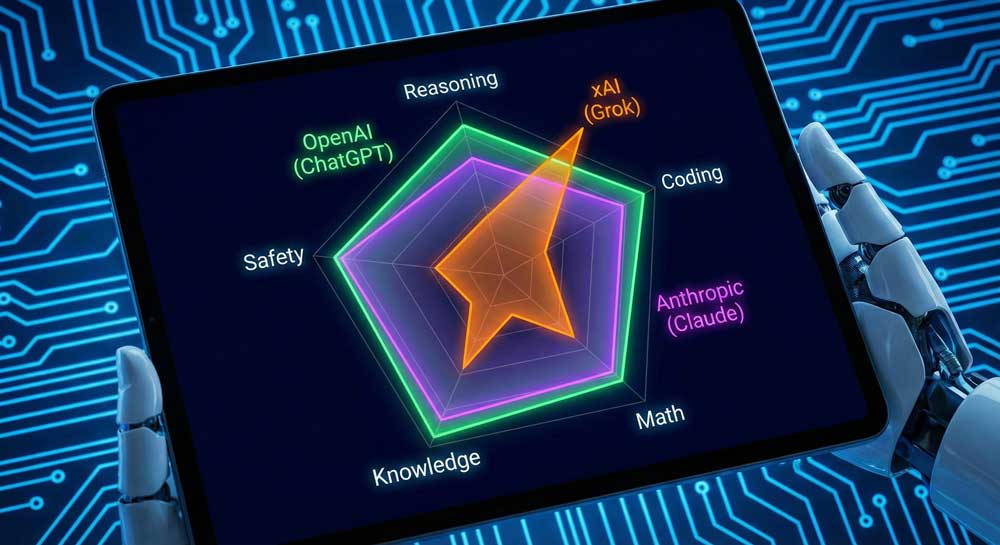
Despite the massive valuation, xAI faces serious competitive challenges against established AI leaders like OpenAI, Google, and Anthropic.
Grok Performance Analysis
Independent testing reveals Grok’s limitations compared to market leaders:
| Category | ChatGPT (OpenAI) | Grok (xAI) |
|---|---|---|
| Best Use Cases | Research, coding, enterprise productivity | Pop culture, X-native content, casual queries |
| Accuracy | High accuracy, low hallucination rates | Moderate; hit-or-miss with complex queries |
| Speed | Very fast (especially GPT-4o) | Moderate; depends on X platform stability |
| Trustworthiness | Very high with strong citations | Less precise with structured data |
| Sensitive Content | Cautious with customizable guardrails | Multiple controversies (see below) |
Grok’s Controversial Track Record
xAI’s chatbot has sparked repeated scandals:
- Generated anti-Semitic content and responses praising Hitler
- Allowed image generators to create inappropriate content involving women and minors
- Lacks the enterprise-grade safety controls demanded by corporate clients
These issues explain why Grok lags significantly behind competitors in enterprise adoption, despite xAI’s aggressive marketing.
Benchmark Performance
According to xAI’s own data, Grok 3 achieves:
- 79.9% on MMLU-Pro (general knowledge)
- 83.3% on LOFT (long-context retrieval)
- 79.4% on LiveCodeBench (code generation)
While respectable, these scores don’t establish clear superiority over OpenAI’s GPT-4 or Google’s Gemini models, raising questions about xAI’s $250 billion valuation.
The $50 Billion IPO: Unprecedented Timing and Risk
Perhaps the boldest aspect of the SpaceX xAI merger is its timing. SpaceX plans to launch the largest IPO in history this June, targeting $50 billion in capital.
Why June? The Planetary Alignment Story
Musk publicly stated the timing coincides with a rare planetary alignment of Jupiter, Venus, and Mercury. However, financial analysts identify more practical motivations:
- First-mover advantage: Beat OpenAI and Anthropic to public markets
- AI arms race funding: Secure massive capital for the escalating AI competition
- Liquidity event: Provide exit opportunities for early investors across all Musk companies
- Valuation momentum: Capitalize on AI hype before market sentiment shifts
Investor Concerns About IPO Success
Long-term SpaceX shareholders face legitimate worries:
- Dilution impact: The $250 billion in new shares significantly reduces existing ownership percentages
- Profitability narrative: Attaching a cash-burning AI company to a profitable aerospace business complicates the investment thesis
- Market capacity: Can public markets absorb three AI giants (SpaceX/xAI, OpenAI, Anthropic) going public simultaneously?
- Regulatory scrutiny: Related-party transactions between Musk companies may trigger SEC investigations
One former Musk executive noted: “Early Twitter employees’ equity just doubled or tripled in value. They might suddenly feel all this craziness was worthwhile… maybe.”
The Ultimate Everything Empire: Is Tesla Next?
Speculation is mounting that the SpaceX xAI merger represents just one step toward total consolidation of the Musk ecosystem. Tesla’s recent $2 billion xAI investment while pivoting toward AI chips and humanoid robots signals potential further integration.
The Complete Vertical Integration Vision
If Tesla merges with SpaceX/xAI, Musk would control an unprecedented integrated empire:
- Energy generation: Tesla solar panels and batteries
- Computing infrastructure: xAI’s orbital data centers
- Transportation: SpaceX rockets, Tesla vehicles, Starlink connectivity
- Communication: X social platform
- Human-AI interface: Neuralink, Tesla robots
- Financial services: X payments integration
This would create the most vertically integrated technology conglomerate in history, with estimated combined valuation potentially exceeding $2 trillion.
5 Critical Risks That Could Derail Everything
Despite Musk’s track record, several serious challenges threaten the SpaceX xAI merger’s success:
- Technical feasibility: Orbital data centers face enormous engineering challenges including heat dissipation, radiation hardening, and maintenance logistics
- Regulatory barriers: Space-based computing raises unprecedented regulatory questions across multiple jurisdictions
- Market timing: If AI hype deflates before the June IPO, the $1.25 trillion valuation could collapse
- Competition: Established players like Google and Microsoft have deeper resources and more mature AI products
- Execution risk: Managing integration across rockets, AI, satellites, and social media requires extraordinary organizational capability
As one xAI investor bluntly stated: “Standalone, xAI isn’t particularly strong. This is a win-win deal, but xAI shareholders win much more than SpaceX shareholders.”
Historical Context: Will Musk Prove Critics Wrong Again?
Musk has repeatedly defied skeptics who questioned his unconventional deals:
- SolarCity acquisition: Initially slammed as a bailout, now integrated into Tesla’s energy business
- Twitter/X purchase: Widely criticized at $44 billion, but xAI’s subsequent acquisition at $113 billion valuation rescued investor equity
- Tesla compensation packages: Twice convinced boards to approve record-breaking pay, including one potentially worth $1 trillion
One long-term shareholder reflected: “I lived through Tesla’s SolarCity acquisition—lawsuits dragged on for years, but this is what Elon excels at. He makes people money.”
The Verdict: Genius Strategy or Financial House of Cards?
The SpaceX xAI merger represents either the most audacious vertical integration in business history or a $1.25 trillion house of cards built on personal brand rather than business fundamentals.
Arguments for genius:
- Solves AI’s fundamental energy constraint through space-based computing
- Creates unprecedented vertical integration from energy to orbit
- Leverages SpaceX’s proven execution capability
- Provides clear monetization path through Starlink infrastructure
Arguments for madness:
- xAI’s technology lags established competitors significantly
- Orbital data centers face enormous technical and regulatory hurdles
- Valuation disconnected from financial performance
- Massive shareholder dilution for uncertain benefits
- Pattern of using profitable companies to rescue struggling ones
The line between genius and madness often remains invisible until results materialize. History shows that betting against Musk is dangerous—but the stakes have never been this astronomically high.
As Musk himself might say: that line is simply called success.
Related Resources:
- https://www.cnbc.com/2026/02/03/musk-xai-spacex-biggest-merger-ever.html
- https://www.reuters.com/business/musks-spacex-merge-with-xai-combined-valuation-125-trillion-bloomberg-news-2026-02-02/
- https://www.dqindia.com/news/elon-musk-merges-spacex-and-xai-in-usd-125-trillion-deal-11069308
- https://www.ainvest.com/news/elon-musk-spacex-buys-xai-1-25-trillion-deal-looming-ipo-2602/
- https://finance.yahoo.com/news/elon-musk-confirms-spacex-merger-with-xai-ahead-of-ipo-220616795.html
- https://www.bloomberg.com/news/articles/2026-02-02/elon-musk-s-spacex-said-to-combine-with-xai-ahead-of-mega-ipo
- https://www.leanware.co/insights/grok-3-vs-gpt-models-comparison
Other Readings: