Tesla Inventory Crisis: 5 Shocking Reasons Why Buyers Win in 2026
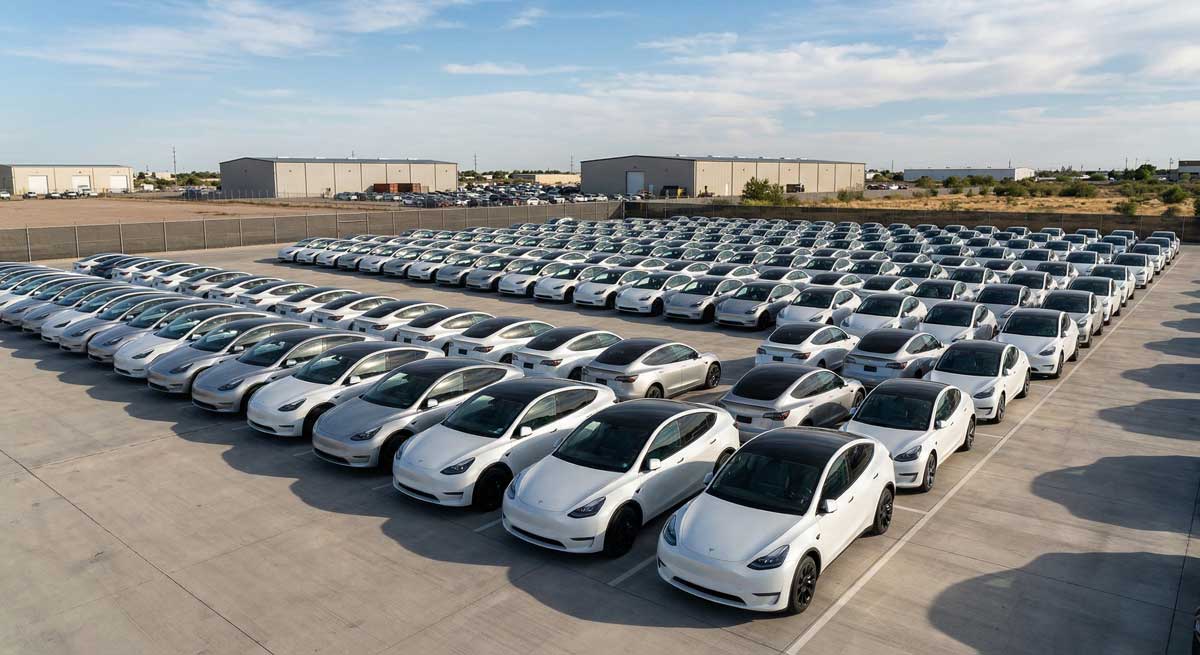
The Tesla inventory crisis of 2026 is officially making headlines — and if you are currently shopping for an electric vehicle, it might be the most powerful market shift in your favour in years. For a company that practically invented the modern “build-to-order” auto model, accumulating over 50,000 unsold vehicles in a single quarter is a seismic change. But while these numbers are sending shockwaves through Wall Street, the same crisis quietly hands everyday consumers a rare and powerful advantage.
Table of Contents
The Numbers Driving the Tesla Inventory Crisis
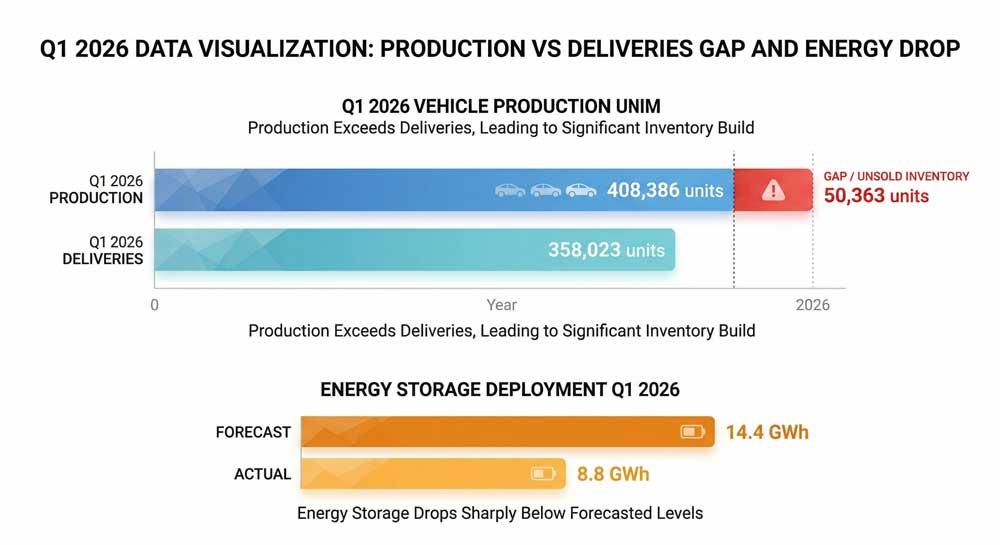
In Q1 2026, Tesla produced 408,386 vehicles globally but delivered only 358,023 — a gap of 50,363 units, the largest inventory surplus in the company’s recent history. While deliveries did grow 6.3% year-over-year, that figure is highly misleading: Q1 2025 was an abnormally depressed baseline marked by consumer protests and macro headwinds, making the rebound look stronger than it really is. Strip that away, and this quarter’s deliveries are effectively the weakest since mid-2022.
The Tesla inventory crisis also missed Wall Street hard. Analysts had projected approximately 372,160 deliveries; Tesla came in nearly 14,000 units short. Tesla’s stock fell between 4.6% and 5.4% on the news, extending a 15%+ year-to-date decline.
Q1 2026 Production vs. Deliveries at a Glance
This mismatch between production and sales is not a logistics or transit issue. As Electrek noted, it “points to a structural demand problem” — one that has been quietly building for several quarters.
5 Root Causes Behind the Tesla Inventory Crisis
1. The US Tax Credit Removal Shock
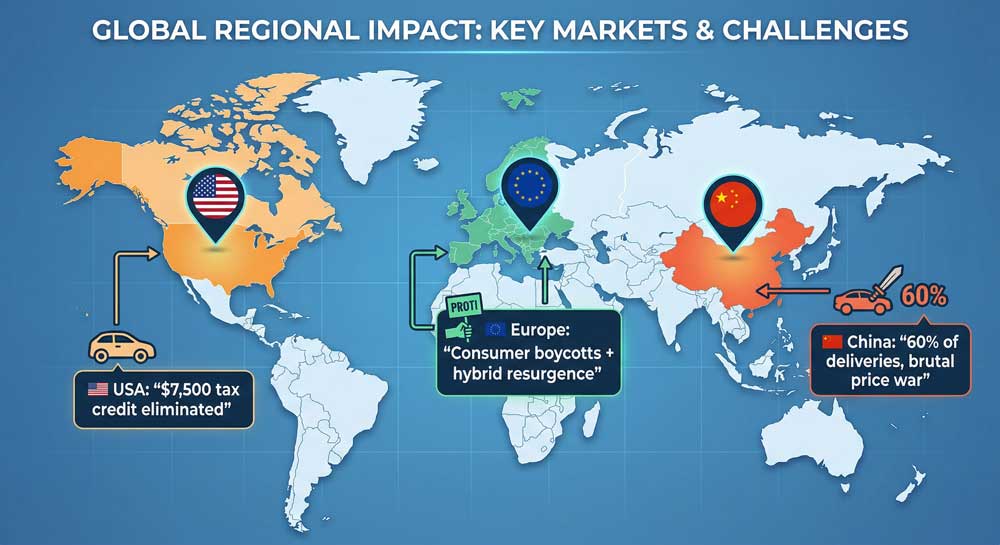
The US federal government’s elimination of the $7,500 EV tax credit at the end of 2025 fundamentally altered American buyer behaviour. Consumers who had been planning purchases either delayed decisions entirely or shifted to cheaper alternatives. Overall US EV sales fell sharply as a result — and Tesla, as the dominant American EV brand, absorbed the greatest impact.
2. Elon Musk’s Controversies Cooling European Demand
In Europe, Musk’s public political statements and associations triggered organised consumer backlash across multiple key markets. Simultaneously, European buyers are pivoting back toward hybrid vehicles rather than pure EVs, eroding Tesla’s total addressable market in a region it once owned. The combined effect has been a meaningful contraction in European Tesla volumes.
3. China: Bright Spot, But at a Steep Cost
China remains the clearest positive in Tesla’s global picture — the Shanghai Gigafactory accounted for over 60% of global Q1 deliveries. However, sustaining those volumes required an aggressive playbook: repeated price cuts, subsidised financing, and trade-in incentives. Fierce competition from BYD and rising domestic EV brands means each incremental sale in China comes with intensifying margin pressure.
4. Aging Core Lineup with No Fresh Talking Points
Over 95% of Tesla’s deliveries still come from the Model 3 and Model Y — vehicles that haven’t received fundamental redesigns in years and are arguably approaching the end of their product life cycles. Sales staff have little new to offer prospective buyers: no exciting features to demo, no new exterior to admire, and no urgency-creating narrative. This makes organic foot traffic to showrooms increasingly difficult to generate — and explains why reps are now proactively chasing leads.
5. Future Growth Engines Are Stalling
The reassuring investor narrative — “even if cars slow, energy and tech pick up the slack” — took a direct hit in Q1 2026. Energy storage deployments fell 38% quarter-over-quarter to just 8.8 GWh, far below analyst forecasts of 14.4 GWh and William Blair’s projection of 18 GWh. Meanwhile, Tesla’s two headline future bets — the Cybercab robotaxi and the Optimus humanoid robot — remain pre-revenue. Musk himself described early production of both as “agonizingly slow,” with Cybercab scaling beginning in 2026 and Optimus sales potentially not starting until 2027. Tesla’s $1.4 trillion valuation is still a bet on these technologies, but the gap between the narrative and commercial reality is widening.
Why the Tesla Inventory Crisis Is Great News for Buyers
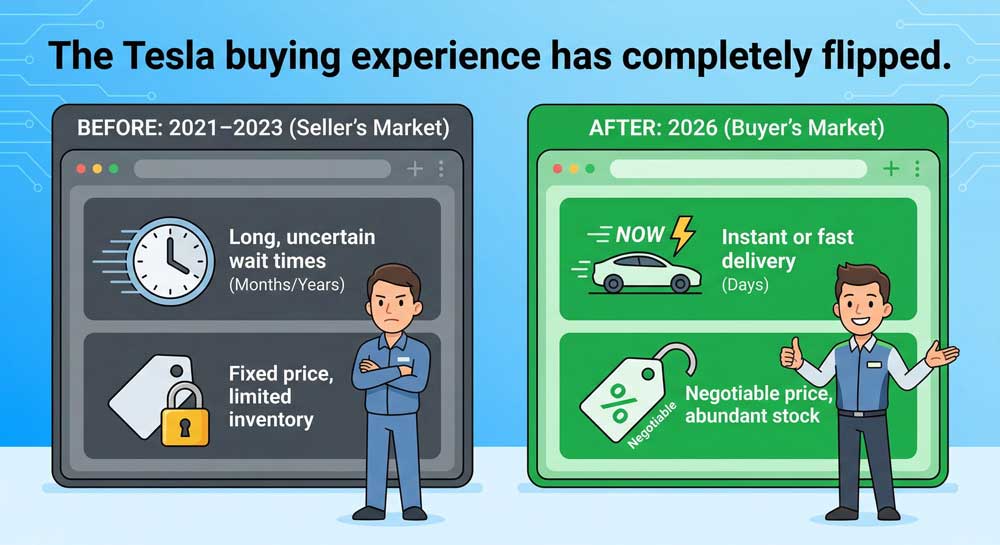
Tesla’s anxiety is your opportunity. For years, buying a Tesla meant months-long waits, non-negotiable pricing, and take-it-or-leave-it service. The inventory crisis has flipped that dynamic entirely.
When frontline sales staff shift from standard check-ins to proactively begging prospects to come in for a test drive — and when the answer to “any discounts available?” changes from a flat “no” to “come in and we’ll talk” — the company’s pressure becomes your leverage.
The EV Buying Experience: Then vs. Now
| Buyer Factor | Peak Tesla Era (Pre-2024) | Tesla Inventory Crisis Era (2026) |
|---|---|---|
| Delivery Wait Time | 3–9 months | Near-immediate from lot inventory |
| Price Negotiation | Essentially zero | Promotional discounts, financing perks available |
| Sales Attitude | Hands-off, take-it-or-leave-it | Proactive, patient, eager to close |
| Trade-In Flexibility | Minimal | Actively promoted as purchase incentive |
| Service Quality | Variable, often slow | Noticeably improved under competitive pressure |
Beyond the showroom, this dynamic benefits all buyers at a macro level. Fierce competition from BYD and other Chinese EV makers is forcing Tesla — and the broader industry — to improve products, sharpen pricing, and lift customer service standards. The ultimate winner is the consumer.
The Bigger Picture: Transition Pain or Structural Decline?
Tesla’s Q1 2026 results reveal a collision between two timelines. The legacy automotive business is facing real-world competitive pressure right now, while the futuristic technology company — robotaxis, AI, humanoid robots — has not yet generated meaningful revenue. JPMorgan, which maintained an Underweight rating post-results, warned of “60% downside” to its December 2026 price target and urged investors to approach Tesla “with a high degree of caution”.
Tesla’s gross profit margin has already fallen to 18%, compared to the 25% it achieved in 2021, largely due to the declining share of higher-margin automotive revenue. Automotive revenue fell 10% across 2025, even as the services and energy segments grew — a reminder that diversification is progressing, but not fast enough to offset the core pressure.
The golden era of unchallenged Tesla dominance is mathematically over. The company is now being “siege-tested” by the very competitive dynamics it helped create. Whether Tesla can navigate this period depends heavily on Musk staying focused on the automotive and energy core, while Cybercab and Optimus mature toward commercialisation. The brand strength, Supercharger network, and manufacturing scale remain formidable moats — but moats erode without product momentum to reinforce them.
For buyers, the message is clear: now is arguably the best time in Tesla’s history to buy one of their cars. Use the leverage. The inventory is sitting there. The sales staff are eager. And the deals are real.
Authoritative Sources
- Tesla Q1 2026 Production, Deliveries & Deployments — Tesla Investor Relations (Official Press Release)
- Tesla Q1 2026 Deliveries Miss Expectations at 358,000 — Electrek
- Tesla Is Sitting on a Record 50,000 Unsold EVs — InsideEVs
- Tesla Deliveries Mark Weakest Quarter in a Year, Inventory Swells — Reuters
- Tesla TSLA Q1 2026 Vehicle Delivery and Production — CNBC
- Tesla’s Q1 2026 Deliveries Fall Short of Expectations — Intellectia AI / JPMorgan Analysis
- Tesla’s Cybercab and Optimus Output to Start ‘Agonizingly Slow’ — Reuters
- Tesla Stock Falls After Q1 2026 Delivery Miss — TIKR / Cybercab Era Analysis
- SpaceX xAI Merger: 7 Shocking Facts Behind Elon Musk’s $1.25 Trillion Gamble
- The $5 Trillion AI Investment Bubble: Can the Boom Outrun Reality?
- The Claude Code Leak: 1 Catastrophic Mistake That Could Supercharge Every AI Tool 100x