Generative AI in Africa: 2025 Adoption Surge, Chinese Platforms Rise, and CEO Investment Battle
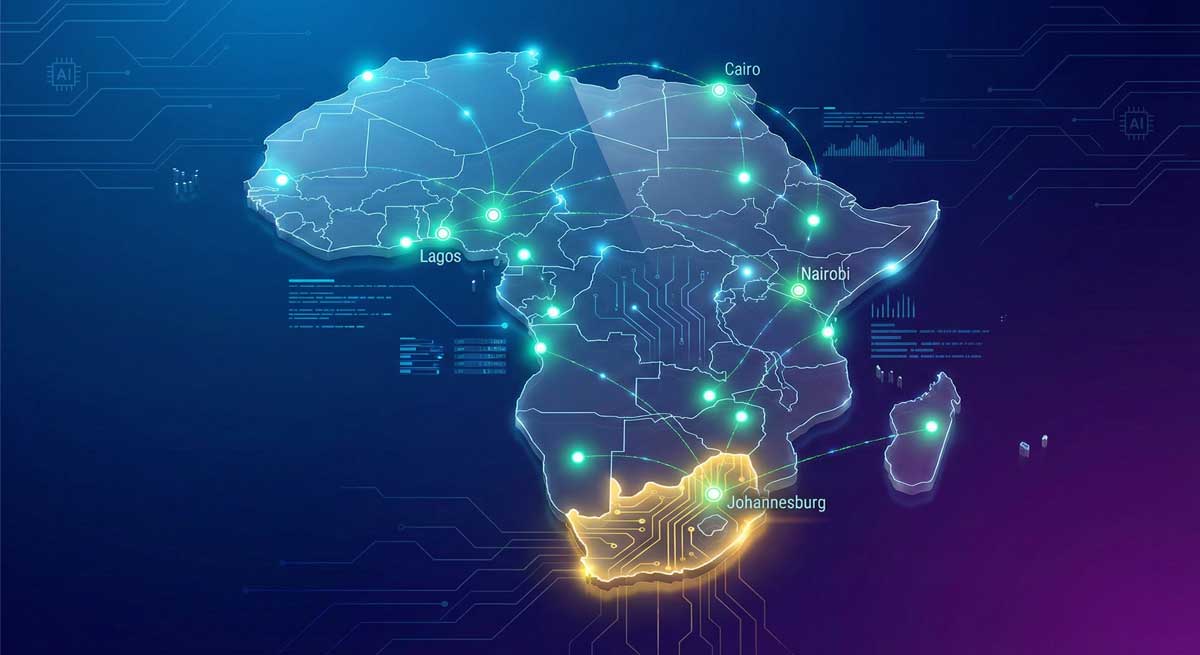
Generative AI in Africa is transforming from experimental technology into operational necessity. Microsoft’s groundbreaking January 2025 report, “Global AI Adoption 2025: The Widening Digital Divide,” reveals that while a significant North-South gap persists (24.7% vs. 14.1% adoption), African nations are pursuing aggressive strategies that could redefine global AI dynamics. Combined with KPMG’s CEO Outlook data showing unprecedented corporate investment, the continent stands at a critical inflection point.
This analysis synthesizes both reports to examine adoption patterns, the disruptive DeepSeek phenomenon, infrastructure challenges, and what African executives are betting on AI’s future.
South Africa’s 21% Adoption Rate Leads Continental Charge
Generative AI in Africa finds its strongest foothold in South Africa, where 21.19% of the 15-64 age demographic actively used AI tools in late 2025. This positions the nation closer to developed markets than to regional peers, suggesting that early digital infrastructure investments create compounding advantages.
Africa’s Top 10 GenAI Markets: Surprising Diversity
| Rank | Country | Adoption Rate | Key Factor |
|---|---|---|---|
| 1 | South Africa | 21.19% | Robust telecommunications infrastructure |
| 2 | Namibia | 13.80% | High smartphone penetration |
| 3 | Libya | 13.70% | Young, tech-literate population |
| 4 | Botswana | 13.70% | Stable internet connectivity |
| 5 | Gabon | 13.40% | Urban digital hubs |
| 6 | Egypt | 13.40% | Large tech-savvy workforce |
| 7 | Senegal | 12.90% | Francophone tech ecosystem |
| 8 | Tunisia | 12.70% | Education system emphasis on STEM |
| 9 | Zambia | 12.30% | Mobile-first digital economy |
| 10 | Algeria | 12.00% | Government digitalization initiatives |
While impressive, these figures still trail global leaders—UAE (64%), Singapore (60.9%), Norway (46.4%)—highlighting massive growth potential. The gap represents opportunity rather than limitation for Generative AI in Africa markets.
DeepSeek’s 16-20% Market Share: Breaking Western Dominance
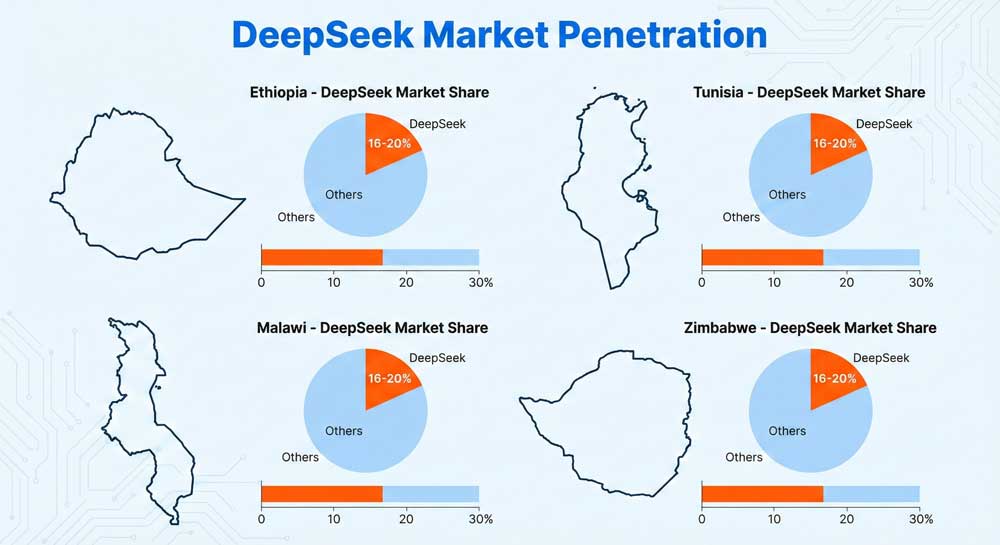
The most disruptive finding involves Chinese platform DeepSeek capturing 16-20% market share in Ethiopia, Tunisia, Malawi, and Zimbabwe. This success challenges assumptions about Western AI hegemony and reveals strategic vulnerabilities in traditional business models.
Why DeepSeek Wins Where Others Don’t
Financial Barrier Elimination
- Zero-cost access removes credit card requirements that exclude millions
- No freemium upsell pressure creating usage anxiety
- Immediate functionality without trial limitations
Infrastructure Integration Strategy
- Partnership with Huawei embeds AI into existing telecom networks
- Local server deployment reduces latency issues
- Integration with mobile payment systems familiar to African users
Open Source Philosophy
- Community-driven model development incorporates local languages
- Transparent algorithms build trust in markets skeptical of foreign tech
- Adaptable framework allows customization for regional contexts
This approach suggests the next billion AI users may emerge from Southern nations through accessibility-first platforms rather than feature-rich premium services. The implications for Generative AI in Africa extend beyond market share to digital sovereignty questions.
African CEOs Outspend Global Peers: 26% Allocate 20%+ of Budgets
KPMG’s data reveals African executives aren’t just observing AI—they’re betting corporate survival on it. 26% of African CEOs plan to invest over 20% of annual budgets in AI, nearly double the 14% global average. This aggressive positioning reflects existential rather than experimental thinking.
Why AI Became “Operational Necessity” Not Innovation Theater
| Business Challenge | AI Solution | Impact |
|---|---|---|
| Productivity gaps | Process automation | 30-40% efficiency gains |
| Talent shortages | Augmented workforce tools | Extends human capital capacity |
| High logistics costs | Predictive supply chain optimization | 15-25% cost reduction |
| Market fragmentation | Consumer behavior modeling | Targeted resource allocation |
| Inflation pressure | Dynamic pricing algorithms | Margin protection |
78% of African executives express growth optimism despite global headwinds, with 41% prioritizing AI integration above cybersecurity and traditional innovation. In high-inflation environments, Generative AI in Africa serves as profit-protection infrastructure rather than competitive differentiator.
Workforce Transformation Accelerates Beyond Global Pace
- 81% view AI training as direct competitive factor within three years
- 88% expect fundamental hiring requirement changes
- 67% launched internal reskilling programs (exceeding global average)
African labor markets may complete digital transformation faster than developed economies, converting demographic youth into technical agility advantage.
The 96% Data Readiness Crisis: Infrastructure Reality Check
Despite investment enthusiasm, 96% of African executives cite “AI data readiness” as primary obstacle—nearly universal recognition of systemic constraints threatening ROI.
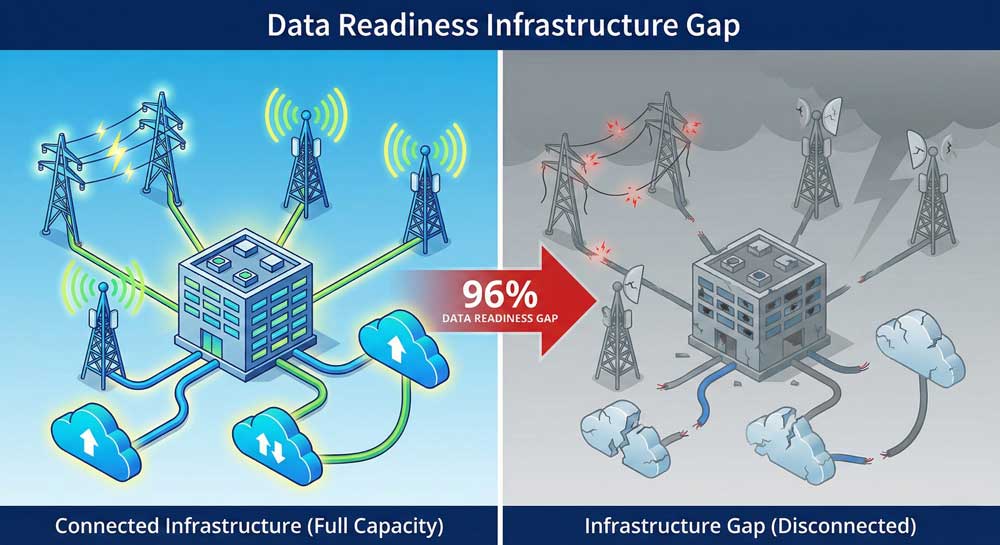
Triple Infrastructure Bottleneck
Power and Connectivity Gap
- Intermittent electricity disrupts training cycles requiring continuous compute
- Unequal internet access creates urban-rural AI divides
- Cloud service costs consume 2-3x budget percentages vs. developed markets
- GPU scarcity forces reliance on outdated processing architectures
Data Sovereignty Crisis
- Dependence on European/North American training datasets
- Cultural bias in language models missing African linguistic nuances
- Behavioral prediction failures from non-local consumer data
- Digital colonialism concerns over foreign data ecosystem dependency
Cybersecurity Awareness Vacuum
Regional quantum computing threat consciousness reveals dangerous gaps:
- East Africa: 14% aware
- Southern Africa: 22% aware
- West Africa: 35% aware
As Generative AI in Africa processes increasing sensitive data volumes, this awareness deficit creates vulnerability windows that quantum decryption could exploit within 5-10 years.
Strategic Implications: Three Scenarios for 2027
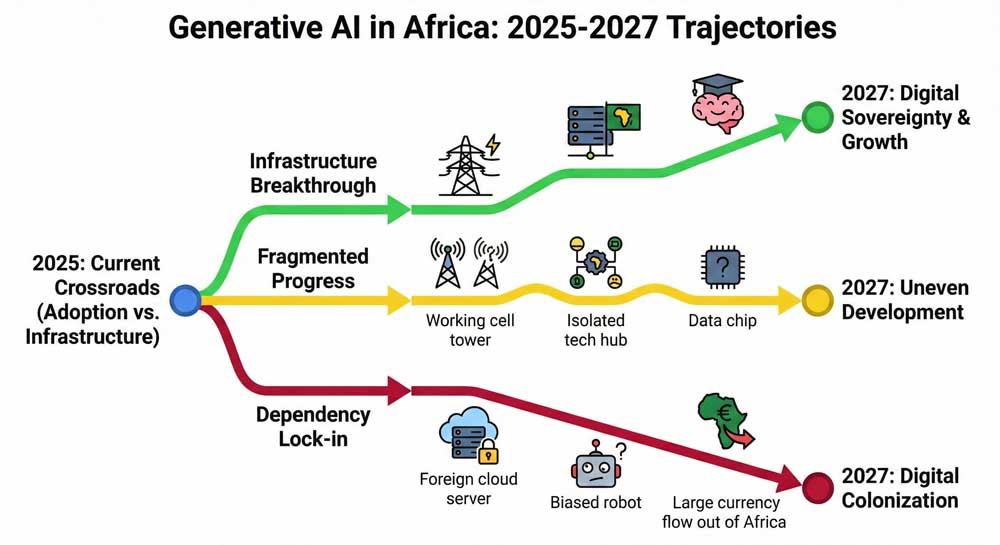
Scenario 1: Infrastructure Breakthrough
Coordinated public-private investment in power grids, submarine cables, and local data centers closes readiness gap. African platforms emerge as global South champions, capturing 30%+ regional market share.
Scenario 2: Dependency Lock-In
Failure to address sovereignty issues creates permanent reliance on foreign AI ecosystems. Cost advantages erode as platforms monetize captive markets through gradual price increases.
Scenario 3: Fragmented Progress
Top-performing nations (South Africa, Egypt, Kenya) advance while others stagnate, creating intra-continental digital divide mirroring global North-South patterns.
Key Takeaways for Stakeholders
For Policymakers:
- Digital infrastructure investment now determines 2030 competitiveness
- Data sovereignty frameworks must balance openness with protection
- Quantum-resistant encryption standards require immediate attention
For Business Leaders:
- AI investment is survival mechanism, not innovation luxury
- Workforce reskilling delivers faster ROI than pure technology spend
- Platform selection should prioritize accessibility over feature richness
For Technology Providers:
- Barrier elimination strategies win emerging markets
- Infrastructure integration matters more than product polish
- Open-source approaches build trust and adoption
The trajectory of Generative AI in Africa in 2025 reveals a continent racing to convert demographic advantage into technological leadership. Success depends on bridging the 96% data readiness gap while leveraging the 26% investment commitment. The DeepSeek disruption proves that alternative approaches can challenge established players—but only if infrastructure foundations support sustained growth.
Essential Resources:
- Microsoft 2025 Global AI Adoption Report
- KPMG 2025 Africa CEO Outlook
- DeepSeek AI Platform Overview
- World Bank Digital Development in Africa
- The Digital Transformation Strategy for Africa (2020-2030)