AI Agents Replacing Apps: 3 Brutal Forces Behind the 80% App Shakeout
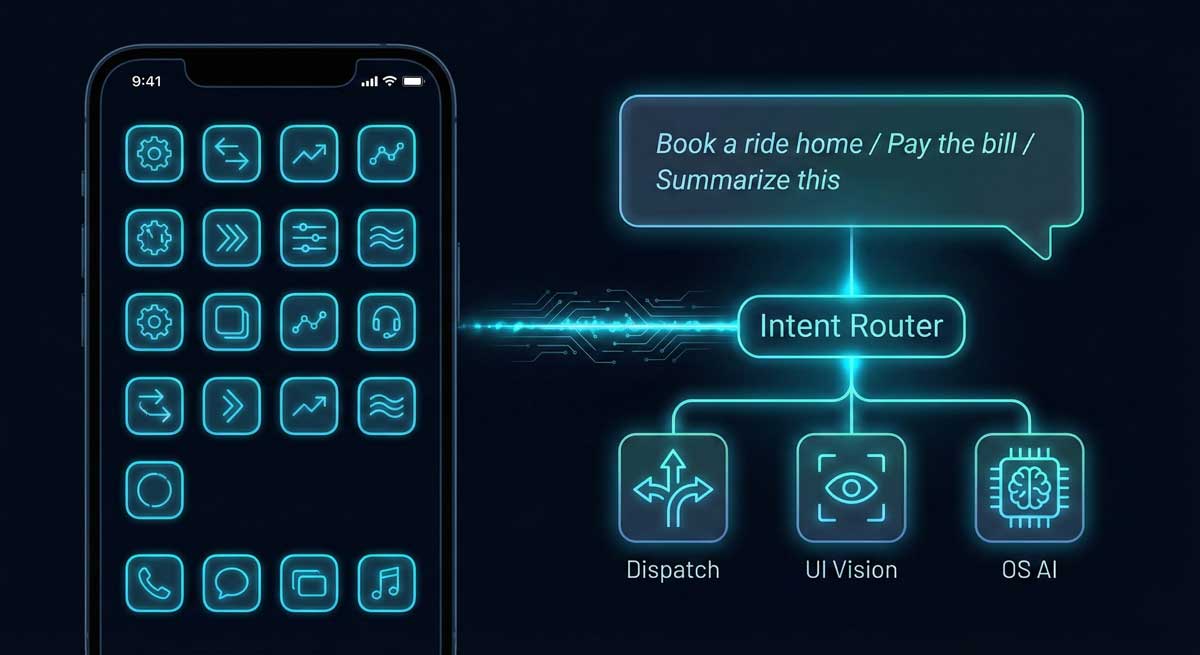
AI agents replacing apps isn’t a claim that software disappears overnight—it’s a claim that the entry point is moving from tapping icons to expressing intent in natural language.
If the OS (or an agent layer) can understand what you want and execute the workflow end-to-end, “opening an app” becomes optional—sometimes invisible.
Open-source projects, hardware-first experiments, and OS-level AI partnerships are pushing this shift from three directions at once.
One widely cited prediction frames the impact starkly: a future where operating systems “don’t need icons, only intent,” and a large portion of apps fade because users stop launching them directly.
What “AI agents replacing apps” really means
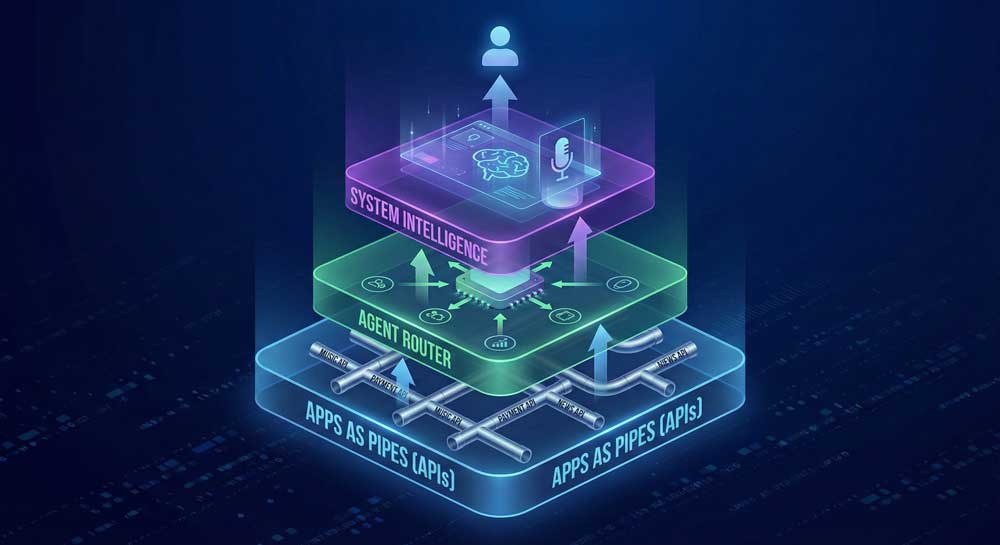
In practice, AI agents replacing apps means apps get “demoted” from destinations to capabilities—services an agent calls through APIs, deep links, or even by operating the UI.
That’s why the most important question isn’t “Will apps die?” but “Who controls the intent router that decides what happens next?”
Force #1: The dispatch layer (agents above apps)
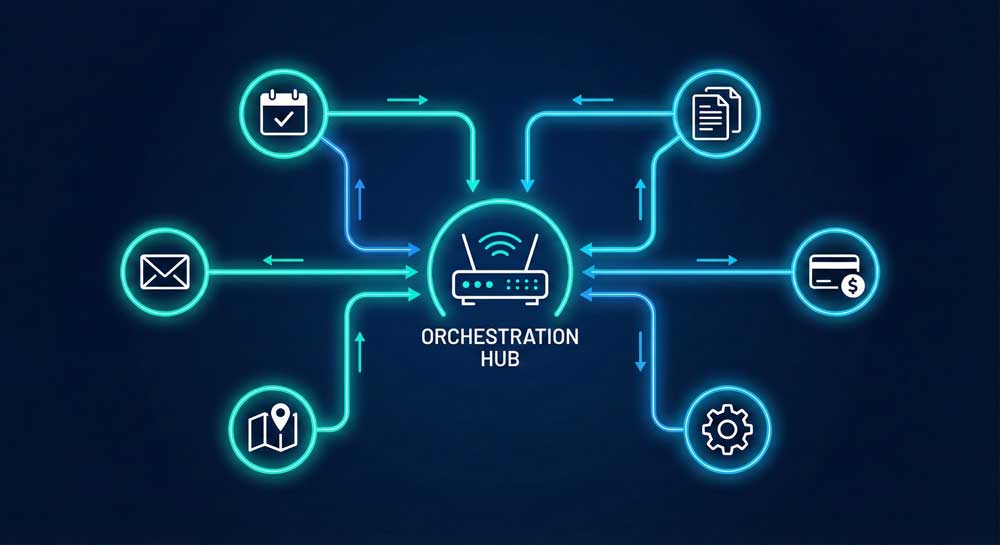
The first force behind AI agents replacing apps is a new dispatch layer: software that coordinates multiple agents/tools to complete tasks, so the user doesn’t manually hop between apps.
36Kr highlights OpenClaw as an example of this “orchestration” direction, describing a system that can coordinate agents like a control center rather than relying on one monolithic model.
OpenClaw’s public GitHub repo positions it as a personal AI assistant, making it easy for developers to inspect the concept and track community traction.
A simple mental model:
- Old workflow: You open multiple apps, repeat the same comparisons, copy/paste details, and complete checkout manually.
- New workflow: You state intent once (e.g., “get me a ride home”), and an agent negotiates steps across services in the background.
This layer is powerful because it can sit on top of today’s ecosystem—no OS update required.
But it also exposes the weak point: reliability drops as plans get longer and more branching, so “multi-step autonomy” is still uneven in real use.
Table 1 — Dispatch layer vs app-first UX
| Dimension | App-first UX | Dispatch layer (agent-first) |
|---|---|---|
| Trigger | Tap an icon, navigate UI | State intent once; agent routes actions |
| Where work happens | In foreground, user-driven | In background, agent-driven |
| What apps become | Destinations | Tools/endpoints called by an executor |
| Main risk | Friction and context switching | Planning reliability in long workflows |
Force #2: The hardware/UI takeover (agents operating screens)
The second force behind AI agents replacing apps is more direct: if APIs aren’t available, let the agent operate the interface by “seeing” and clicking the screen.
36Kr describes ByteDance’s “Doubao phone” approach as “Visual Violence,” emphasizing UI-level takeover via vision-based interaction.
The upside is immediate compatibility: UI automation can theoretically work with any app that a human can operate.
The downside is performance and reliability constraints—36Kr reports cross-app operations facing about ~3 seconds of latency and about ~50% success rate, under current on-device compute constraints (about 30 TOPS).
This is the uncomfortable truth: AI agents replacing apps doesn’t require permission from every developer if the agent can simply operate the UI.
Over time, better on-device AI hardware and multimodal models make this approach more practical, which is why GenAI-capable smartphones are a major industry focus.
Table 2 — Why UI automation matters
| UI automation capability | Why it’s disruptive | What’s holding it back today |
|---|---|---|
| Works without APIs | Bypasses closed ecosystems and slow partner integrations | Latency and success rate limits in real cross-app tasks |
| Treats apps as surfaces | Any app becomes “controllable” like a website for a bot | UI changes break flows; verification/security friction |
| Moves value to the agent | The agent owns the user’s first interaction (intent) | Compute cost + device constraints (e.g., TOPS) |
Force #3: The system layer reshuffle (Apple–Google incentives)
The third force behind AI agents replacing apps is the system layer: whoever owns the OS-level assistant can become the default intent router.
Bloomberg reported Google’s payments to Apple reached $20 billion in 2022 to remain the default search engine in Safari, based on newly unsealed court documents—an example of how valuable “default entry points” are.
But the market narrative has been shifting toward AI model access inside the OS.
TechCrunch reported Apple nearing a deal to pay Google about $1B annually to power a new Siri using Gemini (attributed to Bloomberg reporting), suggesting the entry point could be priced around system intelligence rather than the search box alone.
CNET similarly reported Apple would pay Google about $1B per year for Siri’s custom Gemini model.[cnet]
If OS assistants answer questions, complete bookings, and trigger actions directly, the “first click” no longer belongs to an app grid—or even a search results page.
That’s why AI agents replacing apps is also an incentives story: money follows whichever layer can capture and route intent at scale.
What this means for the app economy (AdSense-safe)
Apps won’t vanish, but many will lose direct user attention as AI agents replacing apps becomes a more common interface pattern.
The “80%” figure should be read as a provocative directional claim about reduced app launching—not a literal forecast that 80% of software gets deleted.
This is also why ad-supported apps and sites feel exposed: if an agent summarizes content or completes tasks without showing the original UI, traditional impression-based monetization can weaken.
At the same time, new monetization paths expand: paid endpoints, transaction fees, verified agent actions, and premium “agent-ready” services.
Table 3 — Builder playbook in an agent-first world
| Who you are | Do this next | Avoid this |
|---|---|---|
| App/product teams | Make workflows agent-friendly: stable deep links/APIs, clear states, fewer brittle UI-only steps | Betting growth purely on “daily opens” |
| Content publishers | Publish intent-aligned pages (comparisons, explainers, data sources) and make them easy to cite/link | Forcing users through multi-step UI friction |
| Platform/OS watchers | Track default entry-point deals (search defaults vs AI assistant integrations) | Assuming yesterday’s default placement stays dominant |
Final takeaway
AI agents replacing apps is best understood as a three-layer migration of the entry point: dispatch (agent orchestration), hardware/UI takeover (vision-driven control), and system-level intelligence (OS default routing).
If that migration continues, the winners won’t be the apps with the prettiest icons—they’ll be the services, platforms, and publishers that become the most reliable endpoints for intent execution.
Related Sources & Further Reading
- OpenClaw GitHub repo: https://github.com/openclaw/openclaw
- Bloomberg (Google payments to Apple reached $20B in 2022, court docs context): https://www.bloomberg.com/news/articles/2024-05-01/google-s-payments-to-apple-reached-20-billion-in-2022-cue-says
- TechCrunch (Apple nears deal to pay Google ~$1B annually for Gemini/Siri): https://techcrunch.com/2025/11/05/apple-nears-deal-to-pay-google-1b-annually-to-power-new-siri-report-says/
- CNET (Apple to pay Google $1B/year for Siri’s custom Gemini model): https://www.cnet.com/tech/services-and-software/apple-to-pay-google-1-billion-per-year-for-siris-custom-gemini-ai-model-report-says/
- Counterpoint Research (GenAI smartphone shipments trend): https://counterpointresearch.com/en/insights/genai-smartphone-shipments-to-exceed-400-million-in-2025-capturing-onethird-of-global-market/
- SCMP (ByteDance Ola Friend AI earbuds linked to Doubao): https://www.scmp.com/tech/article/3281819/tiktok-owner-bytedance-launches-us170-earbuds-china-push-ai-wearables
- Big Tech AI Spending Reaches $670B in 2026: Infrastructure Giants vs. Apple’s Strategic Pivot
- SpaceX xAI Merger: 7 Shocking Facts Behind Elon Musk’s $1.25 Trillion Gamble
- The $5 Trillion AI Investment Bubble: Can the Boom Outrun Reality?
- 5 Brutal Truths the Clawdbot AI Assistant Reveals About Siri’s Future in 2026