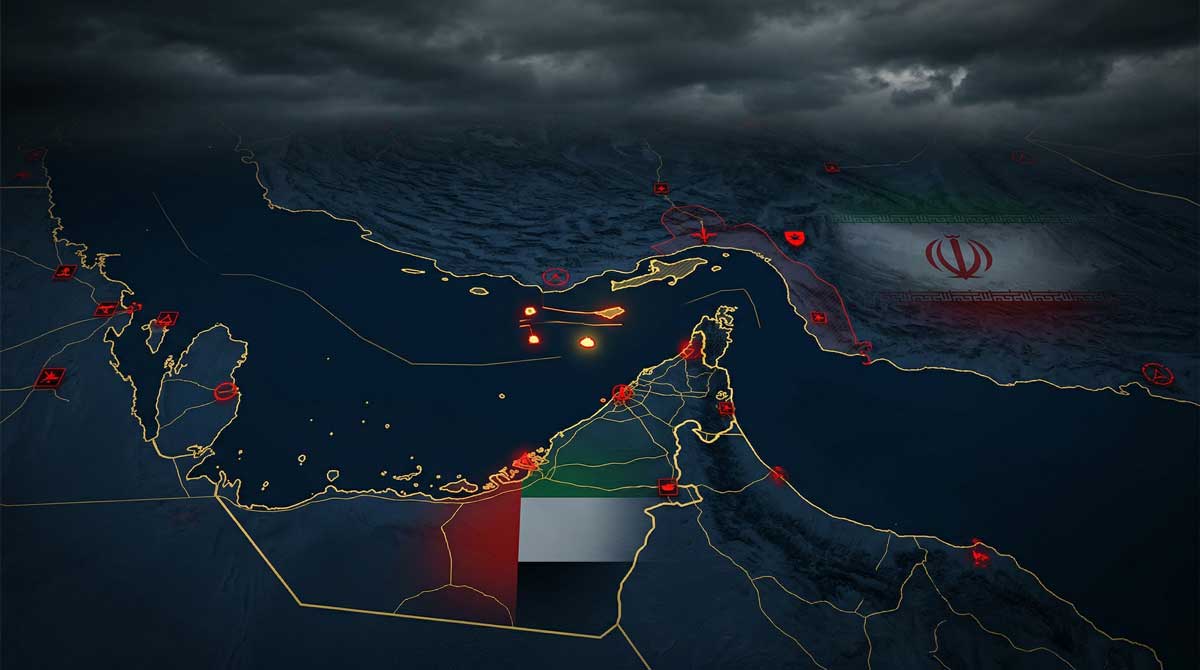
3 Secret Motives Behind the Dangerous UAE Strategy Against Iran in 2026
The UAE strategy against Iran has undergone the most dramatic foreign policy reversal in the Emirates’ short history. Just weeks ago, Abu Dhabi was quietly brokering back-channel communication between Washington and Tehran. By April 2026, it had torn off the mask of neutrality to become the Gulf’s most hawkish voice.
Why did the UAE pivot so sharply — and what is the ultimate endgame? The answers stretch far beyond self-defense into a calculated masterplan to permanently reshape the Middle East’s geopolitical map.
The UAE’s shifting stance is sending ripples across global energy markets and Gulf security architecture.
Table of Contents
The Unbearable Cost of Neutrality
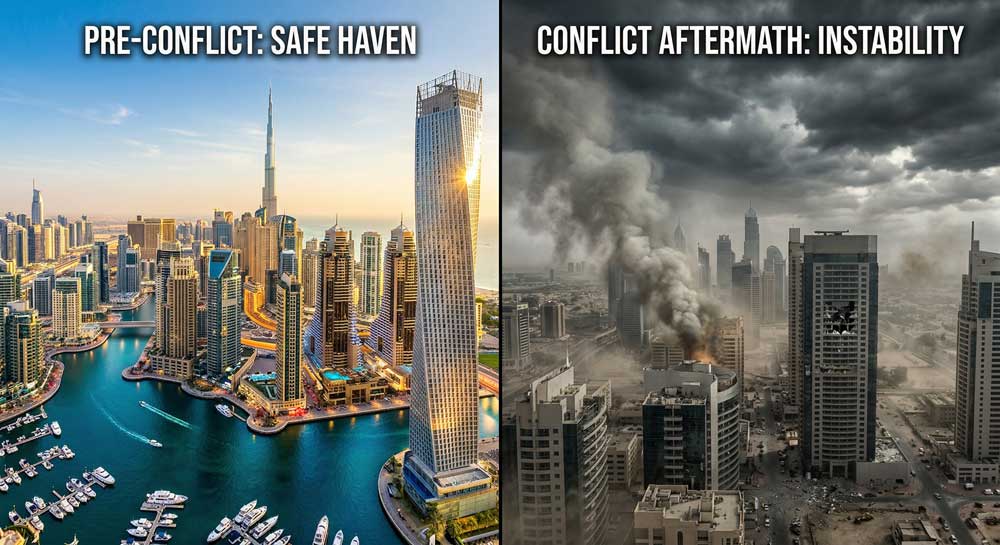
To understand the UAE strategy against Iran, start with the balance sheet. Dubai and Abu Dhabi built their prosperity on a “friends to all, enemies to none” economic model. One month into open conflict, that model collapsed.
Iran launched sustained drone and missile campaigns against UAE territory — not as collateral damage, but as deliberate coercion to force Gulf states off the fence. The result was catastrophic.
| Impact Category | Estimated Damage |
|---|---|
| Total financial losses | $150B+ (approx. $5B daily as of April 1, 2026) |
| Aviation & tourism | Emirates Airlines routes gutted; Dubai hotels struck |
| Energy infrastructure | Fujairah port oil storage facilities set ablaze |
| Investment confidence | UAE’s “world’s safest city” reputation shattered |
| Trade & logistics | Regional re-export hub operations critically disrupted |
The Emirati leadership reached a stark conclusion: if we absorb war’s costs without participating, we might as well enter and secure our strategic interests. Neutrality had stopped being profitable — or safe.
The 3-Part UAE Strategy Against Iran
This pivot isn’t impulsive. Every layer of the UAE’s approach is deliberately sequenced.
1. Legal and Diplomatic Cover First
Before any military action, Abu Dhabi is locking in international legitimacy. Working with Bahrain, the UAE is pushing a UN Security Council resolution condemning Iran’s Strait of Hormuz blockade and demanding cessation of civilian attacks. A legal mandate insulates the coalition from being framed as aggressors.
2. Asymmetric Naval Contribution
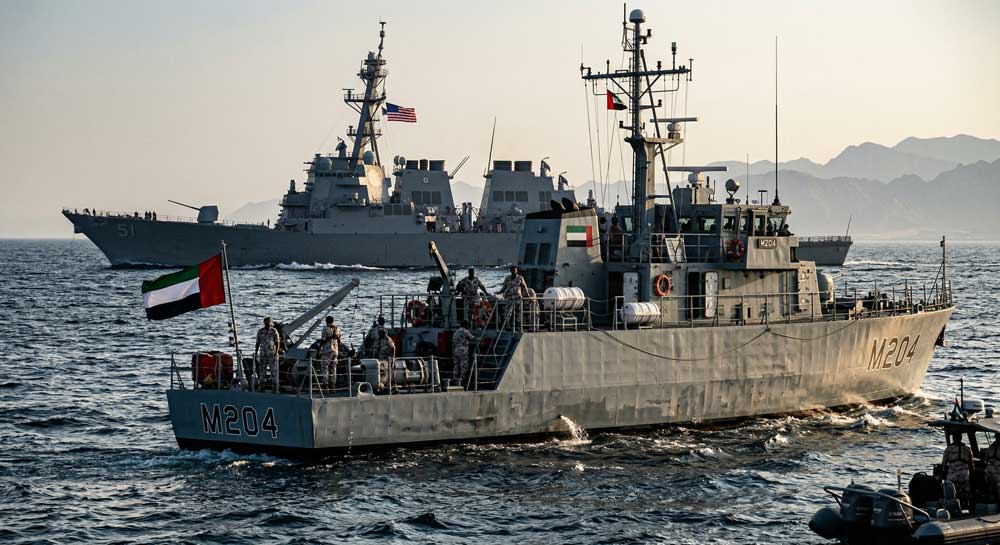
The UAE isn’t trying to match Iran on land. Its military role is narrowly defined and plays to genuine strengths:
| UAE Capability | Strategic Value |
|---|---|
| US-supplied mine-clearing vessels | Reopening blocked commercial shipping lanes |
| Advanced maritime surveillance systems | Filling critical gaps in US naval intelligence |
| Coastal escort operations | Protecting tanker traffic through the strait |
| Special operations experience | Precision operations around island chokepoints |
This asymmetric approach lets the UAE contribute meaningfully while avoiding a catastrophic ground war it cannot win alone.
3. The Island Endgame — The Real Prize
The most consequential — and least publicly discussed — dimension of the UAE strategy against Iran is territorial. And it has been 55 years in the making.
The Three Islands: A Half-Century Wound
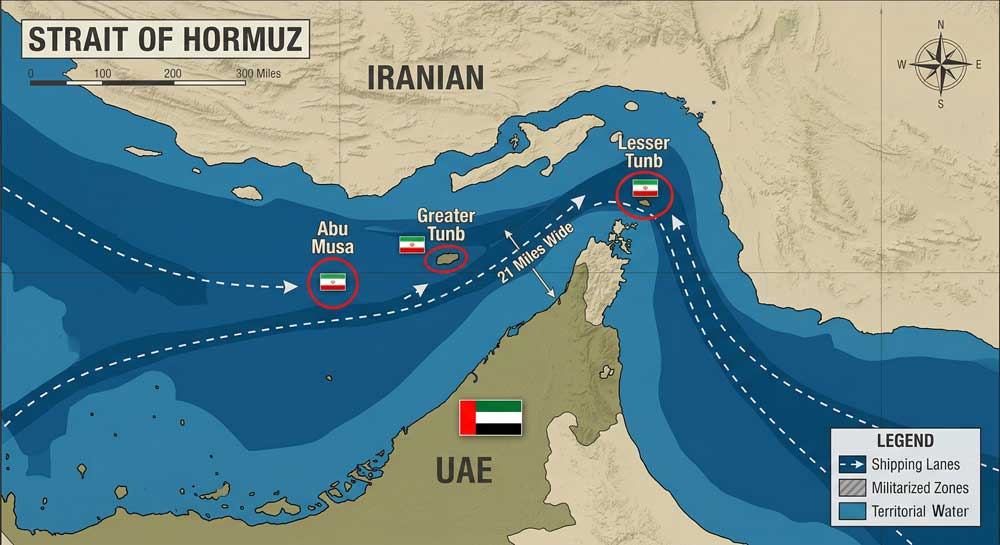
Abu Musa, Greater Tunb, and Lesser Tunb sit at the narrowest chokepoint of the Strait of Hormuz. Whoever controls these three islands holds a strategic grip on 20% of the world’s daily oil supply.
| Island | Strategic Role |
|---|---|
| Abu Musa | Largest; controls central strait passage; civilian population |
| Greater Tunb | Northwestern approach; active Iranian military garrison |
| Lesser Tunb | Southeastern approach; surveillance and interdiction position |
How Iran came to occupy them:
| Year | Event |
|---|---|
| 1971 | Britain withdraws from the Gulf, creating a political vacuum |
| Nov 30, 1971 | Iran’s Pahlavi Shah seizes all three islands days before UAE’s official formation |
| 1971–2026 | 55 years of UAE diplomatic protests with no real leverage to act |
Today, with US forces attempting to break Iran’s blockade, the UAE sees a once-in-a-generation opportunity. If the coalition wrests control of these islands, the UAE simultaneously corrects a 55-year historical grievance and physically pushes Iran’s military perimeter away from Emirati shores. That’s not a side benefit — it’s the central objective driving this entire strategic shift.
3 High-Stakes Risks That Could Unravel Everything
The UAE strategy against Iran is a calculated gamble with genuinely existential downside scenarios.
Risk 1 — Iranian Retaliation Against Civilian Infrastructure
Tehran has explicitly named the UAE in warnings, threatening to destroy critical civilian infrastructure in any Gulf state facilitating island seizure. For a country whose entire economic model depends on investor confidence and perceived stability, this is an existential threat — not a manageable one.
Risk 2 — The Escalation Spiral
US military analysts have stated plainly: fully securing the Strait of Hormuz requires controlling hundreds of kilometers of coastline. That means ground forces. Ground forces mean a protracted conflict, rising casualties, and a war with no predictable endpoint. The UAE could find itself locked into a conflict far beyond its capacity to sustain.
Risk 3 — The Washington Wildcard
Perhaps the most dangerous risk of all is the UAE’s primary ally. President Trump has floated the idea of ending hostilities even if the strait remains closed — signaling that US war aims and UAE war aims may not be perfectly aligned. If Washington abruptly pivots to a negotiated exit, the UAE would be left exposed on the frontlines, without air cover, directly in Tehran’s crosshairs. This scenario — abandoned mid-operation — represents the UAE’s worst-case outcome.
Why the World Is Watching
The UAE’s entry signals that this conflict has permanently outgrown its bilateral origins. The downstream effects extend globally:
- Energy markets: Shipping insurance rates on Gulf routes are spiking, feeding inflation across Europe, Asia, and North America
- Regional recalibration: Saudi Arabia, Kuwait, and Qatar are all watching Abu Dhabi’s move before committing their own posture
- Investment flows: Capital that once treated Dubai as a safe haven is beginning to price in conflict risk
The UAE has officially tied its national fate to the outcome of the most dangerous Middle Eastern conflict of the 21st century — betting that a window open for 55 years won’t stay open much longer.
Authoritative Sources
- Unresolved Territorial Disputes: The Tunbs and Abu Musa in the Gulf
- Part 2- Iran v. Saudi Arabia: Government and Ideology
- ‘Reprehensible’: New wave of Iranian missiles, drones target Gulf nations
- Gulf states tell US ending the war is not enough, Iran’s capabilities must be degraded
- EIA — Strait of Hormuz: World’s Most Important Oil Chokepoint
- Risk Perception and Appetite in UAE Foreign and National Security Policy
- From suppliers to partners: Europe’s growing role in Gulf security
- Strait of Hormuz Control: 7 Shocking Reasons Iran Lost Its Ultimate Strategic Card
- Cyrus the Great: 7 Timeless Leadership Lessons Iran Urgently Needs Today
- 5 Epic Reasons the Hong Kong Safe Haven Thrives After Dubai’s Collapse
- 4th Oil Crisis: 5 Powerful Turning Points That Broke the $100 Barrier