4th Oil Crisis: 5 Powerful Turning Points That Broke the $100 Barrier
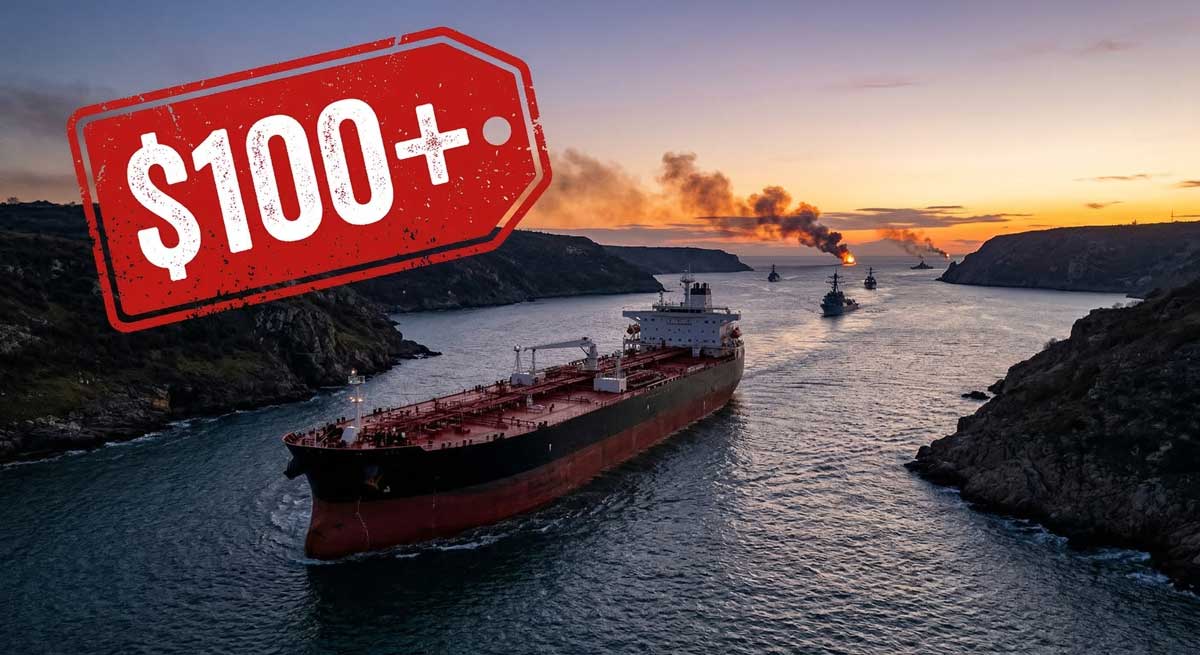
The 4th oil crisis is here — and it arrived faster than any before it. Oil prices smashed through $100 per barrel in under a week in March 2026, triggered by the U.S.-Israel war on Iran and the effective closure of the Strait of Hormuz. To understand how we got here — and where we may be going — you need to trace five pivotal turning points in the history of global oil.
Table of Contents
From Desert Sand to Black Gold
A century ago, Saudi Arabia’s economy ran on taxes and pilgrimage fees. That changed in the 1930s when American geologists struck oil, and the U.S. negotiated drilling rights with the Saudi royal family — eventually establishing what became Aramco in 1944. By 1949, Aramco was remitting 38% of its profits to the U.S. Treasury and selling oil to American buyers below the Gulf’s average market price — a lopsided arrangement Saudi Arabia quietly resolved to fix.
Rather than following Iran’s example — which forcibly seized the Abadan refinery in 1951 and suffered a devastating British naval blockade — Saudi Arabia played a longer game. It funded overseas scholarships in petroleum engineering, systematically placing Saudi nationals at every level of the industry. By 1970, Aramco controlled 50% of the global oil market.
Turning Point 1 — The 1973 Embargo and the First Price Shock
The trigger for the first modern oil crisis was the 1973 Yom Kippur War. When the U.S. airlifted over $1.5 billion in military aid to Israel, OPEC’s Arab members held an emergency meeting and imposed an oil embargo on all nations supporting Israel. Prices previously in the single digits rocketed to nearly $40 per barrel almost overnight.
The structural damage to the U.S. economy was profound. High-horsepower American muscle cars became economically unviable, replaced by a new consumer appetite for fuel efficiency — Honda sold 300,000+ vehicles in the U.S. in a single year on the strength of that advantage alone. Arab oil revenues quadrupled: from $30 billion in 1973 to over $110 billion in 1974. Saudi Arabia used that financial leverage to nationalize Aramco in phases, completing the takeover by 1980.
Saudi Aramco’s Downstream Expansion
Once in full control of production, Aramco didn’t stop at the wellhead. It co-invested with South Korea and Japan on storage and refining infrastructure, making Japan the world’s largest oil reserve holder. More recently, Aramco acquired equity stakes in Chinese private refiners including Rongsheng Petrochemical, and signed a $4 billion joint venture with Sinopec in 2025 — simultaneously locking in customers and capturing downstream margin.
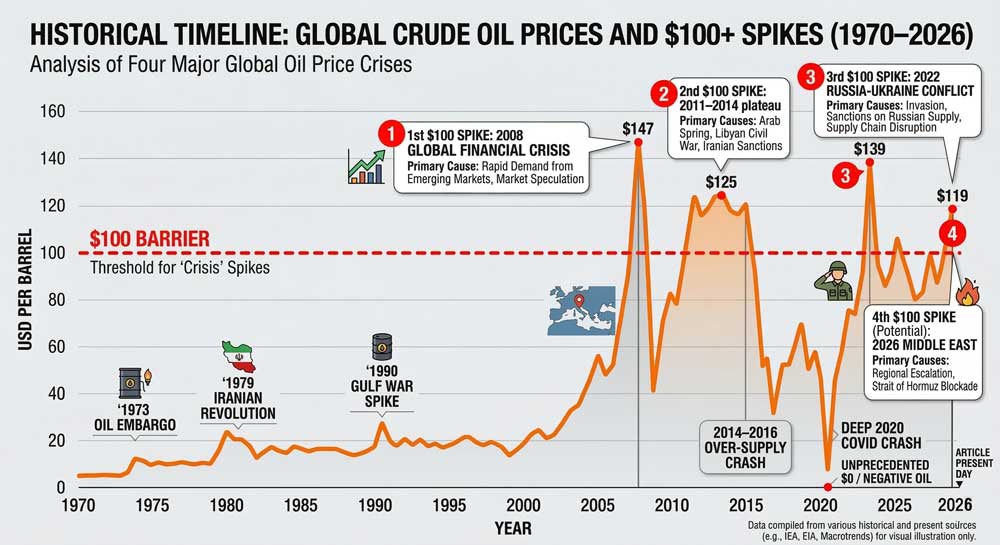
The Four Times Oil Broke $100
| # | Period | Peak Price | Primary Trigger | Duration |
|---|---|---|---|---|
| 1st spike | 1973–74 | ~$40/bbl | Arab oil embargo (Yom Kippur War) | ~12 months |
| 2nd spike | 2007–08 | $147/bbl | China/India demand surge | ~3–4 years |
| 3rd spike | 2022 | $139/bbl | Russia-Ukraine war, energy decoupling | ~6 months |
| 4th spike | Mar 2026 | $119+/bbl | US-Israel Iran war, Hormuz closure | Ongoing |
Turning Point 2 — China’s Rise and the $147 Record
The first time oil actually crossed $100 per barrel came in the 2000s — not from war, but from demand. China and India entered their high-growth decades, and energy consumption rose exponentially. Combined with financial speculation, this pushed Brent crude to a then-record $147 per barrel in July 2008. The global financial crisis brought prices crashing back down, but the era of cheap oil was permanently over.
Turning Point 3 — Sanctions, Shale, and the Supply War
The second $100 oil moment arrived in 2012 when sweeping U.S. and European sanctions effectively removed Iran — a major OPEC producer — from global markets. High prices lasted two to three years before U.S. shale fracking technology transformed the landscape, turning America from the world’s largest oil importer into a net exporter by the mid-2010s.
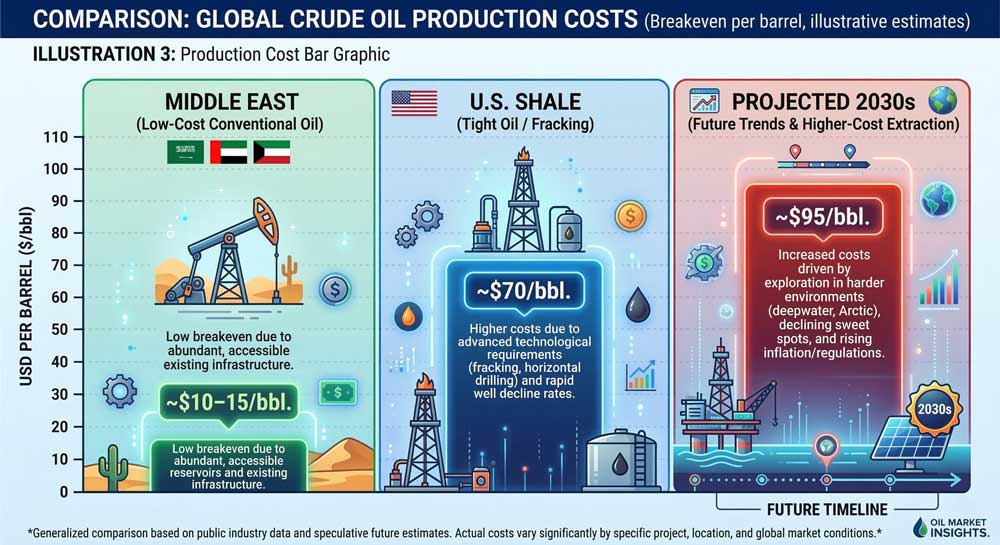
What followed was a brutal supply war. OPEC increased production to defend market share; the U.S. did the same. The result: in April 2020, WTI crude went negative — an unprecedented event driven by pandemic demand destruction and a storage overflow. U.S. shale giants Whiting Petroleum and Extraction Oil & Gas filed for bankruptcy. Yet the industry adapted — companies like Diamondback Energy cut breakeven costs to around $37/barrel, and the sector survived.
U.S. Shale Breakeven Outlook
| Period | Avg. Breakeven (WTI) | Key Pressure |
|---|---|---|
| 2025 | ~$70/barrel | Core inventory depletion |
| ~2030 (est.) | ~$82–85/barrel | Shift to Tier 2 acreage |
| Mid-2030s (proj.) | ~$95/barrel | Lower-quality drilling locations |
Turning Point 4 — Russia, Ukraine, and a World Splitting Apart
The third $100 spike came in February 2022 as Russia invaded Ukraine, fracturing two of the world’s most important economic relationships: U.S.-China trade and Russia-Europe energy. Oil briefly touched $139 per barrel — just $8 below the all-time nominal high. At some Los Angeles gas stations, prices hit $6.65/gallon, surpassing the apocalyptic gasoline price imagined in the Hollywood film I Am Legend ($6.63/gallon).
This episode exposed what has since become a defining feature of the modern oil market: the removal of geopolitical “shock absorbers.” The cheap Russian gas that stabilized European industry is gone. The frictionless U.S.-China trade that kept goods cheap is gone. Each successive crisis now hits a less buffered, more reactive system.
Turning Point 5 — The 4th Oil Crisis: The Strait of Hormuz
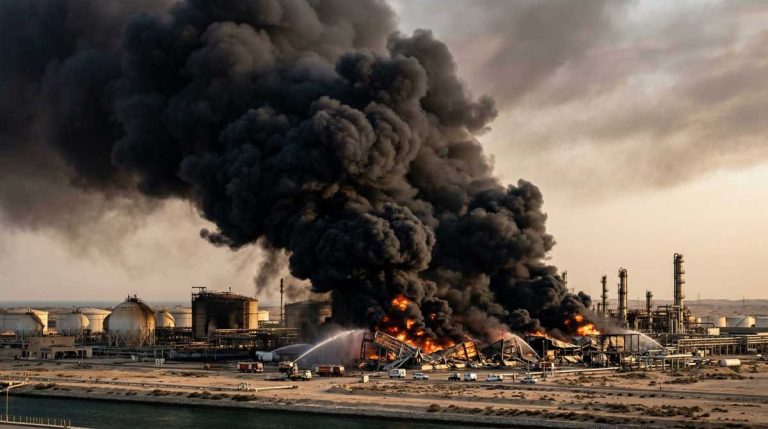
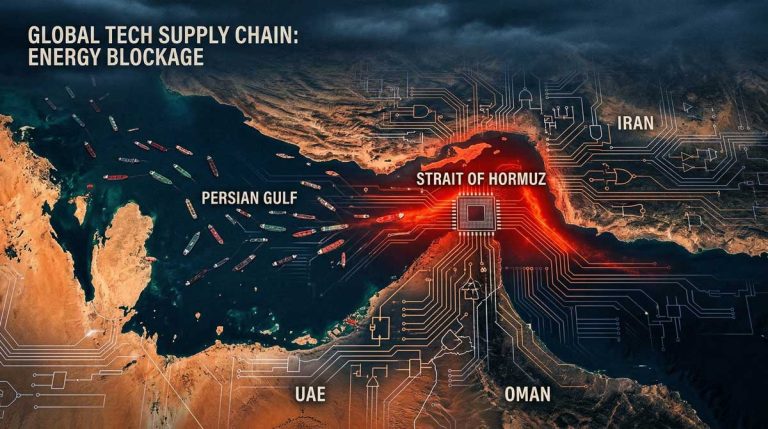
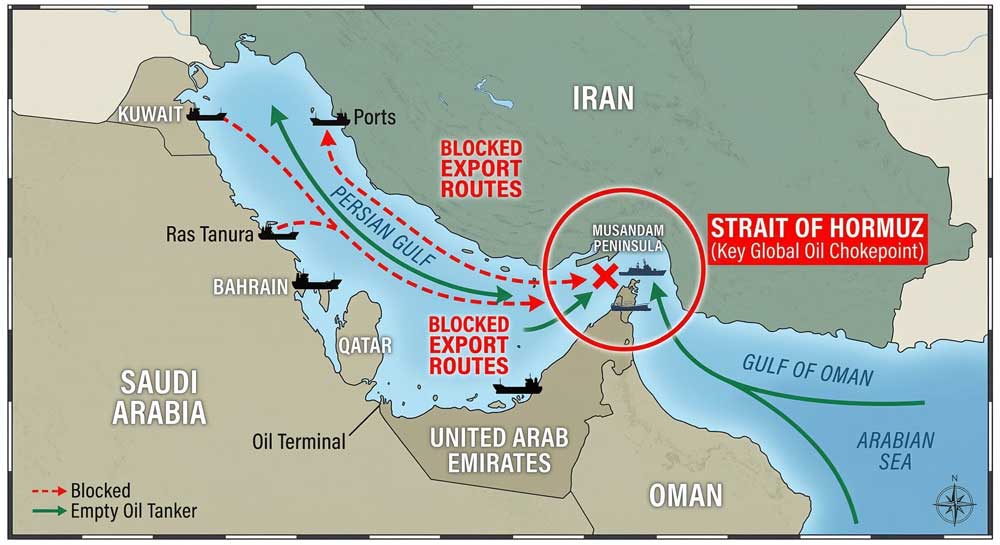
The 4th oil crisis is qualitatively different from all that preceded it. The U.S.-Israel military campaign against Iran, which began on February 28, 2026, has effectively shut down the Strait of Hormuz — the narrow chokepoint through which approximately 20% of all global oil and one-third of seaborne LNG passes daily. Iran’s Revolutionary Guard declared that “not a litre of oil” would pass through the strait, and warned that any vessel linked to the U.S. or its allies would be treated as “a legitimate target”.
The impact was immediate. WTI surged 40% in a single week — the largest weekly gain since at least 1985. Iraq has curtailed 60% of its oil production; Kuwait has halted operations; Qatar’s Ras Laffan LNG facility declared force majeure. JPMorgan analysts estimate that if the strait remains closed, supply disruptions could reach 4.7 million barrels per day by day 18. The IEA responded by releasing 400 million barrels from emergency reserves — the largest such release in history.
Who Is Most Exposed to the Hormuz Blockade?
Why the 4th Oil Crisis Feels Different
Beyond the immediate price shock, the 4th oil crisis reveals deeper structural fragility. U.S. shale — once the market’s great stabilizer — now faces rising breakeven costs projected to approach $95/barrel in the 2030s, limiting its future ability to cap spikes. OPEC+ was already navigating a delicate balance between defending prices and losing market share before the war erupted. And Saudi Aramco, now deeply integrated into Asian downstream markets, has diminishing incentive to flood markets to relieve Western consumers.
TD Securities’ senior commodity strategist warned on March 11: “Expect significantly higher oil prices unless the Strait of Hormuz reopens”. Wood Mackenzie analysts have projected a possible path to $200/barrel if the conflict persists. Whether that materializes depends on one question: how long does the war last?
Authoritative Sources
- Reuters — How the Strait of Hormuz Closure Impacts Global Oil Supply (March 2026)
- Axios — Oil, Gas Prices Spike as Iran War Thrusts Strait of Hormuz into Crisis
- Al Jazeera — Iran’s IRGC: “Not a Litre of Oil” to Pass Hormuz, Expect $200 Price Tag
- CNBC — How High Can Oil Prices Go? Here Are the Scenarios
- NPR — The Iran War Has Effectively Closed the Strait of Hormuz
- Fortune — Oil Over $100, Markets in Freefall, Iran’s New Supreme Leader
- Visual Capitalist — Visualizing Historical Oil Prices 1968–2022
- Discovery Alert — US Shale Oil Breakeven Costs: 2025 Analysis
- S&P Global — Saudi Aramco Signs Agreements to Build Refinery in China
- ElevenLab — Hormuz Strait Oil Disruption: 7 Critical Impacts Reshaping the 2026 Global Energy Market
- ElevenLab — Silver’s 50% Crash and 30% Rebound: 5 Critical Insights for 2026 Investors
- ElevenLab — Nvidia H200 Chips China Sales Hit Zero: 7 Shocking Reasons Trump’s Strategy Backfired
- ElevenLab —Iran Oil Crisis Impact: 5 Proven Reasons It Won’t Trigger a 1970s-Style Disaster